
-
Your next favorite book
is waiting.
Meaning: Revenge on another can be better appreciated if one waits before exacting it.
Revenge is such an ancient concept that it seems like this saying should be similarly old – perhaps stemming from an old Greek philosopher or the Bible or at the very least, a Shakespeare play, given the Bard’s penchant for the theme and for witty phrases. Its origin is surprisingly modern, however.
It’s commonly believed that the saying was first coined by French author Pierre Choderlos de Laclos (1741-1803), an army general who preferred penning novels. His most famous work (which he took a six month vacation to write) was Les Liaisons Dangereuses (Dangerous Liaisons - 1782). It’s widely stated that the phrase “La vengeance est un plat qui se mange froid” – “Revenge is a dish best served cold” – first appears in the novel. This is, unfortunately, incorrect; no sentence resembling it appears anywhere in de Lactos’s works. And, while one can easily imagine Glenn Close delivering the line in the 1988 film of the same name, it doesn’t appear there, either.
The phrase did likely originate in France, as the first appearance in print of a similar adage occurs in a novel by Marie-Joseph "Eugène" Sue. Born in Paris in 1804, Sue began his career as a navel surgeon, and his first books were sensationalist novels about life at sea. By the 1830s he was a “well-known dandy,” according to Britannica. “His carriage and horses, pack of beagles, and displays of luxury made him the talk of Paris.” Most of his novels were serialized in Paris publications of the day and were quite popular, increasing the circulation of the newspapers in which they appeared. They were criticized as melodramatic but were never-the-less influential; it’s thought that his Les Mystères de Paris (1842–43) was an inspiration behind Victor Hugo’s Les Misèrables.
In Sue’s six-volume work, Mathilde: mémoires d'une jeune femme (1841) the author writes, “La vengeance se mange très-bien froide” – “[R]evenge is very good eaten cold.” The italics are present in the original, indicating that the expression was already in popular use at the time the book was written. It was, however, the first known time the phrase was seen in print.
The exact wording of the saying – “Revenge is a dish best served cold” – has been widely attributed
to author Dorothy Parker (1893-1967).
The phrase (along with variations on it) has become quite common in popular culture. Its first use in a movie may have been in the 1949 movie, Kind Hearts and Coronets. Mario Puzo also wrote “Revenge is a dish that tastes best when it is cold” in his novel, The Godfather (1969), although this didn’t make it into the movie by the same name. More recently, In Star Trek II: The Wrath of Khan the eponymous villain cites the phrase as an old Klingon proverb; Quinten Tarantino also claims it’s of Klingon origin at the start of his 2003 film Kill Bill.
More expressions and their source
Challenge yourself with BookBrowse Wordplays
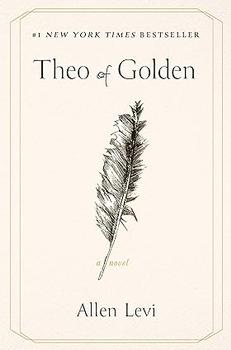
Theo of Golden by Allen Levi
One spring morning, a stranger arrives in the small southern city of Golden. No one knows where he has come from…or why…






Your guide toexceptional books
BookBrowse seeks out and recommends the best in contemporary fiction and nonfiction—books that not only engage and entertain but also deepen our understanding of ourselves and the world around us.

