
-
Your next favorite book
is waiting.
Summary | Excerpt | Reviews | Readalikes | Genres & Themes | Author Bio
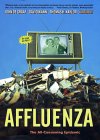
The All-Consuming Epidemic
by Wann, de Graaf, Naylor
HOME SHOPPING Of course, these days you don't have to drive at all (or fly either) to shop, though most people still do. But while malls, and vast discount megastores like Wal-Mart and Costco, still boast growing sales (and still drive smaller, locally owned stores out of business), Americans are doing a whole lotta shopping right from their couches. Some forty billion mail-order catalogs flooded our homes last year, about 150 for every one of us, selling everything from soup to nuts (to refrigerators to underwear). "Buy Now, Pay Later," they shout. While some of us resent their arrival, most Americans eagerly await them and order from them with abandon. In some cases, we even pay for the catalogs (such as Sears') so that we can pay for what's in them.
Then there are the home shopping channels. Critics mock them as presenting a continual succession of baubles on bimbos, but for a sizeable percentage of Americans, they're the highlight of our cable TV systems, and highly profitable. And to think someone once called TV "a vast wasteland." That was before the shopping channels, of course.
Mail-order catalogs and shopping channels carry a lot more than products. They are highly effective carriers of affluenza. Next time a catalog comes, check it with a high-powered microscope.
CYBERSHOPPING In the past several years, of course, a new affluenza carrier has come online. And it threatens to outdraw malls, catalogs, and shopping channels combined. The intense frenzy with which the ubiquitous Internet has been embraced as a shopping center can only be compared to that which followed the discovery of gold in California and Alaska, or the Texas oil boom. Twenty percent of Americans now spend at least five hours a week online and much of that time is spent shopping--a majority of Internet sites are now selling something.
During the 1999 affluenza season, consumers spent $10 billion online, three times what they spent only a year earlier. Now that's growth! For the year, e-sales topped $33 billion. That's still only a tiny fraction of total retail sales, but soon Internet shopping should eclipse catalog sales. Everything imaginable (and some things unimaginable) can now be bought online.
A REAL E-MAN Proof of that is to be found in the adventures of DotComGuy (formerly Mitch Maddox--he had his name legally changed), a twenty-six-year-old Dallas man who has vowed not to leave his home for a year, while making all his purchases online. Maddox found regular shopping too slow for his tastes, and too much like work. He says he told his "low-tech parents" he could "live off the Internet for a year and never leave my apartment." Now, thousands of "DotComHeads" hang out at his Web site to watch this e-male shop. But he doesn't just buy online, he sells as well: DotComGuy merchandise including T-shirts, mouse pads (of course!), baseball hats, bumper stickers, and cake mix. "This is the Internet. This is a forum for e-commerce," he says, in answer to all those foolish people who thought it was an information highway.
SHOPPING AS THERAPY When Scott Simon visited Potomac Mills, the mall was running one of the cleverest ad campaigns we've ever seen, featuring an alluring actress named Beckett Royce, whose persona combined bubble-headed ditziness with winking "joke's on you," sophistication. "Shopping is therapy," she intoned, lying on a couch. "Listen to that little voice in your head: SHOP, SHOP, SHOP." Royce's monologues mocked the shopping channels and catalog shopping, but definitely not shopping at Potomac Mills. She pranced between its aisles, grabbing item after item, then adding up what she'd bought and chirruping, "I spaved a hundred dollars!" "Spaving" means spending and saving at the same time, she explained, suggesting that at Potomac Mills everyone could become a "spaver."
From Affluenza: The All-Consuming Epidemic, by John De Graaf, et al. © June 9, 2001, Berrett-Koehler used by permission.
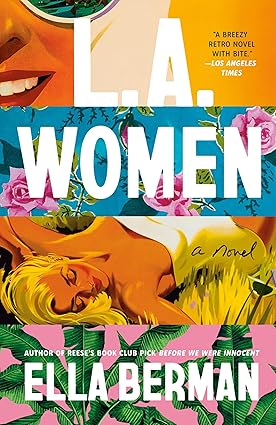
L.A. Women by Ella Berman
Two ambitious writers in 1960s LA face betrayal when one writes a novel based on the other's life.






Your guide toexceptional books
BookBrowse seeks out and recommends the best in contemporary fiction and nonfiction—books that not only engage and entertain but also deepen our understanding of ourselves and the world around us.


