
-
Your next favorite book
is waiting.
Summary | Excerpt | Reviews | Readalikes | Genres & Themes | Author Bio
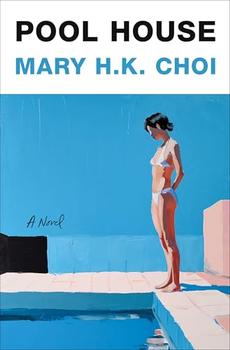
A Novel
by Mary Choi
DAY ONE
STEVIE
Stevie has been usurped. She's rounded the corner at Ralphs to catch Moon, her mother, speaking to a young tattooed Asian woman in the cereal aisle. The angle of the other woman's head and the way Moon uses her hands as she speaks, gaining speed, indicates that some deep and abiding imprinting is taking place. Moon has orchestrated this, trawled Rock N Roll Ralphs, as she cringingly still refers to the grocery store on Sunset, switching her famous face on for her dopamine hit, a hoovering vortex of want.
Stevie retreats into the endcap of the aisle, to hide behind chips the size of feed bags, and this is how Stevie is sick in the head. She has the thought, clear as day, that her mother is cheating on her. The term that springs to mind is cuckold, and while she is aware that this isn't even the definition of the word, she also yearns for her mother to a clinical degree. It was Mother Hunger, self-diagnosed but very real. And her circumstances were a perfect storm of absence, workaholism, and her mother's own ungovernable appetite for anyone who wasn't Stevie.
Delilah Moon (Theresa Moon on her passport) had not been a household name. Though coming up in the nineties at exactly the moment of the paparazzi boom and unprecedented Us Weekly sales, she'd burned bright, especially for the time on a red carpet where she'd been virtually naked and astonishingly pregnant, the same year Björk wore a swan dress. She'd had an athletic and well-received run in several B movies as a kind of Murder Lolita, as well as a handful of Miramax pictures that were all "of a time," predictably with heavy sapphic overtones. She played the same home-wrecking kinderwhore, au pairs in bad wigs and unexplained martial arts training, deployed usually to avenge some murdered (male) family member back in some shitstain rural village in Asia.
For Stevie, this created the very specific experience of growing up knowing that most of the boys at her elite private school, as well as the male teachers, had seen Moon naked. Mostly her boobs but sometimes her bush, and it was purported—though never confirmed (and Stevie had always been too mortified to ask)—Moon had even had live, actual, unsimulated penetrative sex in that first film. Definitely at least one of the blowjobs had been real, and the joke was you didn't need a Moon sex tape to leak, they were all already out there. This was why it was the dads who stopped to talk to Moon. Increasingly the granddads. Or else they wouldn't say anything at all, backing into Moon with their iPads flapped open, held up for the world's most obvious creepshot.
But this Stevie could tolerate. She was proud of her mother. Moon was a trailblazer and iconoclast. Many VH1 talking heads shows agreed on this. And they could minimally rely on a few speaking fees around AAPI month, which meant that by June her mother would get upset about the mid-face deep plane lift she couldn't afford because being referred to unerringly as a legend made her feel old.
Lately, with the return of the Y2K scumbag aesthetic, there was also a certain breed of alt Asian Baby Girl who loved Moon and unfailingly made efforts to impress her. They were all unequivocally cooler than Stevie. With better clothes. Confident and usually near-naked. Goths who vaped, e-girls with tattoos and neon racing stripes on their shredded, oversized jeans. Narrow-hipped girls from Torrance. Cinephiles from Riverside. Letterboxd was their Tumblr. All as much fans of soft-core nineties femme fatale films as experimental cinema. It was these girls who tormented Stevie most. She knew from their striving vocal fry and the unprompted recitations of their LinkedIn accomplishments that they didn't actually care about Moon. But optically, at least from a branding perspective, even Stevie had to admit they were all much more convincing as stand-ins for the role of Moon's daughter.
Excerpted from Pool House by Mary Choi. Copyright © 2026 by Mary Choi. Excerpted by permission of Flatiron Books. All rights reserved. No part of this excerpt may be reproduced or reprinted without permission in writing from the publisher.
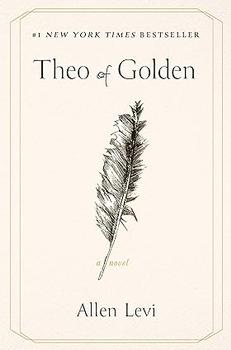
Theo of Golden by Allen Levi
One spring morning, a stranger arrives in the small southern city of Golden. No one knows where he has come from…or why…




Your guide toexceptional books
BookBrowse seeks out and recommends the best in contemporary fiction and nonfiction—books that not only engage and entertain but also deepen our understanding of ourselves and the world around us.


