
-
Your next favorite book
is waiting.
Summary | Excerpt | Reviews | Readalikes | Genres & Themes | Author Bio

A Novel
by Morgan Thomas
Excerpt
Mad Eden
I want to tell you, simply, how joyful we were that summer. Joyful, that word which suggests two separate things: a substance and its vessel. Joy stalked us, and when it pounced we were saturated. Wring our bodies, and the joy would drip from us like dirty water. Separate but not distinct, as Christ is both the substance and the vessel of God, but without the Christianity, with a healthy dose instead of devilry, which from the outside looked like idleness or, based on the later testimony of family and friends, like madness.
When I've attempted, in the past, to describe this joy—to my friend Eva, to my therapist—they both asked the same question: What made you so joyful? What were the reasons? Reasons don't interest me—what I want is a cause beyond reasons. But here they are, the glut of explanations I offered them. There was the sun, to begin, shining each morning. It was a magnificent spring, all afternoon thunderstorm and wind. By summer the pine flats were flooded, and the marshes were on fire. Nothing was where it should be. It was early in the sixth extinction and late in the pandemic. To be inside was to subject your lungs to the possible virus, to be outside was to subject them to smoke. I was two months out of the hospital—long enough that the turbulence had passed, short enough that the world still felt charged with the luster I associate with close calls. The stay hadn't been entirely bad, though I had nightmares of prone holds all through that summer of joy, and any time sirens sounded, spiraling up in pitch, that Doppler effect that signaled approach, I gritted my teeth. I wriggled. I asked Liam whether the sirens were coming to our house, and Liam said they weren't, and if the noise continued I asked again. I asked again. Sometimes, I begged. I would do anything. Anything, please, I said. Liam listened to my pleas grimly. They lay atop me—a live weighted blanket—and said they'd promise never again to call the police if I'd promise never again to try to kill myself. An impasse we abandoned, each time, as soon as the sirens faded. The hospital where I had spent one week would be sued, the next year, by mental health advocates after a patient suffocated at the bottom of a staff dogpile, but that has little to do with the joy that is our focus here, is related to it only through negation. I had gotten out, and there were few sirens that summer given our nearest neighbor was across a large retention pond, some distance away. The hospitalization had led to an autism diagnosis, which had put an end to my getting testosterone prescribed by any local clinic, an effect that had surprised me given there was no law prohibiting the prescribing of testosterone for an autistic adult, not then, but the nurse at my local clinic needed a doctor to sign off on the prescription, and the doctors were scared and busy, and if the diagnosis had closed off this possibility, it had created others in its place, possibilities largely of language—meltdown instead of panic attack, stimming instead of self-harm, burnout instead of depression. The words were not meant to be comforting, borrowed as they were from descriptions of malfunctioning machines—an overloaded circuit, the accidental melting of a nuclear reactor core—but there was promise in these new phrases, a hopeful, even a joyful, promise. What it meant, though the psychologist hadn't framed it this way, had instead used words like disorder and impairment and black-and-white and pathological, what it meant was that the trauma I had searched for with hypnotists and therapists to explain my social ineptitude, my hatred of touch, my hard startle at loud noises, could be forgotten. It had never existed. My life had been the lucky, charmed life I'd suspected, and this was a part of my joy, and the peach tea we drank was a part, and the tomatoes we picked up each week from our neighbor in exchange for helping with whatever small tasks she needed—stapling the screen back on to the screen door, burning trash, loading up her recycling in our car to take it eighteen miles to the center—were a part, and so was our proximity to cold spring water in which we could submerge, and our drinking water, which flowed from an underground lens, water that was silky and full-bodied and tasted of earth, and our decision not to marry after attending the wedding of Liam's close friends, a straight couple who had read "Having a Coke with You" in lieu of their vows and so made the decision for us, as we couldn't very well choose the same reading, and a wedding without O'Hara didn't interest us, and our decision not to reproduce, which we had made after watching, from our screened-in porch, a tattered sparrow parent, harried by their larger offspring, offer food again and again into the chick's smug, ever-ready beak. We had decided it solemnly, we were of an age where such a decision had to be made. If we wanted to wait, things needed to be frozen, some part of us held still in time. And there was hate, of course, that constant. Or prejudice, whatever word you prefer, there was plenty of it that summer and more would come. The governor was trying to shut down R House, and we were no longer using public restrooms, and Liam had canceled a workshop at a local youth center—the organizers were worried about it drawing the wrong sort of attention—and the paper I'd cowritten with several colleagues on intersex considerations in gender-affirming care for minors was pulled from an academic journal after being accepted, edited, and proofed, a decision, they explained in a terse email, they'd made to safeguard the journal's reputation, and this doesn't sound like joy, perhaps it is gauche to say that joy came from this, what joy could come, but there was joy, somehow, in our surviving in this place that intended to be inhospitable to us, I felt it sometimes when biting into a slice of garden-grown cucumber marinated in balsamic or diving into the ever-cool waters of the spring, how the state mounted a threat to our joy, how the state seemed increasingly to want to destroy it, and how we, therefore, guarded the joy more steadfastly.
Excerpted from Mad Eden by Morgan Thomas. Copyright © 2026 by Morgan Thomas. Excerpted by permission of MCD. All rights reserved. No part of this excerpt may be reproduced or reprinted without permission in writing from the publisher.
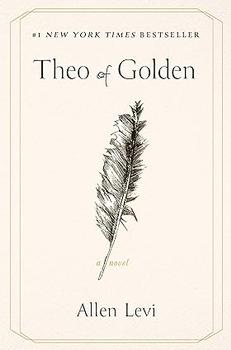
Theo of Golden by Allen Levi
One spring morning, a stranger arrives in the small southern city of Golden. No one knows where he has come from…or why…




Your guide toexceptional books
BookBrowse seeks out and recommends the best in contemporary fiction and nonfiction—books that not only engage and entertain but also deepen our understanding of ourselves and the world around us.


