
-
Your next favorite book
is waiting.
Summary | Excerpt | Reviews | Beyond the Book | Readalikes | Genres & Themes | Author Bio

A Novel
by Fran Fabriczki Book Reviewed by:
Szonja and Rina hadn't always been friends as well as sisters—there was a six-year gap between them, which, depending on their respective ages, meant that they had either everything or nothing in common. When Rina was six and Szonja was a baby, one had newly joined the choir at school while the other was testing out her vocal cords in an entirely different way. When Rina was thirteen and Szonja was seven, they played together nicely, but only a few months later, puberty hit, and Szonja was left to hold up both sides of her dolls' conversation (this particular skill would remain useful later on in life, when assaulted with tedious company). At twenty and thirteen, during the mild spring of their first months stationed in Washington, DC, they both briefly had the right combination of patience, enjoyment of popular music and interest in each other to spend hours in their shared bedroom talking and listening to their collection of tapes.
Now, as Szonja prepared to visit her sister in America, this was the place her thoughts lingered, despite the letters and occasional phone calls that had detailed moves, jobs, the birth of two daughters—a whole new image of her sister over the past five years—because it was the last time they had been close (physically and emotionally), sure, but also because it was the first time Szonja became conscious of her sister having a specific, distinct personality—one that was not simply defined as part of their fam ily quartet. Rina was studious, unlike Szonja; she was passionate, unlike their mother; and she was kind, unlike their father. And the more that Szonja had seen her sister as something separate from herself, the more she had wanted to join her on the other side of that difference—in her interests, her manners, her choice of words. And briefly, it seemed, Rina did not mind her mimicry.
Yet, like all their other fleeting moments of alliance, this was sure to end—Szonja had seen the signs when Rina met Aron, a young man more sombre and studious than Rina herself who had bent Rina's interests just enough to be a branch out of reach for Szonja.
In the end it was Szonja who had stopped searching for Rina's company, leaving her to long walks and murmured discussions with this boy they knew little of. It was always easier to be the one who left—she had learned this at the age of seven, sitting among a cluster of plastic friends, talking to herself.
Excerpted from Porcupines by Fran Fabriczki. Copyright © 2026 by Fran Fabriczki. Excerpted by permission of Summit Books. All rights reserved. No part of this excerpt may be reproduced or reprinted without permission in writing from the publisher.
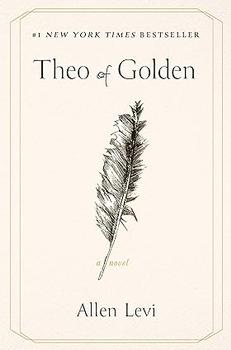
Theo of Golden by Allen Levi
One spring morning, a stranger arrives in the small southern city of Golden. No one knows where he has come from…or why…




Your guide toexceptional books
BookBrowse seeks out and recommends the best in contemporary fiction and nonfiction—books that not only engage and entertain but also deepen our understanding of ourselves and the world around us.


