
-
Your next favorite book
is waiting.
Summary | Excerpt | Reviews | Beyond the Book | Readalikes | Genres & Themes | Author Bio

 Book Reviewed by:
Excerpt:
London Fields
This is a true story but I can't believe it's really happening.
It's a murder story, too. I can't believe my luck.
And a love story (I think), of all strange things, so late in the century, so late in the goddamned day.
This is the story of a murder. It hasn't happened yet. But it will. (It had better.) I know the murderer, I know the murderee. I know the time, I know the place. I know the motive (her motive) and I know the means. I know who will be the foil, the fool, the poor foal, also utterly destroyed. And I couldn't stop them, I don't think, even if I wanted to. The girl will die. It's what she always wanted. You can't stop people, once they start. You can't stop people, once they start creating.
What a gift. This page is briefly stained by my tears of gratitude. Novelists don't usually have it so good, do they, when something real happens (something unified, dramatic and pretty saleable), and they just write it down?
I must remain calm. I'm on deadline too here, don't forget. Oh, the pregnant agitation. Someone is tickling my heart with delicate fingers. Death is much on people's minds. Three days ago (is it?) I flew in on a red-eye from New York. I practically had the airplane to myself. I stretched out, calling piteously and frequently to the stewardesses for codeine and cold water. But the red-eye did what a red-eye does. Oh, my. Jesus, I look like the Hound of the Baskervilles ... Shaken awake to a sticky bun at 1.30 in the morning, my time, I moved to a window seat and watched through the bright mists the fields forming their regiments, in full parade order, the sad shires, like an army the size of England. Then the city itself, London, as taut and meticulous as a cobweb. I had the airplane to myself because nobody in their right mind wants to come to Europe, not just now, not for the time being; everybody wants to go the other way, as Heathrow confirmed.
It reeked of sleep. Somnopolis. It reeked of it, and of insomniac worry and disquiet, and thwarted escape. Because we are all poets or babies in the middle of the night, struggling with being. There were hardly any Arrivals, apart from me. The business of the airport was all Departures. As I stood in some stalled passage and listened to the canned instructions I looked down on the lots and runways through the layered insult of dawn rain: all the sharks with their fins erect, thrashers, baskers, great whites — killers. Killers every one.
As for the apartment — well, it takes my breath away. I mean it. When I come in the door I go tee-hee-hee. The place kills me. All this for a personal ad in the New York Review of Books? I have certainly gotten the better of the deal. Yes, I have well and truly stiffed Mark Asprey. I tramp through the rooms and think with shame of my contorted little crib in Hell's Kitchen. He's a fellow writer, after all, and I would have felt happier, if not with exact equivalence, then with broad parity. Of course even I suspect that the decor is in regrettable taste. What does Mark Asprey write? Musicals? He writes charming notes. 'Dear Sam: Welcome!' his begins.
Not a thing in the place is content to be merely handy or convenient. The toilet brush is a mustachioed sceptre. The kitchen taps squirm with gargoyles. Clearly, here is someone who heats his morning coffee on the torched wind of Circassian dancing girls. Mr Asprey is a bachelor: no doubt about that. For instance there are a great many signed photographs on the walls - models, actresses. In this respect his bedroom is like some joint called Two Guys from Italy. But this guy's from London; and it isn't his pasta they're praising. The effortful inscription and looped signature: self-injury, done to the tender, the legendary throat.
On top of all this I get to use his car, his A-to-B device, which obediently awaits me on the ledge. In his note Mark Asprey apologizes on its behalf, letting me know that he has a better one, a much better one, moored to his country cottage, or country house, or country estate. Yesterday I staggered out and took a look at it. Of the latest design, the car strives toward a state of stone-grey invisibility. Even my scrutiny it found inordinate and embarrassing. Features include fool-the-eye dent-marks, a removable toupee of rust on the hood, and adhesive key-scratches all over the paintwork. An English strategy: envy-preemption. Things have changed, things have remained the same, over the past ten years. London's pub aura, that's certainly intensified: the smoke and the builders' sand and dust, the toilet tang, the streets like a terrible carpet. No doubt there'll be surprises when I start to look around, but I always felt I knew where England was heading. America was the one you wanted to watch ... I climbed in and took a spin. I say spin to help account for the ten-minute dizzy spell that hit me when I came back into the apartment. I was impressed by its force. Giddiness and a new nausea, a moral nausea, coming from the gut, where all morality comes from (like waking up after a disgraceful dream and looking with dread for the blood on your hands). On the front passenger seat, under the elegant rag of a white silk scarf, lies a heavy car-tool. Mark Asprey must be afraid of something. He must be afraid of London's poor.

Excerpted from London Fields by Martin Amis. Copyright © 1991 by Martin Amis. Excerpted by permission of Knopf. All rights reserved. No part of this excerpt may be reproduced or reprinted without permission in writing from the publisher.
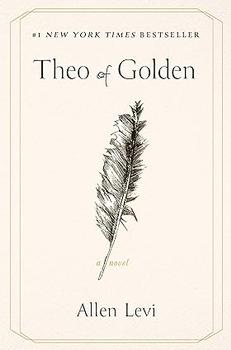
Theo of Golden by Allen Levi
One spring morning, a stranger arrives in the small southern city of Golden. No one knows where he has come from…or why…






Your guide toexceptional books
BookBrowse seeks out and recommends the best in contemporary fiction and nonfiction—books that not only engage and entertain but also deepen our understanding of ourselves and the world around us.

