
-
Your next favorite book
is waiting.
Summary | Excerpt | Reviews | Beyond the Book | Readalikes | Genres & Themes | Author Bio
 Book Reviewed by:
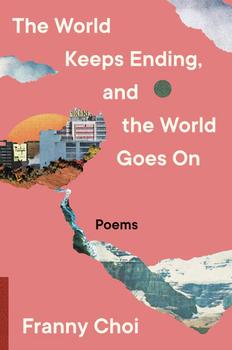
THE WORLD KEEPS ENDING, AND THE WORLD GOES ON
Before the apocalypse, there was the apocalypse of boats:
boats of prisoners, boats cracking under sky-iron, boats making corpses
bloom like algae on the shore. Before the apocalypse, there was the apocalypse
of the bombed mosque. There was the apocalypse of the taxi driver warped
by flame. There was the apocalypse of the leaving, and the having left—
of my mother unsticking herself from her mother's grave
as the plane barreled down the runway. Before
the apocalypse, there was the apocalypse of planes.
There was the apocalypse of pipelines legislating their way through sacred water,
and the apocalypse of the dogs. Before which was the apocalypse of the dogs
and the hoses. Before which, the apocalypse of dogs and slave catchers
whose faces glowed by lantern light. Before the apocalypse, the apocalypse of bees. The apocalypse of buses. Border fence
apocalypse. Coat hanger apocalypse. Apocalypse in the textbook's selective silences. There was the apocalypse of the settlement
and the soda machine; the apocalypse of the settlement and
the jars of scalps; there was the bedlam of the cannery; the radioactive rain;
the chairless martyr demanding a name. I was born from an apocalypse
and have come to tell you what I know—which is that the apocalypse began
when Columbus praised God and lowered his anchor. It began when a continent
was drawn into cutlets. It began when Kublai Khan told Marco, Begin
at the beginning. By the time the apocalypse began, the world had already ended.
It ended every day for a century or two. It ended, and another ending
world spun in its place. It ended, and we woke up and ordered Greek coffees, drew the hot liquid through our teeth, as everywhere, the apocalypse rumbled, the apocalypse remembered, our dear, beloved apocalypse—it drifted
slowly from the trees all around us, so loud we finally stopped hearing it.
PUBLISHER'S NOTE
Abbreviated from the e-book edition
Rendering poetry in a digital format presents several challenges just as its many forms continue to challenge the conventions of print, however, a poem takes place within the static confines of a page, hewing as close as possible to the poet's intent, whether it's Walt Whitman's lines stretching to the margin like Route 66, or Robert Creeley's lines descending the page like a string tie. The printed poem has a physical shape, one defined by the negative space that surrounds it—a space that is crafted by the broken lines of the poem. The line, as vital a formal and critical component of the form of a poem as metaphor, creates rhythm, timing, proportion, drama, meaning, tension and so on.
Reading poetry on a small device will not always deliver line breaks as the poet intended—with the pressure of the horizontal line brings to a poem, rather than the completion of the grammatical unit. The line, intended as a formal and critical component of the form of the poem, has been corrupted by breaking it where it was not meant to break, interrupting a number of important elements of the poetic structure—rhythm, timing, proportion, drama, meaning, and so on. It's a little like a tightrope walker running out of rope before reaching the other side.
There are limits to what can be done with long lines on digital screens. At some point, a line must break. If it has to break more than once or twice, it is no longer a poetic line, with the integrity that lineation demands. On smaller devices with enlarged type, a line break may not appear where its author intended, interrupting the unit of the line and its importance in the poem's structure....

From The World Keeps Ending, and the World Goes On by Franny Choi. Copyright © 2022 by Franny Choi. Excerpted by permission of Ecco, an imprint of HarperCollins Publishers.
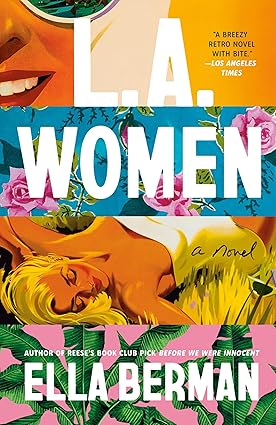
L.A. Women by Ella Berman
Two ambitious writers in 1960s LA face betrayal when one writes a novel based on the other's life.






Your guide toexceptional books
BookBrowse seeks out and recommends the best in contemporary fiction and nonfiction—books that not only engage and entertain but also deepen our understanding of ourselves and the world around us.

