
-
Your next favorite book
is waiting.
Summary | Excerpt | Reading Guide | Reviews | Beyond the Book | Readalikes | Genres & Themes | Author Bio

A Novel
by Alexis Wright Book Reviewed by:
It takes a particular kind of knowledge to go with the river, whatever its mood. It is about there being no difference between you and the movement of water as it seasonally shifts its tracks according to its own mood. A river that spurns human endeavour in one dramatic gesture, jilting a lover who has never really been known, as it did to the frontier town built on its banks in the hectic heyday of colonial vigour. A town intended to serve as a port for the shipping trade for the hinterland of Northern Australia.
In one moment, during a Wet season early in the last century, the town lost its harbour waters when the river simply decided to change course, to bypass it by several kilometres. Just like that. Now the waterless port survives with more or less nothing to do. Its citizens continue to engage in a dialogue with themselves passed down the generations on why the town should continue to exist. They stayed on to safeguard the northern coastline from invasion by the Yellow Peril. A dreadful vision, a long yellow streak marching behind an arrowhead pointing straight for the little town of Desperance. Eventually the heat subsided. When the Yellow Peril did not invade, everyone had a good look around and found a more contemporary reason for existence. It meant the town still had to be vigilant. Duty did not fall on one or two; duty was everybody's business. To keep a good eye out for whenever the moment presented itself, to give voice to a testimonial far beyond personal experience -- to comment on the state of their blacks. To do so was regarded as an economic contribution to State rights, then, as an afterthought, to maintaining the decent society of the nation as a whole.
Normal Phantom was an old tribal man, who lived all of his life in the dense Pricklebush scrub on the edge of town. He lived amidst thickets of closely growing slender plants with barely anything for leaves, which never gave an ant an inch of shelter under a thousand thorny branches. This foreign infestation on the edge of Desperance grew out of an era long before anyone in the Phantom family could remember. They had lived in a human dumping ground next to the town tip since the day Normal Phantom was born. All choked up, living piled up together in trash humpies made of tin, cloth, and plastic too, salvaged from the rubbish dump. The descendants of the pioneer families, who claimed ownership of the town, said the Aboriginal was really not part of the town at all. Sure, they worked the dunny cart in the old days, carted the rubbish, and swept the street. Furthermore, they said, the Aboriginal was dumped here by the pastoralists, because they refused to pay the blackfella equal wages, even when it came in. Right on the edge of somebody else's town, didn't they? Dumped the lot of them without any sign of lock, stock, or barrel.
No, the Pricklebush was from the time before the motor car, when goods and chattels came up by camel train until Abdul and Abdullah, the old Afghan brothers, disappeared along the track called the "lifeline," connecting north to south. After much time had passed the jokes came about Afghans being shifty dogs, dodgy dogs, murdering dogs, and unreliable. When the cupboards turned bare, the town talk finally turned to the realisation that very likely the camel men were never coming back -- then everyone in town assumed they had died. A few of the Christian-minded, trying to capitalise on the gross lack of decency in town, sniffed, Well! That ought to teach you now, won't it? But no one else thought so, because by then the grog and the tucker were being freighted up by mail truck, which everyone thought was a more convenient method of road transport by any stretch of the imagination.
One cloud-covered night, the camels finally turned up in Desperance, jingling and a-jangling, their foreign bells swaying around their necks, vespers on such a still night. The residents woke up in childlike fright, sitting straight up in their beds, eyes wide open like zombies, seeing dark figures moving in their pitch-black bedroom, same time reckoning it was ghosts with an Afghan smell, true God, just came straight in, levitating, taking over, helping themselves, walking around people's homes with no mind youse, not one shred of good manners whatsoever. Couldn't even knock on the door first before coming into someone's house. That was the trouble with new Australians, the town claimed: Even dead ones had no manners. Unnaturalised. Really un-Australian. You shoulda sent out a search party. What a relief it was for dawn to come and everyone could see for themselves it was just poor old Abdul's and Abdullah's camels.
Copyright 2006 by Alexis Wright
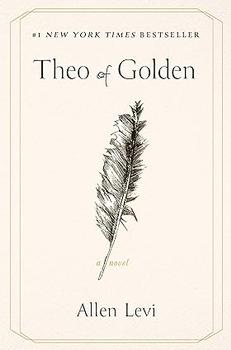
Theo of Golden by Allen Levi
One spring morning, a stranger arrives in the small southern city of Golden. No one knows where he has come from…or why…






Your guide toexceptional books
BookBrowse seeks out and recommends the best in contemporary fiction and nonfiction—books that not only engage and entertain but also deepen our understanding of ourselves and the world around us.


