
-
Your next favorite book
is waiting.
Summary | Excerpt | Reading Guide | Reviews | Beyond the Book | Readalikes | Genres & Themes | Author Bio
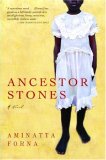
A Novel
by Aminatta Forna Book Reviewed by:
The letter that brought me back to Africa came from my cousin Alpha. I didn’t
recognise his hand on the envelope: he had never written to me before. Alpha had
once been a teacher, but in those changed days he made his living composing
letters for other people. People who took their place opposite him one by one,
clutching a scrap of paper bearing the address of an overseas relative or else
the business card of some European traveller, unwittingly exchanged in a moment
of good humour for a lifetime of another person’s hopes. Alpha conveyed
greetings, prayed for the recipient’s health, invoked the memory of the dead,
and wrote hereby merely to inform them of the sender’s situation, the
dislocations and hardships of the war. Sought their help in solving their many
difficulties. By God’s grace. Thanking them in advance.
And then he swivelled the letter around to face his customer, for their
perusal and signature. They nodded, feigning comprehension. And signed with a
knitted brow and a wobbling hand the letters of their name learned by heart. Or
else they pushed a thumb on to the opened ink pad, and left a purple thumbprint
like a flower on the bottom of the page.
My own letter was written on a single side of paper taken from a school
exercise book. No crossing out, no misspellings—suggesting it had been drafted
beforehand and carefully copied out. Alpha’s signature was at the bottom of the
page. Alpha Kholifa, plainly executed without flourishes, a simply statement. He
used our grandfather’s name, the same as mine, so there could be no mistake. The
other thing I noticed, only after I had read the letter through, was the absence
of a post-office box address. Knowingly, he had denied me the opportunity to
write back with ready excuses, to enclose a cheque bloated with guilty zeros.
The letter contained not a single request or plea. The sum of it was held
within two short sentences.
‘The coffee plantation at Rofathane is yours. It is there.’
O yi di. In our language: it is there. Alpha had written to me in English,
but the words, the sensibility, was African. In our country a person might
enquire of another after the health of a third. And the respondent, wishing to
convey that the individual was less than well, requiring the help of God or man,
might reply: ‘O yi di.’ He is there. She is there. The coffee plantation at
Rofathane is yours. It is there.
He did not ask me to come back. He willed it.
The letter finished in the conventional manner. Alpha enquired after my
husband, whom he had met once, the last time I went back. We had taken the
children, to be seen and admired by family and friends, though they—the
children, that is—were too small then to have any memory of the visit. I
remember my aunts called my husband the Portuguese One, the potho, which had
become my people’s word for any European. After those sailors who landed and
kept coming back. Named the country. Set up trading posts. Bred bronze-coloured
Pedros and Marias. And disappeared leaving scattered words as remnants of their
stay. Oporto. Porto. Potho. The tip of the tongue pushed against the back of the
teeth, a soft sound. Over the years the word had moulded itself to the shape of
an African mouth. It did not matter to them—my aunts—that my husband was, in
fact, a Scot.
The morning after the letter arrived I woke to a feeling, which I mistook at
first for the chill that follows the end of a warm dream. A sense of
apprehension, of an undertaking ahead. Every year for years I had told my Aunt
Serah I was coming home. But every year Aunt Serah told me to wait. ‘Come at
Christmas. When things have settled down.’ I knew I had left it long enough. A
spectator, I had watched on my television screen images of my country bloodied
and bruised. The burned out façade of the department store where we bought mango
ice cream on Saturdays. Corpses rolling in the surf of the beach where we
picnicked on Sundays, where I rolled for hours in those very waves. A father
with his two sons dodging sniper bullets on a street I travelled every Monday
morning on my way to school. Peace had been declared and yet the war was far
from over. It was like witnessing, from a distance, somebody you know being set
upon by thieves in the street. And afterwards, seeing them stagger, still punch
drunk, hands outstretched as they fumble for their scattered possessions. Or
else, shocked into stillness, gazing around themselves as if in wonder,
searching for comfort in the faces of strangers.
Excerpted from Ancestor Stones, (c) 2006 by Aminatta Forna. Reproduced with permission of the publisher, Grove Atlantic. All rights reserved.
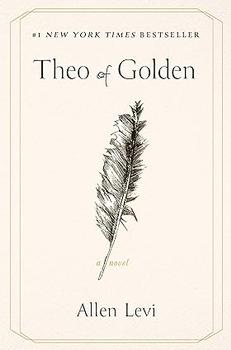
Theo of Golden by Allen Levi
One spring morning, a stranger arrives in the small southern city of Golden. No one knows where he has come from…or why…






Your guide toexceptional books
BookBrowse seeks out and recommends the best in contemporary fiction and nonfiction—books that not only engage and entertain but also deepen our understanding of ourselves and the world around us.


