
-
Your next favorite book
is waiting.
Summary | Excerpt | Reviews | Beyond the Book | Readalikes | Genres & Themes | Author Bio
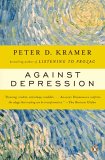
 Book Reviewed by:
What It Is to Us
One
The Final Memoir
SHORTLY
AFTER THE PUBLICATION OF Listening to Prozac,
twelve years ago, I became immersed in depression. Not my own.
I was in my forties and contented enough in the slog through
midlife. But mood disorder surrounded me, in my contacts with
patients
and readers. Messages from parents with depressed children and
husbands with depressed wives filled my telephone answering
machine;
letters dense with personal history crammed the mail slot. In
their volume,
in their particularity, these contacts were sobering,
overwhelming,
disorienting. Less intimate overtures came my way. Reporters and talk show
wranglers approached me about the significance of drug company
initiatives, antidepressant-related lawsuits, and mental health
legislation. Colleagues invited me to join colloquia on
particular therapies.
Advocates of partisan views of mood disorder e-mailed me with
propaganda, asking me to sign on.
Immersion has a passive sound to it. I experienced my
relationship to
depression in that way, being swamped by a tide. I would have
denied
that I had brought this condition on myself. Yes, in my book I
had discussed depression—but only en route to raising issues that
stood at
some distance from the treatment of mental illness.
Listening to Prozac
grew out of a claim that
certain of my patients
had made:
On this medication, I am
myself at last. These
men and
women had taken an antidepressant and experienced a dramatic
response.
Their episode of depression ended—and they reported another
change as well. Temperamentally cautious and pessimistic, even
before
their first encounter with depression, these patients moved, on
medication,
toward assertiveness and optimism. This self-assured state, so
they
believed, represented their identity, themselves as they were
meant
to be.
I had used this report—myself
at last—as a
jumping-off point for
speculation. What if future, similar medications had the
potential to
modify temperament in people who had never experienced mood
disorder?
There were reasons to believe that even current antidepressants
might sometimes alter personality traits, making the hesitant
decisive.
Given access to such drugs, how should doctors prescribe? The
inquiry
moved from medical ethics to social criticism: What does our
culture
demand of us, in the way of assertiveness? Assessing my
patients' attitude
toward antidepressants required, I thought, attention to grand,
perennial questions. How do we identify true self? Does the path
matter,
in the journey to contentment?
It was the medications' extra effects—on personality, rather
than
frank disease—that provoked this line of thought. After all, for
centuries,
doctors have treated depressed patients, using medication and
psychological strategies. When those efforts succeed, restoring
health,
we are grateful. The ethical dilemmas that interested me lay
elsewhere.
Strange though it may sound, I never imagined that I had written
a
book about depression.
But authors cannot predict or control the fate of their books,
any
more than parents can determine the direction of their
children's lives.
Listening to Prozac
emerged into an era of marked
interest in depression.
Everything about it had the power to fascinate: diagnosis,
treatment,
health care politics, gender issues, intimate experience. When
Listening to Prozac
found readers, it became
the
best-selling book about
depression. In stores, it was shelved beside how-to manuals on
recovering
from mood disorder or living with those afflicted by it. I had
never
intended for my book to be
useful.
But readers wrote to say that
Listening
to Prozac
had guided them to one or
another resolution of their
depression—through taking medication or steering clear.
Excerpted from Against Depressionby Peter Kramer. Copyright 2005 by Peter Kramer. Reproduced by permission of Penguin Publishing. All rights reserved. No part of this excerpt may be reproduced or reprinted without permission in writing from the publisher.
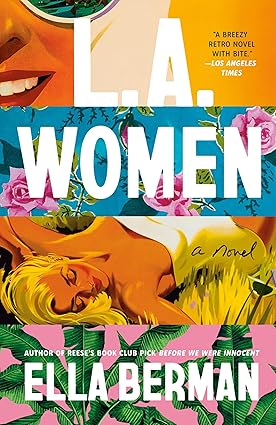
L.A. Women by Ella Berman
Two ambitious writers in 1960s LA face betrayal when one writes a novel based on the other's life.






Your guide toexceptional books
BookBrowse seeks out and recommends the best in contemporary fiction and nonfiction—books that not only engage and entertain but also deepen our understanding of ourselves and the world around us.


