
-
Your next favorite book
is waiting.
Summary | Excerpt | Reading Guide | Reviews | Beyond the Book | Readalikes | Genres & Themes | Author Bio

 Book Reviewed by:
Chapter 1
At twenty-four the ambassador's daughter slept badly through the warm,
unsurprising nights. She woke up frequently and even when sleep did come her
body was rarely at rest, thrashing and flailing as if trying to break free of
dreadful invisible manacles. At times she cried out in a language she did not
speak. Men had told her this, nervously. Not many men had ever been permitted to
be present while she slept. The evidence was therefore limited, lacking
consensus; however, a pattern emerged. According to one report she sounded
guttural, glottal-stoppy, as if she were speaking Arabic. Night-Arabian, she
thought, the dreamtongue of Scheherazade. Another version described her words as
science-fictional, like Klingon, like a throat being cleared in a galaxy far,
far away. Like Sigourney Weaver channeling a demon in Ghostbusters. One night in
a spirit of research the ambassador's daughter left a tape recorder running by
her bedside but when she heard the voice on the tape its death's-head
ugliness, which was somehow both familiar and alien, scared her badly and she
pushed the erase button, which erased nothing important. The truth was still the
truth.
These agitated periods of sleep-speech were mercifully brief, and when they
ended she would subside for a time, sweating and panting, into a state of
dreamless exhaustion. Then abruptly she would awake again, convinced, in her
disoriented state, that there was an intruder in her bedroom. There was no
intruder. The intruder was an absence, a negative space in the darkness. She had
no mother. Her mother had died giving her birth: the ambassador's wife had
told her this much, and the ambassador, her father, had confirmed it. Her mother
had been Kashmiri, and was lost to her, like paradise, like Kashmir, in a time
before memory. (That the terms Kashmir and paradise were synonymous was one of
her axioms, which everyone who knew her had to accept.) She trembled before her
mother's absence, a void sentinel shape in the dark, and waited for the second
calamity, waited without knowing she was waiting. After her father died—her
brilliant, cosmopolitan father, Franco-American, "like Liberty," he said,
her beloved, resented, wayward, promiscuous, often absent, irresistible
father—she began to sleep soundly, as if she had been shriven. Forgiven her
sins, or, perhaps, his. The burden of sin had been passed on. She did not
believe in sin.
So until her father's death she was not an easy woman to sleep with, though
she was a woman with whom men wanted to sleep. The pressure of men's desires
was tiresome to her. The pressure of her own desires was for the most part
unrelieved. The few lovers she took were variously unsatisfactory and so (as if
to declare the subject closed) she soon enough settled on one pretty average
fellow, and even gave serious consideration to his proposal of marriage. Then
the ambassador was slaughtered on her doorstep like a halal chicken dinner,
bleeding to death from a deep neck wound caused by a single slash of the
assassin's blade. In broad daylight! How the weapon must have glistened in the
golden morning sun; which was the city's quotidian blessing, or its curse. The
daughter of the murdered man was a woman who hated good weather, but most of the
year the city offered little else. Accordingly, she had to put up with long
monotonous months of shadowless sunshine and dry, skin-cracking heat. On those
rare mornings when she awoke to cloud cover and a hint of moisture in the air
she stretched sleepily in bed, arching her back, and was briefly, even
hopefully, glad; but the clouds invariably burned off by noon and then there it
was again, the dishonest nursery blue of the sky that made the world look
childlike and pure, the loud impolite orb blaring at her like a man laughing too
loudly in a restaurant.
Excerpted from Shalimar the Clown by Salman Rushdie Copyright © 2005 by Salman Rushdie. Excerpted by permission of Random House, a division of Random House, Inc. All rights reserved. No part of this excerpt may be reproduced or reprinted without permission in writing from the publisher.
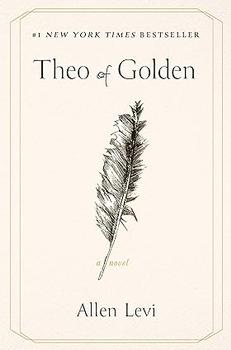
Theo of Golden by Allen Levi
One spring morning, a stranger arrives in the small southern city of Golden. No one knows where he has come from…or why…






Your guide toexceptional books
BookBrowse seeks out and recommends the best in contemporary fiction and nonfiction—books that not only engage and entertain but also deepen our understanding of ourselves and the world around us.


