
-
Your next favorite book
is waiting.
Summary | Excerpt | Reviews | Beyond the Book | Readalikes | Genres & Themes | Author Bio
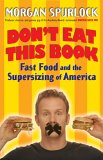
Fast Food and the Supersizing of America
by Morgan Spurlock Book Reviewed by:
One
Do You Want Lies with That?
Don't do it. Please. I know this book looks delicious, with
its lightweight pages sliced thin as prosciutto and swiss, stacked in a way that
would make Dagwood salivate. The scent of freshly baked words wafting up with
every turn of the page. Mmmm, page. But don't do it. Not yet. Don't eat
this book.
We turn just about everything you can imagine into food. You
can eat coins, toys, cigars, cigarettes, rings, necklaces, lips, cars, babies,
teeth, cameras, film, even underwear (which come in a variety of scents, sizes,
styles and flavors). Why not a book?
In fact, we put so many things in our mouths, we constantly
have to be reminded what not to eat. Look at that little package of
silicon gel that's inside your new pair of sneakers. It says do not eat for a
reason. Somewhere, sometime, some genius bought a pair of sneakers and said,
"Ooooh, look. They give you free mints with the shoes!"—soon followed, no doubt,
by the lawsuit charging the manufacturer with negligence, something along the
lines of, "Well, it didn't say not to eat those things."
And thus was born the "warning label." To avoid getting sued,
corporate America now labels everything. Thank the genius who first decided to
take a bath and blow-dry her hair at the same time. The Rhodes scholar who first
reached down into a running garbage disposal. That one-armed guy down the street
who felt around under his power mower while it was running.
Yes, thanks to them, blow-dryers now come with the label do
not submerge in water while plugged in. Power mowers warn keep hands and feet
away from moving blades. And curling irons bear tags that read for external use
only.
And that's why I warn you—please!—do not eat this book. This
book is for external use only. Except maybe as food for thought.
We live in a ridiculously litigious society. Opportunists
know that a wet floor or a hot cup of coffee can put them on easy street. Like
most of you, I find many of these lawsuits pointless and frivolous. No wonder
the big corporations and the politicians they own have been pushing so hard for
tort reform.
Fifty years ago it was a different story. Fifty years ago,
adult human beings were presumed to have enough sense not to stick their fingers
in whirring blades of steel. And if they did, that was their own fault.
Take smoking. For most of us, the idea that "smoking kills"
is a given. My mom and dad know smoking is bad, but they don't stop. My
grandfather smoked all the way up until his death at a grand old age, and my
folks are just following in his footsteps—despite the terrifying warning on
every pack.
They're not alone, of course. It's estimated that over a
billion people in the world are smokers. Worldwide, roughly 5 million people
died from smoking in 2000. Smoking kills 440,000 Americans every year. All
despite that surgeon general's warning on every single pack.
What is going on here? It's too easy to write off all
billion-plus smokers as idiots with a death wish. My parents aren't idiots. I
don't think they want to die. (When I was younger, there were times when I
wanted to kill them, but that's different.) We all know that tobacco is
extremely addictive. And that the tobacco companies used to add chemicals to
make cigarettes even more addictive, until they got nailed for it. And that for
several generations—again, until they got busted for it—the big tobacco
companies aimed their marketing and advertising at kids and young people. Big
Tobacco spent billions of dollars to get people hooked as early as they could,
and to keep them as "brand-loyal" slaves for the rest of their unnaturally
shortened lives. Cigarettes were cool, cigarettes were hip, cigarettes were
sexy. Smoking made you look like a cowboy or a movie starlet.
From Don't Eat This Book by Morgan Spurlock. Copyright Morgan Spurlock 2005. All rights reserved. No part of this book maybe reproduced without written permission from the publisher, Putnam Publishing.
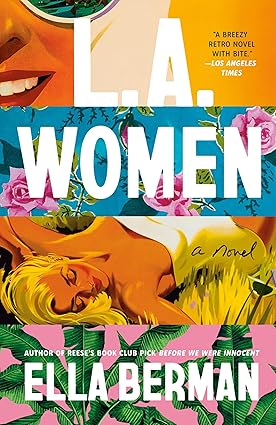
L.A. Women by Ella Berman
Two ambitious writers in 1960s LA face betrayal when one writes a novel based on the other's life.






Your guide toexceptional books
BookBrowse seeks out and recommends the best in contemporary fiction and nonfiction—books that not only engage and entertain but also deepen our understanding of ourselves and the world around us.


