
-
Your next favorite book
is waiting.
Summary | Excerpt | Reviews | Readalikes | Genres & Themes | Author Bio
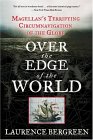
Magellan's Terrifying Circumnavigation of the Globe
by Laurence Bergreen
Although it might be expected that pilots worked closely with cosmologists, that was far from the case. Pilots were hired hands who occupied a lower social stratum. Many of them were illiterate and relied on simple charts that delineated familiar coastlines and harbors, as well as on their own instincts regarding wind and water. The cosmologists looked down on pilots as "coarse men" who possessed "little understanding." The pilots, who risked their lives at sea, were inclined to regard cosmologists as impractical dreamers. Explorers setting out on ocean voyages to distant lands needed the skills of both; they took their inspiration from cosmologists, but they relied on pilots for execution.
Although the Treaty of Tordesillas was destined to collapse under the weight of its faulty assumptions, it challenged the old cosmological ways. On the basis of this fiction, based on a profound misunderstanding of the world, Spain and Portugal competed to establish their global empires. The Treaty of Tordesillas was not even a line drawn in the sand; it was written in water.
Emboldened by the Treaty of Tordesillas, Ferdinand and Isabella looked for ways to exploit the portion of the globe granted to Spain. Success proved elusive: Christopher Columbus's voyages to the New World all failed to find a water route to the Indies. A generation after Columbus, King Charles I resumed the quest to establish a global Spanish empire. He, or his advisers, recognized that the Indies could provide priceless merchandise, and the most precious commodity of all was spices.
Spices have played an essential economic role in civilizations since antiquity. Like oil today, the European quest for spices drove the world's economy and influenced global politics, and like oil today, spices became inextricably intertwined with exploration, conquest, imperialism. But spices evoked a glamour and aura all their own. The mere mention of their names--white and black pepper, myrrh, frankincense, nutmeg, cinnamon, cassia, mace, and cloves, to name a few--evoked the wonders of the Orient and the mysterious East.
Arab merchants traded in spices across land routes reaching across Asia and became adept at boosting prices by concealing the origins of the cinnamon, pepper, cloves, and nutmeg with which they enriched themselves. The merchants maintained a virtual monopoly by insisting these precious items came from Africa, when in fact they grew in various places in India, and China, and especially throughout Southeast Asia. Europeans came to believe that spices came from Africa, when in fact they only changed hands there. To protect their monopoly, Arab spice merchants invented all sorts of monsters and myths to conceal the ordinary process of harvesting spices, making it sound impossibly dangerous to acquire them.
The spice trade was central to the Arab way of life. Muhammad, the prophet of Islam, belonged to a family of prominent merchants, and for many years traded in myrrh and frankincense, among other spices, in Mecca. Arabs developed sophisticated methods of extracting essential oils from aromatic spices used for medical and other therapeutic purposes. They formulated elixirs and syrups derived from spices, including julab, from which the word "julep" derives. During the Middle Ages, Arab knowledge of spices spread across western Europe, where apothecaries developed a brisk trade in concoctions made from cloves, pepper, nutmeg, and mace. In a Europe starved for gold (much of it controlled by the Arabs), spices became more valuable than ever, a major component of European economies.
Despite the overwhelming importance of spices to their economy, Europeans remained dependent on Arab merchants for their supply. They knew the European climate could not sustain these exotic spices. In the sixteenth century, the Iberian peninsula was far too cold--colder than it is now, in the grip of the Little Ice







Read the best books first...
Click Here to find out who said this, as well as discovering other famous literary quotes!

Can you name the title?
Test your book knowledge with our daily trivia challenge!
Your guide toexceptional books
BookBrowse seeks out and recommends the best in contemporary fiction and nonfiction—books that not only engage and entertain but also deepen our understanding of ourselves and the world around us.


