-
Your next favorite book
is waiting.
Summary | Excerpt | Reading Guide | Discuss | Reviews | Beyond the book | Read-Alikes | Genres & Themes | Author Bio

 Book Reviewed by:
In the astonishing new novel by the author of the bestsellers The Robber Bride, Cat's Eye, and The Handmaid's Tale, Margaret Atwood takes us back in time and into the life and mind of one of the most enigmatic and notorious women of the nineteenth century.
Grace Marks has been convicted for her involvement in the vicious murders of her employer, the wealthy Thomas Kinnear, and of Nancy Montgomery, his housekeeper and mistress. Some believe Grace is innocent; others think her evil or insane. Now serving a life sentence after a stint in Toronto's lunatic asylum, Grace herself claims to have no memory of the murders.
Dr. Simon Jordan, an up-and-coming expert in the burgeoning field of mental illness, is engaged by a group of reformers and spiritualists who seek a pardon for Grace. He listens to her story, from her family's difficult passage out of Ireland into Canada, to her time as a maid in Thomas Kinnear's household. As he brings Grace closer and closer to the day she cannot remember, he hears of the turbulent relationship between Kinnear and Nancy Montgomery, and of the alarming behavior of Grace's fellow servant, James McDermott. Jordan is drawn to Grace, but he is also baffled by her. What will he find in attempting to unlock her memories? Is Grace a female fiend, a bloodthirsty femme fatale? Or is she a victim of circumstances?
Alias Grace is a beautifully crafted work of the imagination that reclaims a profoundly mysterious and disturbing story from the past century. With compassion, an unsentimental lyricism, and her customary narrative virtuosity, Margaret Atwood mines the often convoluted relationships between men and women, and between the affluent and those without position. The result is her most captivating, disturbing, and ultimately satisfying work since The Handmaid's Tale—in short, vintage Atwood.
1859.
I am sitting on the purple velvet settee in the Governor's parlour, the Governor's wife's parlour; it has always been the Governor's wife's parlour although it is not always the same wife, as they change them around according to the politics. I have my hands folded in my lap the proper way although I have no gloves. The gloves I would wish to have would be smooth and white, and would be without a wrinkle.
I am often in this parlour, clearing away the tea things and dusting the small tables and the long mirror with the frame of grapes and leaves around its and the pianoforte; and the tall clock that came from Europe, with the orange-gold sun and the silver moon, that go in and out according to the time of day and the week of the month. I like the clock best of anything in the parlour, although it measures time and I have too much of that on my hands already.
But I have never sat down on the settee before, as it is for the guests. Mrs. Alderman Parkinson said a lady must never sit in ...
Did you read any books in 2025 that are widely considered classics? If so, which ones and why?
OK, so after I posted this question of the week, I got to wondering what would be considered a classic. What do you think? The only three I've read that I'd say most people would call classics are: The Bluest Eye by Toni Morrison The Adventures of Huckleberry Finn by Mark Twain Lolita by Vladimir...
-kim.kovacs
What are you reading this week? (8/28/2025)
@Brenda_D_Andre I literally just finished Alias Grace half an hour ago. I so love Margaret Atwood's books. My favorite was the Oryx & Crake series.
-kim.kovacs
What are you reading this week? (7/17/2025)
I am reading Alias Grace by Margaret Atwood. It was mentioned in the last newsletter. So far, so good.
-Susan_A
The servant class is the cartilage of Alias Grace. Atwood imagines the servants as mostly supportive and clannish, a united front against the accumulation of indignities from their employers. I was riveted by the character of Grace Marks partly because she was accused when she was sixteen and I wondered what went wrong in her life. What happened to her? I liked the narrowness of the story, and its blatant subjectivity. That said, Atwood sticks to the basics and never tips her hand. She is an experienced storyteller and rarely overwhelms with too much information. What I appreciated the most was her respect for the reader's intelligence, the assumption that we can think for ourselves...continued
Full Review
 (1188 words)
(Reviewed by Valerie Morales).
 The novel Alias Grace, handsomely written by Margaret Atwood, is based on the true life story of housemaid Grace Marks, convicted of taking part in the murder of Thomas Kinnear, who employed Marks, and his housekeeper/lover Nancy Montgomery. The murders took place north of Richmond Hill, Upper Canada (now Ontario), on the farm Kinnear owned. Kinnear was shot in the left side of his chest and Montgomery was struck in the head with an axe and then strangled before being dismembered and stuffed under a tub.
Grace Marks fled for the United States under an alias and was captured in Lewiston, New York, along with James McDermott, who was also a servant on the Kinnear property. Both were immigrants who were new hires to the Kinnear farm ...
If you liked Alias Grace, try these:

by Emily Brontë
Published 2025
One of English literature's classic masterpieces—a gripping novel of love, propriety, and tragedy. Nominated as one of America's best-loved novels by PBS's The Great American Read.
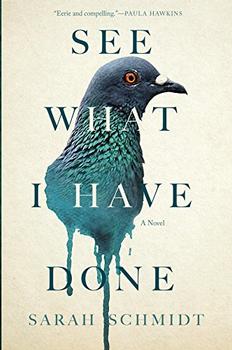
by Sarah Schmidt
Published 2018
In this riveting debut novel, See What I Have Done, Sarah Schmidt recasts one of the most fascinating murder cases of all time into an intimate story of a volatile household and a family devoid of love.
by Sarah Waters
Published 2015
A love story, a tension-filled crime story, and a beautifully atmospheric portrait of a fascinating time and place.

L.A. Women by Ella Berman
Two ambitious writers in 1960s LA face betrayal when one writes a novel based on the other's life.