-
Your next favorite book
is waiting.

Truman and the Secret Struggle for Control of the Atomic Age
by Alex Wellerstein
A nuclear historian gives a new, surprising account of one of the most controversial actions in history—how the United States deployed the atomic bomb on Hiroshima and Nagasaki during World War II—and the fallout that continues to haunt us.
In the eight decades since the United States deployed the most destructive weapon ever used, conventional wisdom has held that American leaders were faced with a difficult choice: Invade Japan, which would have cost millions of Japanese and Allied lives in bloody combat, or use the fearsome atom bomb in the hopes of convincing the Japanese emperor to surrender. President Truman—in what many have come to regard as an immoral decision—ordered the military to drop the bomb.
Now, historian Alex Wellerstein offers a revisionist narrative of what happened in the spring of 1945, uncovering new research that points to a very different chain of events. Wellerstein reveals a much more complex situation in which American leaders, limited by time, knowledge, and authority, and under great secrecy, each jockeyed to influence if and how the bomb would be used. Refuting previous accounts, Wellerstein explains how there was no official decision to use the bomb, nor did President Truman likely know that Hiroshima or Nagasaki were heavily populated cities. Once the bombs were dropped, Truman began a years-long struggle for control of the awesome power of atomic weapons, the ramifications of which are still felt today.
The Atomic President documents the little-known truth of the circumstances leading to this momentous event, painting a more complete picture of the end of World War II and of Truman himself. It is essential reading for all who want to truly understand not only why the bomb was dropped on Japan, but also why it has not been used since.
"Many people think that the U.S. decision to use atomic bombs against Japan in 1945 was made by a pro-nuclear President Truman, hoping to persuade the Japanese to surrender to the Allies and end six years of war. But Wellerstein argues that this was not the case... This must-read book takes readers on a journey through the use of atomic weapons as it relates to the geopolitical landscape and how the Hiroshima and Nagasaki bombing shaped current views on atomic weapons and deterrence." —Library Journal (starred review)
"A nuanced portrait of a president who shaped the modern nuclear age." —Kirkus Reviews
This information about The Most Awful Responsibility was first featured
in "The BookBrowse Review" - BookBrowse's membership magazine, and in our weekly "Publishing This Week" newsletter. Publication information is for the USA, and (unless stated otherwise) represents the first print edition. The reviews are necessarily limited to those that were available to us ahead of publication. If you are the publisher or author and feel that they do not properly reflect the range of media opinion now available, send us a message with the mainstream reviews that you would like to see added.
Any "Author Information" displayed below reflects the author's biography at the time this particular book was published.
Alex Wellerstein is an Associate Professor in the Science and Technology Studies program at the Stevens Institute of Technology. He is the author of Restricted Data: The History of Nuclear Secrecy in the United States, and he has written for The New Yorker, Atlantic, Harper's Magazine, and many other venues. He is perhaps best known as the creator of the NUKEMAP, the world's most popular online nuclear weapons effects simulator. He is also the author of the Doomsday Machines blog, and he has taught at Harvard, MIT, and Georgetown University.

If you liked The Most Awful Responsibility, try these:
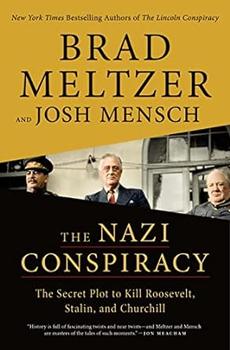
by Brad Meltzer
Published 2024
From the New York Times bestselling authors of The First Conspiracy and The Lincoln Conspiracy comes the little-known true story of a Nazi plot to kill FDR, Joseph Stalin, and Winston Churchill at the height of World War II.
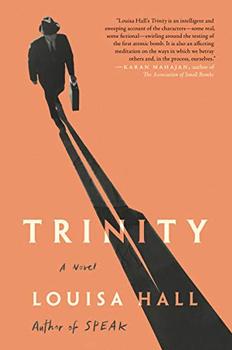
by Louisa Hall
Published 2019
From the acclaimed author of Speak comes a kaleidoscopic novel about Robert Oppenheimer - father of the atomic bomb - as told by seven fictional characters.
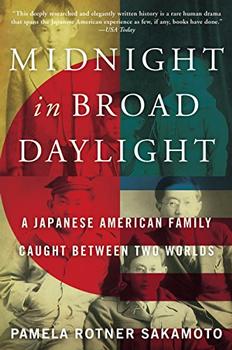
by Pamela Rotner Sakamoto
Published 2017
Alternating between American and Japanese perspectives, Midnight in Broad Daylight provides a fresh look at the dropping of the first atomic bomb.
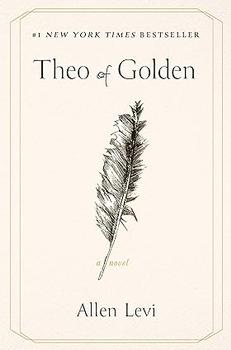
Theo of Golden by Allen Levi
One spring morning, a stranger arrives in the small southern city of Golden. No one knows where he has come from…or why…

Your guide toexceptional books
BookBrowse seeks out and recommends the best in contemporary fiction and nonfiction—books that not only engage and entertain but also deepen our understanding of ourselves and the world around us.