
-
Your next favorite book
is waiting.

A letter from the author about her novel, Odessa
Storytelling is an intrinsic part of Judaism. We mark each holiday by recounting our history, we read from the book of the Torah in Synagogue– we tell and retell the stories of our ancestors. Memory is precious, and the telling of these stories is how we keep our people from disappearing. In a way, writing Odessa was a very Jewish act. But the story my grandmother told me about our family was a difficult one, and my own research into Jewish women's experiences of the pogroms was equally as upsetting. I wanted to write a story that did their suffering justice, but didn't give in to despair.
When I was a child, my grandmother showed me a photo of my ancestor Golda, who escaped pogroms in Eastern Europe and fled to America. She told me a story about a brave young woman who journeyed to unknown lands alone. Golda, in her travel clothes and with a single piece of luggage, remained a glowing, otherworldly figure in my life, but I only had pieces of her. By the time I grew up and decided to write Golda's story, a story I finally understood had hidden dark corners and centuries of buried pain, my grandmother had Parkinson's, and I could only collect the fragments of her memory that remained. Odessa grew from those fragments and became its own creature, sculpted by my own research and imagination.
Judaism, at its heart, is about gratitude. Our prayers thank God for every small wonder, every single day. My grandfather's favorite prayer was called the Shechecheyanu. In the first pages of Odessa, Yetta's mother Frieda recites it. In essence, it means this: I am grateful to be alive. It's my father's favorite prayer now, and my mother's, my sisters', and mine. We have inherited that prayer as a thread of hope. When we come together to pray, or to celebrate, or to remember, I feel that we are honoring our ancestors. I hope Odessa does the same, and that by continuing to tell Jewish stories, I'm keeping them alive.
Unless otherwise stated, this interview was conducted at the time the book was first published, and is reproduced with permission of the publisher. This interview may not be reproduced or reprinted without permission in writing from the copyright holder.

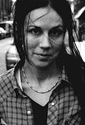
Rivka Galchen received her MD from the Mount Sinai School of Medicine, having spent a year in South America working on public health issues. Galchen completed her MFA at Columbia University, where she was a Robert Bingham ... (more)
If you enjoyed:
Odessa
Try:
Everyone Knows Your Mother Is a Witch
by Rivka Galchen
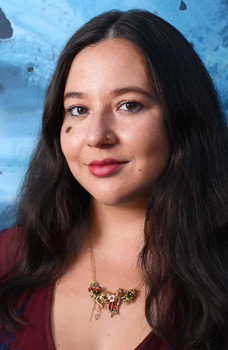
Kiran Millwood Hargrave is an award-winning, bestselling novelist. Her books have been translated into more than thirty languages and shortlisted for the Kirkus Prize. Her debut novel for adults, The Mercies, was a New York ... (more)
If you enjoyed:
Odessa
Try:
The Mercies
by Kiran Millwood Hargrave
We recommend 5 similar authors
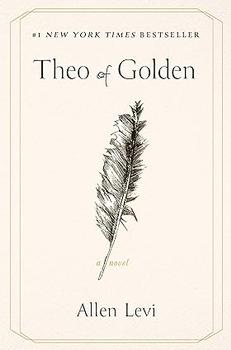
Theo of Golden by Allen Levi
One spring morning, a stranger arrives in the small southern city of Golden. No one knows where he has come from…or why…






Your guide toexceptional books
BookBrowse seeks out and recommends the best in contemporary fiction and nonfiction—books that not only engage and entertain but also deepen our understanding of ourselves and the world around us.

