
-
Your next favorite book
is waiting.

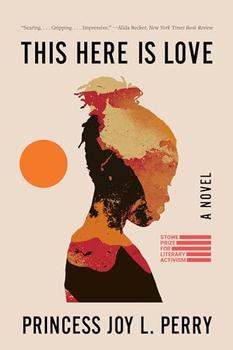
Q&A With Author Princess Joy L. Perry
Q: While researching your novel you visited old plantation sites, heritage sites, the Great Dismal Swamp, and other important locations. Why did you feel it was important to travel to these places while you were writing the book?
A: Because I live in a time so removed from the era in which the story is set, I needed to feel an emotional connection with Colonial Virginia. Reading triggered my empathy and my anger about the violence and injustice that facilitated slavery, but standing in places where slaves stood and withstood bondage allowed me to enter the past in a more complete way that is hard to put into words. Seeing a one-dimensional building on a screen is nothing like the visceral reaction felt when you place your hand in the imprint of an enslaved child's hand, as I did at Monticello, knowing that a child as real as myself—but hindered from reaching her full, personal potential—pressed her hand into that brick. Feeling the weight of iron shackles helped me better understand in my body what it might be like to carry those shackles.
I know that my experience was not nearly the same as that of those who were enslaved. I walked away from Monticello and back into my own self-determined life. I set the shackles down at will. But visiting those places, touching the evidence of slavery, amplified an ache within me. I needed that ache, and I needed details that I could only learn by touch to put my characters' experiences into words.
Q: In order to lend the story historical accuracy you also researched seventeenth-century laws, birth control, plants and herbs, and foodways. What were some of the interesting things you learned?
A: I learned that the choice of slaves was not necessarily random. Captives were often chosen for enslavement based on a skill set they developed in their homeland. For example, Anthony might have been taken from a tribe of people known for their skill with farming. This speaks to economics being the primary driver of enslavement despite other ennobling explanations layered on over the course of American enslavement. I learned about the presence, from 1619 on, of "maroons," runaways who removed themselves to far places like the Great Dismal Swamp or lived in hiding places underground and in the woodlands near the farms they had fled. Concerning daily life, I learned many details about planting tobacco, butchering hogs, weaving fabric, blacksmithing, and how to shoe a horse. Making the story fit the facts of history was one of the most challenging and enjoyable things I have ever done.
Q: There were especially difficult laws that were established in the 1660s and 1670s that systematically stripped Blacks of rights. Is that why you decided to set your book just after this period, in 1690?
A: I chose this period because slavery as we now understand it was becoming. The Black Codes were instituted because crossing racial lines was not unusual—the Virginia legislature had to create penalties and punishments that induced Black and white colonists to stay apart. For instance, interracial marriage was not outlawed in the Colony of Virginia until 1691. To me, this means that until this law, color, or lack thereof, was not a disqualifying factor when choosing an employee, friend, or mate. This speaks of an in-between time, a time when race was becoming an impenetrable line. I am interested in the forms of conditioning (social, economic, psychological) of Blacks, whites, and Native Americans that made race an unapproachable barrier. That is why I chose this time period.
Q: You currently live in Norfolk, Virginia, and your book is set in Virginia. Does your family have ties to the state dating back in history?
A: My family has ties to North Carolina. Though I was born in Virginia, my grandparents, parents, and siblings were all born in North Carolina. From what I have been able to ascertain though a commercial DNA test, my enslaved ancestors hailed from various West African groups of people who were brought to eastern North Carolina. I chose Virginia as my setting because of its rich colonial history and the accessibility of landmarks tied to slavery.
Q: You did not use a computer and instead you wrote your book down in longhand. Was it important to you to write this story using only tools that your characters would have had access to as well?
A: I honestly never thought of the fact that my characters would only have access to pen and some form of paper. I write longhand because, when it comes to story, I think and imagine better that way. Another reason is that I do not like to come to the computer empty-handed, so I write in my notebook first. For me, this makes getting started on the writing day a lot easier. I have something to bring to the blank screen. Also, writing in my notebook means that, by the time I sit down at the keyboard, I have written out and tinkered with a version of a sentence, paragraph, or page at least twice before I ever type it out. By that time, the feeling I want is usually there even if the final wording is not.
Q: There's a beautiful song that's sung by the characters. What's the background on this song?
A: My maternal grandmother, Ruth Slade Gaskins, known to us as "Ma Ruth," and to people in the community as "Miss Ruth," spent the majority of her adult life as a sharecropper on Willow Branch farm in Bertie County, North Carolina. Once she moved off the farm and into the town of Windsor, NC she became a cook and housekeeper for a white family in the town. My grandmother sang in the choir of her Baptist church. She kept a garden, and she loved to fish. Always spirited, she was well into her middle age when she learned how to drive, and after several tries, earned her driver's license.
I am not sure what first compelled Ma Ruth to tell us about "Grandma," my maternal grandfather Arthur's grandmother who lived with the young couple around the time of my mother's birth, but the story goes that Grandma was an enslaved child. As a young child, it was her job to run around in the garden, beating a metal pan with a spoon, and singing, "Hark! the blackbird said to the crow! Why do the farmer hate us so?" to keep the birds from pecking up whatever seeds or fare was growing in the garden.
When telling the story, Ma Ruth sang the "Hark!" and the "Why?" with long and lilting notes, like a field holler or hog call, sounds that would catch the attention and carry over some distance. The rest of the song came to my ear as a quick patter. The secret of the song – what I realized as an adult – what both of my grandmothers surely already knew, is that the "blackbird" and the "crow" of the song are the Black enslaved pondering why the "farmer," the white landowner who holds them in bondage, hates them, and why he treats them so. Now that I do understand the real question at the heart of the song, my heart aches every time I repeat the words to myself. And then I imagine a little black girl singing those words.
Sadness aside, I am also struck by the clever simplicity and outright sassiness of the song. Surely, the "farmer" heard children like my great-great-Grandma singing. Did he understand? Did he think it a simple rhyme, or was he aware of the tiny little rebellion occurring in his own kitchen garden? I doubt it. If he'd known that even his smallest prisoners questioned the legitimacy their bondage, of chattel slavery, surely the verse would not have made its way through history to me.
So, after the ache, there is a blooming feeling of pride. My enslaved ancestors knew they deserved to be free. That certainty, held in the heart, and sung in code, is a joyful, edifying legacy passed to me by Ma Ruth - always smiling and so tickled, each time she sang this song.
Unless otherwise stated, this interview was conducted at the time the book was first published, and is reproduced with permission of the publisher. This interview may not be reproduced or reprinted without permission in writing from the copyright holder.
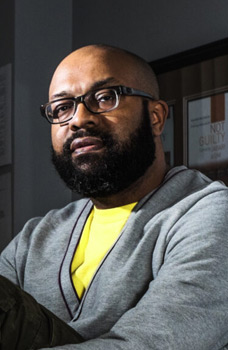
Jabari Asim is a writer and multidisciplinary artist, who has been described as one of the most influential African American literary critics of his generation. Asim is the Elma Lewis Distinguished Fellow in Social Justice ... (more)
If you enjoyed:
This Here Is Love
Try:
Yonder
by Jabari Asim
Toni Morrison was born Chloe Anthony Wofford in Lorain, Ohio in 1931. The volume of critical and popular acclaim that has arisen around the work of Toni Morrison is virtually unparalleled in modern letters. Her six major ... (more)
If you enjoyed:
This Here Is Love
Try:
A Mercy
by Toni Morrison
We recommend 3 similar authors

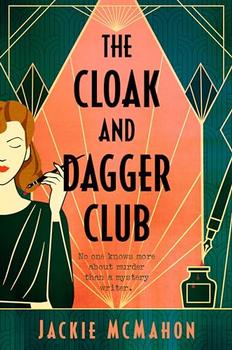
L.A. Women by Ella Berman
Two ambitious writers in 1960s LA face betrayal when one writes a novel based on the other's life.






Your guide toexceptional books
BookBrowse seeks out and recommends the best in contemporary fiction and nonfiction—books that not only engage and entertain but also deepen our understanding of ourselves and the world around us.

