
-
Your next favorite book
is waiting.

A Talk with Dr. Gerta Keller, Author of The Last Extinction
What do most people think caused the dinosaurs to become extinct?
If you ask a random person on the street, there's a very good chance they'll say it was an asteroid. Impact theory is the popular, albeit incorrect, belief that an asteroid crashed into Yucatan, Mexico, and caused the mass extinction of about 70% of the species 66 million years ago. This belief was first promoted in 1980 when Nobel Prize physicist Luis Alvarez and his geologist son Walter claimed the presence of the rare earth element Iridium proved the impact theory. This conclusion was always doubtful, but few scientists dared to question Iridium's origin. And so, Iridium remained the unquestioned elephant in the room of impact theory for decades.
By 2017, I had almost given up hope of finding the true source of the Iridium anomaly. In early February of that year, I lectured in Tallahassee, Florida, where I met an astrochemist, which is a person who knows the chemistry of asteroids. He was also an "impactor," which means he firmly believed in the impact theory. But he was open-minded and ready to investigate the evidence we had found, which indicated that the Iridium had instead come from volcanic eruptions in India—and had surfaced from deep within Earth's crust.
So what really caused the dinosaurs to become extinct?
It was the volcanic eruptions in India.
To fully understand what caused the dinosaur extinction, we must first know the basic facts about Earth's volcanic eruptions. Volcanic eruptions are primarily caused by interactions of Earth's tectonic plates, which produce magma, a hot molten or partially molten rock beneath Earth's surface. Magma is essentially a hot, liquid mixture of minerals and gases, formed when rocks melt under high temperatures and pressures within the Earth's crust and mantle. When magma erupts onto the surface, it's called lava. With this basic understanding of volcanic eruptions, we can reveal what happened during the mass-extinction near the end of the Cretaceous Era.
The mass extinction of the dinosaurs was caused by increasingly larger, and more frequent, volcanic eruptions. Hot lava flows spanned over 1000km from volcanic mountains on India's Deccan Plateau into the Bay of Bengal and the Indian ocean. The volcanic eruptions killed off the last dinosaurs 66 million years ago. Many other species also went extinct during this mass extinction.
How do you know that's what caused their demise—what evidence did you uncover, and how did you know to even look for it in the first place?
It all started with the discovery that all but one species of planktic forams (a microscopic organism) went extinct at the end of the Cretaceous period. This was a fascinating discovery, and we continued to research these forams, with hopes they might provide us with the bigger picture of mass extinction in this era. Our research pointed us to the Deccan volcanic eruptions, which, due to extreme temperature heights, killed all but one of the planktic forams (alongside many other species). These eruptions (and heightened temperatures) provided the key to understanding the dinosaur extinction, as well. Let me explain, using a recent experiment.
About 10 years ago, a Danish scientist, Hans Jorgen Hansen, boarded a plane from Florida to Denmark with precious cargo. In his pockets he carried a dozen eggs of baby crocodiles, which are the closest relatives of the dinosaurs. He had wrapped the eggs in socks and cuddled them against his belly to keep them warm during the flight. Then he incubated the eggs at a specific temperature (85-92 Celsius) and gradually injected poison from volcanic eruptions to evaluate the survival rate. Most crocodile eggs survived incubation and injected poisons, but one shocking thing happened: their shells became extremely hardened due to the poisoned chemistry, and many of the crocodiles were unable to peck their way to freedom.
While our discoveries predate this study, it is a crude example of what appears to have happened to the dinosaurs. As temperatures rose due to deccan volcanic eruptions, eggshells grew harder, as a means of protection. However, as these eggshells became harder, this meant fewer and fewer dinosaurs were able to crack the shells, and with that came a slow, mass extinction.
To what lengths did you have to go to gather this evidence, and how long did it take you?
It took ten years to gather records of climate and environmental changes in the Deccan volcanic mountains. Then we had to compare that data with our earlier work from Tunisia, Israel, and Egypt. Then add six years of analyses from two dozen localities in Mexico, including mercury, climate, age dating, and paleontology. In truth, it took nearly all my life to gather and research the evidence of what really happened.
How were your conclusions received by the scientific community?
My attempt to share my research at the Snowbird II conference in Utah in 1988 was the beginning of what has become popularly known as "The Dinosaur Wars," a contentious debate over what triggered the fifth mass extinction at the end of the Cretaceous Era sixty-six million years ago. In other words, what really killed the dinosaurs.
Do you think your conclusions would have been received differently if you were a man, and what kind of retaliation did you face?
If I were a man, my life would have been easier in many ways, especially if I agreed with the views of the impactors (which I never could). Sexist attacks, gross name calling, ridicule, screaming insults—I experienced them all, and I wasn't the only one. Rage against women was common.
I've been called: "The most dangerous woman in the world." I take that as honor, though the man who yelled it at me was red-faced with anger. Another man in the Astrophysics Department in the New York Museum during my evening lecture screamed at me: "You are a witch and should be stoned and burned at the stake."
In my life, it has always been the sexist culture of men and their belief that women are inferior scientists. Some of my male colleagues demanded I help them teach, meaning I would do the teaching for them. The excuse was always that women are betters teachers and men are better scientists. I scathed at this sexist belief. It took five years before my teaching over 150 students each semester was ended by a kind faculty member who said it's enough, let the men do their teaching. Within two years the class dropped to less than 10 students and was discontinued in disgrace.
How did scientists get it so wrong when it comes to what caused the dinosaurs to become extinct?
It's easy for a journalist to celebrate an exciting new theory that provides a simple, comprehensible answer to a long-debated mystery. It's much harder for a journalist to master and present the scientific evidence that argued against the simple answer. And besides, who wants to ruin a good story?
We paleontologists had plenty to say in rebuttal. The problem was, we couldn't say it—or at least not quickly enough. The science community's method of submitting papers to science journals and waiting for peer reviews could take a year, with additional months added for revisions, if accepted. Meanwhile, breathless reports of the new theory spread rapidly to the public through print media, television, and radio. In the early 1980s, we were still years away from the opening of the internet to the public, so there was no way to contest it.
While opposition papers wound their laborious way through the peer review process, I watched, stunned, as Alvarez's story ran wild. A tsunami of media attention for Alvarez, combined with the near absence of critical articles, sent a clear but false message of consensus. Scientists not on the Alvarez impact bandwagon had effectively been preempted.
What does your discovery teach us about greenhouse gas and climate change?
As the geological record shows, this type of climate change has happened repeatedly over Earth's long history, and we are seeing alarming signs of the pattern repeating itself today. It has gotten so bad, so quickly, that scientists have begun to wonder if we are in the midst of a sixth mass extinction right now. Of course, what differentiates this sixth ongoing mass extinction and rapid climate warming from the five that preceded it is the absence of immense volcanic eruptions spewing out the deadly greenhouse gases. Instead, we humans managed to replace those natural events with our own homemade catastrophe that follows exactly the same well-worn path to Earth's previous mass extinctions.
It began with the rampant burning of coal, oil, and gas, releasing vast quantities of greenhouse gases into the atmosphere at rates twelve to sixteen times the peak volcanic eruptions during the dinosaur mass extinction. The tipping point of rapid climate warming during the fifth mass extinction was reached around 4.C in the oceans and 7.C on land over a few thousand years. At the rate we are going, we don't have a few thousand years to save our environment and ensure our survival. We don't even have a hundred years.
Why is the question of what caused the demise of the dinosaurs more relevant than ever?
Because if we continue on our current path—if we continue to ignore the fact that greenhouse gas emissions are increasing and the climate is warming—we may become the dinosaurs of the sixth extinction.
You're a geologist and paleontologist, but what advice do you have for scientists in any field whose research is facing unjust scrutiny?
Stay on your path of evidence—the truth will be there.
Unless otherwise stated, this interview was conducted at the time the book was first published, and is reproduced with permission of the publisher. This interview may not be reproduced or reprinted without permission in writing from the copyright holder.


Cat Bohannon is a researcher and author with a Ph.D. from Columbia University in the evolution of narrative and cognition. Her essays and poems have appeared in Scientific American, Mind, Science Magazine, The Best American ... (more)
If you enjoyed:
The Last Extinction
Try:
Eve
by Cat Bohannon

Walter Isaacson, University Professor of History at Tulane, has been CEO of the Aspen Institute, chairman of CNN, and editor of Time. He is the author of Leonardo da Vinci; The Innovators; Steve Jobs; Einstein: His Life and ... (more)
If you enjoyed:
The Last Extinction
Try:
The Code Breaker
by Walter Isaacson
We recommend 3 similar authors
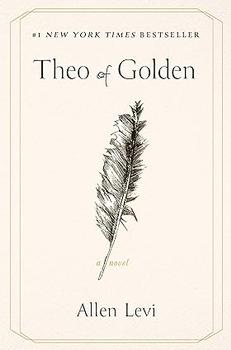
Theo of Golden by Allen Levi
One spring morning, a stranger arrives in the small southern city of Golden. No one knows where he has come from…or why…





Your guide toexceptional books
BookBrowse seeks out and recommends the best in contemporary fiction and nonfiction—books that not only engage and entertain but also deepen our understanding of ourselves and the world around us.

