Page 4 of 4
There are currently 27 member reviews
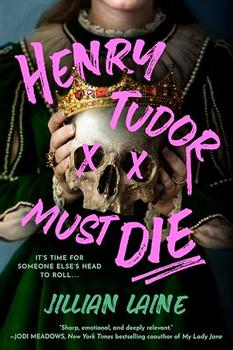
for Henry Tudor Must Die
-
Margot
Exciting premise, snarky narrator, slow pacing
I received an advance review copy of this book from Berkley and BookBrowse via NetGalley. All opinions are my own.
Jillian Laine brings a witchy feminist take on some of England’s most infamous historical figures. Anne Boleyn and Catherine of Aragon are compelling protagonists, and although their circumstances are extraordinary, their motivations—grief, anger, justice, and the desire to reclaim their own stories—feel surprisingly relatable. I also really enjoyed the snarky footnotes, which added humor and personality to the narration.
The historical backdrop is fascinating, and it’s clear the author has a deep appreciation for the Tudor period. Seeing real historical figures and events woven into a fantastical revenge story made for an intriguing premise. When the action picked up, those scenes were exciting and engaging. Ultimately, though, I found myself wanting the story to move more quickly between the action sequences, and I had trouble staying invested enough to continue. I ended up setting this one aside around the halfway point, but I plan to pick it up again when the audiobook is released.
Even so, I think readers who enjoy slower-building historical fantasy, especially those who love the Tudors and the lore of witchcraft, will likely find a lot to enjoy here.
-
Ali K. (Greenville, OH)
Spirited Reimagining of History
Henry Tudor Must Die was one of my most anticipated releases of the year, for I am obsessed with the Tudor dynasty. While the novel itself wasn't quite what I expected (the premise made me think it would be a punchy, modernized twist on the history), it was still a relatively enjoyable read.
Though Laine took considerable liberties with certain aspects about the lives of Henry VIII's wives, she still remained true to the stories we have been told. She also did a remarkable job replicating the tone of the era, especially with respect to the dialogue, the decisions made, as well as the outcome of Anne, Lina, Kat, Anna, and Catherine. I was impressed by the amount of characterization each person was given, considering the consistent changes in point of view and the shifts in the storyline. That said, the first half of the novel dragged quite a bit. I truly didn't understand the trajectory of the plot until well into the second act, particularly since the first act relied heavily on exposition and passive description, rather than active interaction and dialogue. However, once the overarching plan was established, the pace of the novel picked up quite a bit and my interest was renewed.
Laine's writing style was very accessible, though as aforementioned, it focused more on description than action. I didn't quite see the point in making Marguerite the 'author' either, for her role in the story was sporadic at best. So too was I a bit surprised by how quickly and anti-climatically the ending shored up all of the loose ends without providing some sort of lasting impact.
Despite the fact that Henry Tudor Must Die is rich in its reimagining of one of the most well known monarchical reigns, Laine's adult debut unfortunately didn't affect me as much as I wanted it to— but that's purely because my expectations were off the mark. I do believe other readers, including fans of the period, will love it, for at its heart, Henry Tudor Must Die is the tale of female friendships and empowerment.
Thank you to Berkley, BookBrowse, and NetGalley for the privilege to read this ARC!
-
Bridgette T. (San Angelo, TX)
Here for the Sisterhood, Not the Ending
Henry Tudor Must Die has a wonderfully audacious premise, and I was immediately drawn in by the idea of Henry VIII's wives forming a secret alliance. The opening—Catherine of Aragon being sent into the Tower to rescue Anne Boleyn—sets expectations for a clever, character-driven story about women supporting one another under impossible circumstances.
The strongest part of the novel is the developing bond between Lina and Anne, and I found myself far more invested in the sisterhood than in the larger plot. While I enjoyed the story overall, the ending felt surprisingly straightforward given the complexity of the relationships that came before it. I finished the book wanting more of the alliance at its heart and wishing the resolution had drawn more fully on what made the novel so engaging in the first place.
-
Kay L. (Broken Arrow, OK)
Tudor Historical Fantasy
As an avid reader of both nonfiction history and historical fiction, I've read many well-researched books set in Tudor England, so I was pleased to have the opportunity to read an alternate history/fantasy centered on the Tudors. What intrigued me most was knowing from the start that this would not be a traditional Tudor story. And while Henry Tudor is prominent in the title, the novel is really an entertaining revisionist story about the women in his life who wanted him dead.
What worked for me most was the author's willingness to fully embrace the fantasy elements while re-imagining these historical women in ways that felt fresh and engaging. The rumor that Anne Boleyn was a witch is woven directly into the story, and her powers are used not only for revenge but also for good. I also appreciated that Anne was allowed to recognize her own faults and grow as a character.
The portrayal of Catherine of Aragon ("Lina") was another strength. She is often written as cold, aloof, or rigidly religious, but here she is shown as strong while also caring, generous, and forgiving. The story avoids reducing her Catholic faith to intolerance, which made her characterization feel more nuanced. I also appreciated the author's inclusion of same-sex relationships as something natural and historically plausible, rather than treated as modern invention.
The depictions of Anne of Cleves and Catherine Parr were highlights for me as well. Their roles in this version of the story were compelling, and I especially liked the broader theme that a woman's value is not tied solely to bearing children. Some reviewers have criticized the book for being "full of feminist views," but that was actually part of what made it appealing to me. It gives today's readers a chance to see these women in a positive, feminist light, rather than solely through historical narratives so often shaped by male writers. As a historical fantasy, it isn't trying to replicate the social attitudes or events of the period exactly, and I enjoyed that contemporary perspective.
There were, however, a few things that held it back for me. At times, the pacing dragged, and I found myself wanting more dramatic action and stronger visual details. In several scenes, the book relied too much on telling readers what to feel instead of letting the story create that emotional response on its own.
I was also uncomfortable with the references to the relationship between Catherine Howard ("Kat") and Francis Dereham without acknowledging the significant age difference between them—she was in her early teens, while he was in his thirties. This could have been an effective opportunity to address how young girls have historically been groomed, exploited, and abused, especially in contrast with the similarly troubling age gap between Kat and Henry VIII.
Spoiler:
The introduction of the character Gisa felt abrupt and somewhat contrived. I wanted more explanation about who she was, why she mattered, and how she fit into the larger story. I was also a little disappointed by the ending. I had been looking forward to seeing the future of Lina and Anne, along with Kat, Anna, and Marguerite, and the good they might go on to accomplish together.
-
Laura
History but with witches
I enjoyed most of this book. I don't know a lot about Henry VIII and his queens. I love the idea of strong women finding ways to be free. This book takes history and adds magic. It gives a nice revenge plot that had me wondering how it would end. I can't wait to see more from this author.
-
Helen B. (WINTHROP, ME)
Not what I was Expecting!
I was excited to jump into this book as I love Tudor history and anything to do with the Six queens. Having toured London this winter, I eagerly started reading, only to be more and more disappointed the further I read. To be fair, Laine is a competent writer and had a decent fictional plot, but the historical pieces for accuracy are hit or miss. The main characters, Catherine of Aragon (called Lina in the novel) and Anne Boleyn, are not like the queens I've researched or read about. Laine portrays them as almost 2026 versions in their speech, thoughts and actions. And while, I am sure women of that time were smart, competent and frustrated, Catherine and Anne are angry, vengeful, and in some cases violent. The original love story between Henry and Catherine is gone. Catherine's devotion to her Catholic faith is gone..she in fact embraces witchcraft and revenge without much discussion. Probably the toughest thing to understand is that Catherine and Anne become best friends within days. Throw in a Queen/lady in waiting lesbian love affair, a trans prison guard, and a Dicken's Sydney Carlton moment without any of the build-up, thankfully he didn't say "It is a far, far better thing that I do…." and you have a lot of great ideas with no real substance in under 400 pages.