-
Your next favorite book
is waiting.

What Science Tells Us about How to Live Well with the Rest of Life
by Rob Dunn Book Reviewed by:
How rethinking our relationships with other species can help us reimagine the future of humankind.
In the woodlands of sub-Saharan Africa, sometime deep in our species' past, something strange happened: a bird called out, not to warn others of human presence, but to call attention to herself. Having found a beehive, that bird—a honeyguide—sought human aid to break in. The behavior can seem almost miraculous: How would a bird come to think that people could help her? Isn't life simply bloodier than that?
As Rob Dunn argues in The Call of the Honeyguide, it isn't. Nature is red in tooth and claw, but in equal measure, life works together. Cells host even smaller life, wrapped in a web of mutual interdependence. Ants might go to war, but they also tend fungi, aphids, and even trees. And we humans work not just with honeyguides but with yeast, crops, and pets. Ecologists call these beneficial relationships mutualisms. And they might be the most important forces in the evolution of life.
We humans often act as though we are all alone, independent from the rest of life. As The Call of the Honeyguide shows, we are not. It is a call to action for a more beneficent, less lonely future.
In The Call of the Honeyguide, Dunn shows just how important mutualisms are in ecology, evolution, and—specifically—the history and development of the human species. The ancient mutualism between humans and yeasts, for example, not only transformed societies—as seen in the cultural significance of bread, beer, wine, and other fermented beverages and foods—but also altered the genomes of our early ancestors... The book also weaves in examples of remarkable human-wildlife partnerships from across different cultural traditions...continued
Full Review
 (871 words)
(Reviewed by Elisabeth Herschbach).
 In The Call of the Honeyguide, applied ecologist Rob Dunn examines the many ways that living things in an ecosystem are synergistically connected by reciprocal relationships called mutualisms—defined as interactions between two or more species in which each benefits.
As the book shows, some of the connections between species are so intimate that they challenge our assumptions about the nature of living things. "The world as we perceive it is composed of species, living as individuals," Dunn writes. "The world as it exists is composed not only of species, but also of the connections among those species." Look closely at those connections, and the boundaries between different species can start to blur.
Consider the complex ...
If you liked The Call of the Honeyguide, try these:

by David George Haskell
Published 2026
An exquisite exploration of the power of flowers, placing them at the center of the story of how evolution created the world we know today.

by Zoë Schlanger
Published 2025
Award-winning Atlantic staff writer Zoë Schlanger delivers a groundbreaking work of popular science that probes the hidden world of the plant kingdom and reveals the astonishing capabilities of the green life all around us.

by Ferris Jabr
Published 2025
A vivid account of a major shift in how we understand Earth, from an exceptionally talented new voice. Earth is not simply an inanimate planet on which life evolved, but rather a planet that came to life.
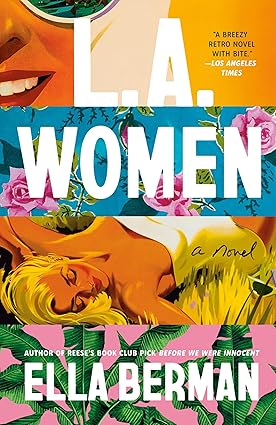
L.A. Women by Ella Berman
Two ambitious writers in 1960s LA face betrayal when one writes a novel based on the other's life.