
-
Your next favorite book
is waiting.
To wish for luck
There are a number of theories for the origins of this expression but the one that historians give most credit to is that the crossing of fingers started in the early days of Christianity when the religion was banned and followers were forced to develop secret signs to communicate with each other. One such sign is thought to have been the crossing of fingers by two people on meeting, who would identify themselves to each other by forming an L shape with their thumb and forefinger and then touching their thumbs together and crossing their index fingers to form a fish symbol (the ichthys, Greek for fish, being the ancient symbol of Christianity).
As for when crossing fingers for good luck became a one-person affair, there seems to be some modicum of consensus that it started during the Hundred Years' War period in Europe (14th-15th centuries) when soldiers were happy to get all the luck they could and crossing fingers with another person in the middle of battle wasn't practical.
If that is the case, then there are two gestures that have their roots in this fractious period: The crossing of fingers and the V-sign: the British equivalent to the American middle-finger, made by forming the index and middle finger into a V with the back of the hand facing toward the person you wish to offend.
Although there is no primary evidence to prove it, legend has it that the V-sign originates with the English longbow-men during the Hundred Years War. This gruesome series of conflicts fought over more than a century to decide who was the rightful heir to the French throne led to many significant military innovations (in essence the two sides started the conflict with knights in armor and ended it shooting guns). One such innovation was the longbow, which was the main weapon of the English armies from the 14th century until the introduction of firearms. An effective method for the French to permanently put an archer out of commission was to cut off the index and middle fingers used to pull the bowstring. This led to the practice of English archers taunting the enemy by raising their bow fingers in what is sometimes referred to as the "two-fingered salute".
More expressions and their source
Challenge yourself with BookBrowse Wordplays
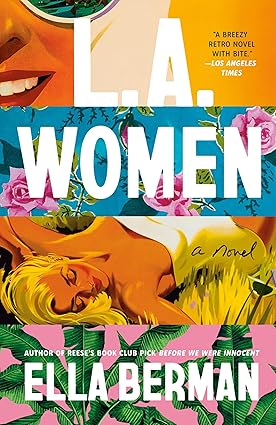
L.A. Women by Ella Berman
Two ambitious writers in 1960s LA face betrayal when one writes a novel based on the other's life.



Your guide toexceptional books
BookBrowse seeks out and recommends the best in contemporary fiction and nonfiction—books that not only engage and entertain but also deepen our understanding of ourselves and the world around us.

