
-
Your next favorite book
is waiting.
The foolish behavior of an older person seems especially so as they are expected to think and act more sensibly than a younger person
Like so many modern-day proverbs, the oldest recorded reference is in John Heywood's 1546 book of proverbs: A Dialogue conteinyng the nomber in effect of all the Prouerbes in the Englishe tongue, where it appears as "There is no foole to the old foole"
Heywood was an English dramatist employed at the courts of Henry VIII and his daughter Mary I. He was important in the development of English comedy, specifically short comic dialogues known as interludes - but is now best remembered for his book of proverbs, which was a huge hit back in the 16th century.
According to the introduction to a relatively modern reprint of the book edited by J. Sharman:
There is little doubt that, after the appearance of Heywood’s book in 1546, a new idea or influence was set working in English literature. It was not, indeed, that the work possessed intrinsic merit, or that its appearance was attended with circumstances of public interest. Rather was it that the author was by means of this work reminding the public of a property which the owners were inadvertently losing. That attempted to explain with an allegory, Heywood could promptly convey in a proverb. The romancers were rejected; Heywood’s volume was hailed with acclaim. It became the most popular of all popular books. Ten times it was sent to press during the sixteenth century. Ten times it was sent to press during the sixteenth century. Immediately on its appearance it gave the fillip to the nation’s appetite for literary enjoyment; poets, play-writers, and statemen made capital of its mine of proverbs. The Elizabethan dramatists are brimming with them. One orator delivered a speech in the House of Commons in which a proverb formed the substance of every sentence. Proverbs were adopted everywhere as devices for tapestry, as mottoes for knives, as inscriptions for rings and keepsakes.
Here is the page from J. Sharman’s edition showing this particular proverb (click image for full size version):

More expressions and their source
Challenge yourself with BookBrowse Wordplays
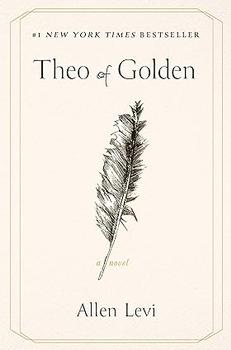
Theo of Golden by Allen Levi
One spring morning, a stranger arrives in the small southern city of Golden. No one knows where he has come from…or why…




Your guide toexceptional books
BookBrowse seeks out and recommends the best in contemporary fiction and nonfiction—books that not only engage and entertain but also deepen our understanding of ourselves and the world around us.

