
-
Your next favorite book
is waiting.
Summary | Excerpt | Reviews | Beyond the book | Read-Alikes | Genres & Themes | Author Bio

 Book Reviewed by:
An astonishing novel of raw beauty about gang life, sex work, and social media in Haiti.
Cécé La Flamme, as she's known by her loyal Facebook friends, captures photographs of still bodies. Figures scorched and bruised, left to the rubble of the Cité of Divine Power. When she posts an image of a corpse, Cécé's followers skyrocket. "Nothing got more attention than a good corpse that was nice and warm or already rotting." Just beside visions of rot and neglect, she posts pictures of her toes, gullies crisscrossing the cité, and her own lips painted blue. With every image, Cécé seeks control and wants to create a frank, intimate record of the terror in her cité.
Cécé's world begins and ends with the cité – a slum peopled by gangs, yelping kids, grandmothers, junkies, and preachers. The very gate that encloses the cité was constructed by militant gang members. First boss Freddy, then Joël, then Jules César rule the gang that holds the cité in a chokehold. Sharp, sincere, and desperate, Cécé cleaves life for herself out of social media, sex work, and attempts at friendship with other women. When an American journalist offers to buy the rights to Cécé's photographs, she demands double the cash. When an abusive former client dies, she wears hot pink to his funeral. Emmelie Prophète's novel is fierce, devastating, and suggestive – a record of a woman clawing back control.
Excerpt
Cécé
Outside, the usual racket. My body counted the imagined comings and goings. I had nothing but the present and stories with no beginnings. It was dark. I had slept lightly, just enough. No dreams, no real rest, just a short transition between two wounds.
For five days now the man had come. He would knock discreetly, always at the same time, 6:30 p.m. He was fat, acted shy, and wore striped shirts like the kind the tailor on Rue Ficelle used to make. His pants were hiked in the rear, the inseam too short or his belly too flabby for them to sit at his waist. His shoes were clean and well-polished with thick rubber soles. He wore the same clothes every time I saw him. His cologne was very strong, and clung to the pillow and the sheet.
I was never in the mood to talk to him. If our eyes met, he would smile. Not me. I never encouraged conversation. I'm sure he would have welcomed it.
He undressed timidly and slowly, embarrassed by his body. And he was ugly. He had short ...
There is a deliberate bluntness to Prophète's prose, which reflects Cécé's hardened exterior, a necessary tool to survive in a brutal society where death and suffering have become normalized. Take, for example, how nonchalantly she describes the most popular posts on her social media: "Dead bodies did very well. Better than the living. The more sordid the better… Nothing got more attention than a good corpse that was nice and warm or already rotting"... For all its bleak qualities, Cécé's story is also peppered with quiet moments of kinship and compassion, a testament to the resilience of the human spirit...continued
Full Review
 (724 words)
(Reviewed by Callum McLaughlin).
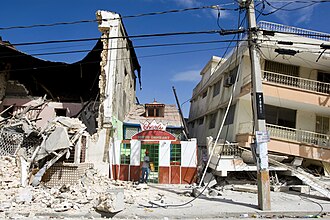 Emmelie Prophète's novel Cécé lays bare the hardship of day-to-day life in modern Haiti, as seen through the eyes of the titular heroine. Cécé bears witness to widespread poverty, rampant drug abuse, and deadly gang warfare. Despite how brutal this may sound, Cécé sees her life as "a very ordinary story," and indeed, this environment is very much the norm in modern Haiti, especially in the capital, Port-au-Prince. (Prophète, who was formerly Haiti's Justice Minister, presumably has a deep knowledge of Haiti's sociopolitical climate and the issues the country faces.)
Haiti is the poorest country in the Western hemisphere. Its modern history—as a colony whose economy was based on slavery that...
If you liked Cécé, try these:

by Karina Sainz Borgo
Published 2020
Told with gripping intensity, It Would be Night in Caracas chronicles one woman's desperate battle to survive amid the dangerous, sometimes deadly, turbulence of modern Venezuela and the lengths she must go to secure her future.
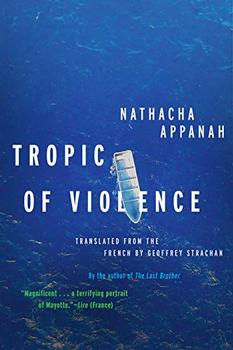
by Nathacha Appanah
Published 2020
A potent novel about lost youth and migration by the author of The Last Brother and Waiting for Tomorrow.

by Ann Patchett
Published 2002
'Combining an unerring instinct for telling detail with the broader brushstrokes you need to tackle issues of culture and politics, Patchett creates a remarkably compelling chronicle of a multinational group of the rich and powerful held hostage for months.'


I like a thin book because it will steady a table...
Click Here to find out who said this, as well as discovering other famous literary quotes!

Can you name the title?
Test your book knowledge with our daily trivia challenge!
