
-
Your next favorite book
is waiting.
Summary | Excerpt | Reviews | Beyond the book | Read-Alikes | Genres & Themes | Author Bio
 Book Reviewed by:
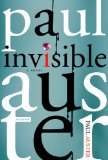
“One of America’s greatest novelists” dazzlingly reinvents the coming-of-age story in his most passionate and surprising book to date.
Sinuously constructed in four interlocking parts, Paul Auster's fifteenth novel opens in New York City in the spring of 1967, when twenty-year-old Adam Walker, an aspiring poet and student at Columbia University, meets the enigmatic Frenchman Rudolf Born and his silent and seductive girfriend, Margot. Before long, Walker finds himself caught in a perverse triangle that leads to a sudden, shocking act of violence that will alter the course of his life.
Three different narrators tell the story of Invisible, a novel that travels in time from 1967 to 2007 and moves from Morningside Heights, to the Left Bank of Paris, to a remote island in the Caribbean. It is a book of youthful rage, unbridled sexual hunger, and a relentless quest for justice. With uncompromising insight, Auster takes us into the shadowy borderland between truth and memory, between authorship and identity, to produce a work of unforgettable power that confirms his reputation as "one of America's most spectacularly inventive writers."
I
I shook his hand for the first time in the spring of 1967. I was a second- year student at Columbia then, a know-nothing boy with an appetite for books and a belief (or delusion) that one day I would become good enough to call myself a poet, and because I read poetry, I had already met his namesake in Dante’s hell, a dead man shuffling through the final verses of the twenty-eighth canto of the Inferno. Bertran de Born, the twelfth-century Provençal poet, carrying his severed head by the hair as it sways back and forth like a lantern— surely one of the most grotesque images in that book-length catalogue of hallucinations and torments. Dante was a staunch defender of de Born’s writing, but he condemned him to eternal damnation for having counseled Prince Henry to rebel against his father, King Henry II, and because de Born caused division between father and son and turned them into enemies, Dante’s ingenious punishment was to divide de Born ...
When you pick up a Paul Auster novel, a spell descends over you. As if you are in a funhouse car, you are hooked onto the tracks of the story and pulled into its depths... His abiding love for frame narratives places Auster in the company of metafiction novelists like Vladimir Nabokov, Thomas Pynchon, or Italo Calvino, yet he is not a flashy, fancy, or difficult writer. Invisible sounds exactly like someone talking to you about something astonishing that happened to him when he was young. It is impossible not to listen...continued
Full Review
 (715 words)
(Reviewed by Amy Reading).
Paul Auster frequently employs two particular literary techniques which, when combined, turn his novels into multi-layered stories with internal echoes and reverberations.
The first is a frame narrative, in which the main plot is a story, usually in the form of a manuscript, which is discovered and introduced by someone else. This device paradoxically helps establish the reality of Auster's world at the same time that it highlights the book's flagrant fictionality as mere words on a page. On the one hand, the embedded story's status as a text prevents the reader from getting fully immersed in it. On the other hand, the context that is built around the embedded story becomes a kind of self-referential world. It is the resonance between ...
If you liked Invisible, try these:

by Joyce Hinnefeld
Published 2025
Hinnefeld's web of characters are bound by legacies, genes, philanthropy, and chance but gravitate largely around Charlie, a rich, white, college graduate who ends up in Venice.
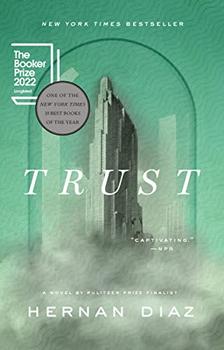
by Hernan Diaz
Published 2023
An unparalleled novel about money, power, intimacy, and perception.
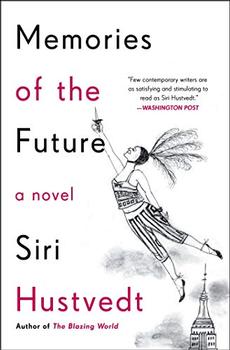
by Siri Hustvedt
Published 2020
A provocative, exuberant novel about time, memory, desire, and the imagination - the story of a young Midwestern woman's first year in New York City in the late 1970s and her obsession with her mysterious neighbor, Lucy Brite.




Judge a man by his questions rather than by his answers.
Click Here to find out who said this, as well as discovering other famous literary quotes!

Can you name the title?
Test your book knowledge with our daily trivia challenge!