Summary | Excerpt | Reading Guide | Reviews | Beyond the book | Read-Alikes | Genres & Themes | Author Bio
Critics' Opinion:
Readers' Opinion:
First Published:
Jun 2012, 336 pages
Paperback:
Jul 2013, 336 pages
 Book Reviewed by:
Jennifer Dawson Oakes
Buy This Book
From the author of the number one Canadian bestseller The Birth House comes the story of a young girl abandoned to the streets of post-Civil War New York City.
"I am Moth, a girl from the lowest part of Chrystie Street, born to a slum-house mystic and the man who broke her heart."
So begins The Virgin Cure, a novel set in the tenements of lower Manhattan in the year 1871. As a young child, Moth's father smiled, tipped his hat and walked away from her forever. The summer she turned twelve, her mother sold her as a servant to a wealthy woman, with no intention of ever seeing her again.
These betrayals lead Moth to the wild, murky world of the Bowery, filled with house-thieves, pickpockets, beggars, sideshow freaks and prostitutes, where eventually she meets Miss Everett, the owner of a brothel simply known as "The Infant School." Miss Everett caters to gentlemen who pay dearly for companions who are "willing and clean," and the most desirable of them all are young virgins like Moth.
Through the friendship of Dr. Sadie, a female physician, Moth learns to question and observe the world around her, where her new friends are falling prey to the myth of the "virgin cure" - that deflowering a "fresh maid" can heal the incurable and tainted. She knows the law will not protect her, that polite society ignores her, and still she dreams of answering to no one but herself. There's a high price for such independence, though, and no one knows that better than a girl from Chrystie Street.
Excerpt
The Virgin Cure
TO THE READER:
In 1871, I was serving as a visiting physician for the New York Infirmary for Indigent Women and Children. While seeing to the health and well-being of the residents of the Lower East Side, I met a young girl, twelve years of age, named Moth. In the pages that follow, you will find her story, told in her own words, along with occasional notes from my hand. In the tradition of my profession, I intended to limit my remarks to scientific observations only, but in the places where I felt compelled to do so, I've added a page or two from my past. These additions are offered in kindness and with the best of intentions.
OCTOBER 1878 S.F.H., DOCTOR OF MEDICINE
Recall ages - One age is but a part - ages are but a part;
Recall the angers, bickerings, delusions, superstitions, of the idea of caste,
Recall the bloody cruelties and crimes.
Anticipate the best women;
I say an unnumbered new race of hardy and well-defined
women are to spread...
While much of my description of the book and the information in this review may seem dark or heavy, The Virgin Cure is to be commended for addressing a difficult subject with humanity and in a way that is very accessible to readers. This story is full of life, and the will of a young girl to find a better way in the world than the one she knows is so strong on every page. McKay doesn't make Moth's journey easy, and that is to her credit. Moth must travel the path set out from her birth. That she does so wisely and with her eyes open - despite enduring pain, loss, and sadness - makes the experience of reading The Virgin Cure so much more real. Moth will take up space in your heart, and you will thank McKay for the gift of this story...continued
Full Review
(921 words)
This review is available to non-members for a limited time. For full access,
become a member today.
(Reviewed by Jennifer Dawson Oakes).
As Ami McKay notes in the afterword of The Virgin Cure: "In 1870, there were over thirty thousand children living on the streets of New York and many more who wandered in and out of cellars and tenements as their families struggled to scrape together enough income to put food on the table."
 The New York Infirmary for Indigent Women & Children was opened on May 12, 1857 by Dr. Elizabeth Blackwell, who was born in 1821 in Bristol, England and is credited with being the first female to receive a medical degree in the United States. (This hospital still exists, but today it is known as the New York Downtown Hospital.) The mission of both Elizabeth and her sister, Emily Blackwell - who earned her medical doctorate five years after her ...
This "beyond the book" feature is available to non-members for a limited time. Join today for full access.

If you liked The Virgin Cure, try these:

by Robin Oliveira
Published 2019
From the New York Times bestselling author of My Name Is Mary Sutter comes a rich and compelling historical novel about the disappearance of two young girls after a cataclysmic blizzard, and what happens when their fate is discovered.
by Vanessa Diffenbaugh
Published 2012
A mesmerizing, moving, and elegantly written debut novel, The Language of Flowers beautifully weaves past and present, creating a vivid portrait of an unforgettable woman whose gift for flowers helps her change the lives of others even as she struggles to overcome her own troubled past.

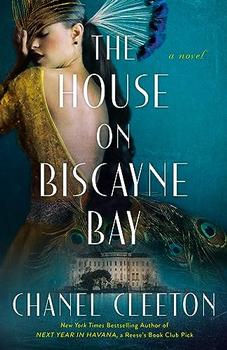
The House on Biscayne Bay
by Chanel Cleeton
As death stalks a gothic mansion in Miami, the lives of two women intertwine as the past and present collide.
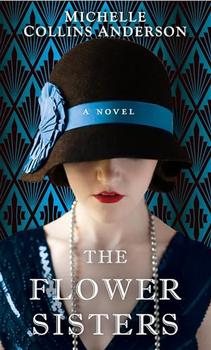
The Flower Sisters
by Michelle Collins Anderson
From the new Fannie Flagg of the Ozarks, a richly-woven story of family, forgiveness, and reinvention.
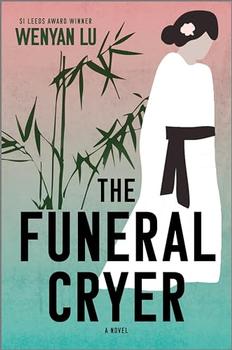
The Funeral Cryer by Wenyan Lu
Debut novelist Wenyan Lu brings us this witty yet profound story about one woman's midlife reawakening in contemporary rural China.
Your guide toexceptional books
BookBrowse seeks out and recommends the best in contemporary fiction and nonfiction—books that not only engage and entertain but also deepen our understanding of ourselves and the world around us.