Summary | Excerpt | Reviews | Beyond the book | Read-Alikes | Genres & Themes | Author Bio
Critics' Opinion:
Readers' Opinion:
First Published:
Oct 2011, 272 pages
Paperback:
Jul 2012, 336 pages
 Book Reviewed by:
Lisa Guidarini
Buy This Book
Both spine chilling and playfully cerebral, Zone One brilliantly subverts the genre's conventions and deconstructs the zombie myth for the twenty-first century.
In this wry take on the post-apocalyptic horror novel, a pandemic has devastated the planet. The plague has sorted humanity into two types: the uninfected and the infected, the living and the living dead.
Now the plague is receding, and Americans are busy rebuilding civilization under orders from the provisional government based in Buffalo. Their top mission: the resettlement of Manhattan. Armed forces have successfully reclaimed the island south of Canal Street - aka Zone One - but pockets of plague-ridden squatters remain. While the army has eliminated the most dangerous of the infected, teams of civilian volunteers are tasked with clearing out a more innocuous variety - the "malfunctioning" stragglers, who exist in a catatonic state, transfixed by their former lives.
Mark Spitz is a member of one of the civilian teams working in lower Manhattan. Alternating between flashbacks of Spitz's desperate fight for survival during the worst of the outbreak and his present narrative, the novel unfolds over three surreal days, as it depicts the mundane mission of straggler removal, the rigors of Post-Apocalyptic Stress Disorder, and the impossible job of coming to grips with the fallen world.
And then things start to go wrong.
Both spine chilling and playfully cerebral, Zone One brilliantly subverts the genre's conventions and deconstructs the zombie myth for the twenty-first century.
Excerpt
Zone One
He always wanted to live in New York. His Uncle Lloyd lived downtown on Lafayette, and in the long stretches between visits he daydreamed about living in his apartment. When his mother and father dragged him to the city for that season's agreed-upon exhibit or good-for-you Broadway smash, they usually dropped in on Uncle Lloyd for a quick hello. These afternoons were preserved in a series of photographs taken by strangers. His parents were holdouts in an age of digital multiplicity, raking the soil in lonesome areas of resistance: a coffee machine that didn't tell time, dictionaries made out of paper, a camera that only took pictures. The family camera did not transmit their coordinates to an orbiting satellite. It did not allow them to book airfare to beach resorts with close access to rain forests via courtesy shuttle. There was no prospect of video, high-def or otherwise. The camera was so backward that every lurching specimen his father enlisted from the passersby ...
Zone One may not be Whitehead's finest novel, but it's a satisfying, riveting read. The beautifully long, descriptive sentences are richly sensuous, and the languid plot is driven by characters rendered life-like through the author's choice of third-person omniscient narration. Those in love with the written word will most appreciate Whitehead's magic. Lovers of zombie genre novels may find it less appealing. It's a story to be savored slowly, melting on the tongue like fine chocolate. While not a masterpiece, Zone One is a distinct cut above the average and an impressively multi-layered novel that is well deserving of praise...continued
Full Review
(612 words)
This review is available to non-members for a limited time. For full access,
become a member today.
(Reviewed by Lisa Guidarini).
They're the undead dreaded monsters that feast on the brains of the living. But what exactly is the origin of the zombie? No one knows for sure - perhaps it's the Haitian belief that animals can be brought back to life via witchcraft; or maybe it's the jiang shi (reanimated dead body) in Chinese folklore that lives off others' qi or life forces; or what about the evil Dybbuk in Jewish fables that consumes the spirits of lost souls?
 Though a definitive mythology of the origin of zombies isn't entirely clear, these ghastly ghouls - in some form or variation - have been a part of the Western literary tradition for centuries. Mary Shelley's 1818 Frankenstein introduced the idea of harvesting body parts of the dead, and in H.P. Lovecraft...
This "beyond the book" feature is available to non-members for a limited time. Join today for full access.

If you liked Zone One, try these:
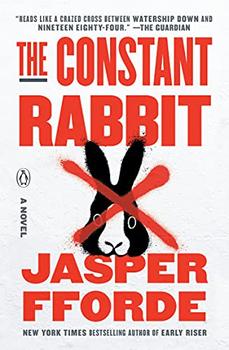
by Jasper Fforde
Published 2021
A new stand-alone novel from the New York Times bestselling author of Early Riser and the Thursday Next series.

by Violet Kupersmith
Published 2015
These stories - based on traditional Vietnamese tales - blends the old world and the new with fantastical, chilling, and original explorations of the ghosts that continue to haunt us: those of the Vietnam War.
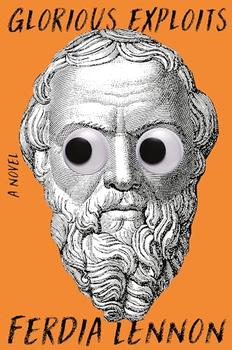
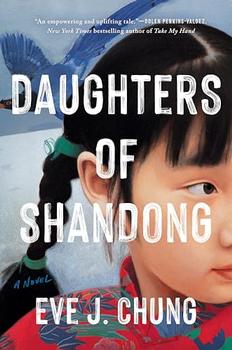
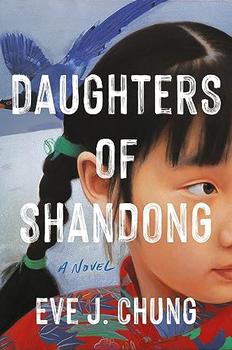
Daughters of Shandong
by Eve J. Chung
Eve J. Chung's debut novel recounts a family's flight to Taiwan during China's Communist revolution.
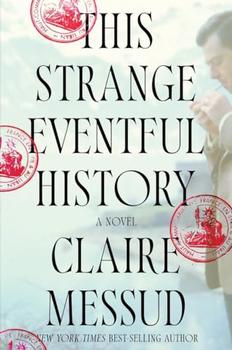
This Strange Eventful History
by Claire Messud
An immersive, masterful story of a family born on the wrong side of history.
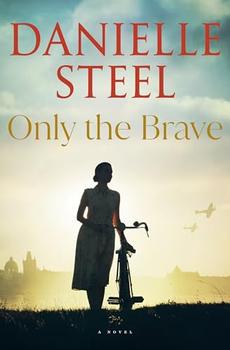
Only the Brave by Danielle Steel
A powerful, sweeping historical novel about a courageous woman in World War II Germany.
Your guide toexceptional books
BookBrowse seeks out and recommends the best in contemporary fiction and nonfiction—books that not only engage and entertain but also deepen our understanding of ourselves and the world around us.