Summary | Excerpt | Reviews | Beyond the book | Read-Alikes | Genres & Themes | Author Bio
Critics' Opinion:
Readers' Opinion:
First Published:
Oct 2007, 240 pages
Paperback:
Sep 2008, 240 pages
 Book Reviewed by:
Lucia Silva
Buy This Book
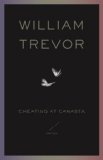
From a chance encounter between two childhood friends to the memories of a newly widowed man to a family grappling with the sale of their ancestral land, Trevor examines with grace and skill the tenuous bonds of our relationships, the strengths that hold us together, and the truths that threaten to separate us.
The publication of a new book by William Trevor is a great literary event. Trevor’s last collection, A Bit on the Side, was named a New York Times Notable Book and hailed as one of the Best Books of the Year by papers from coast to coast, including The Washington Post and San Francisco Chronicle. And his earlier collection, After Rain, published in 1996, was named one of the eight best books of the year by The New York Times.
Trevor’s precise and unflinching insights into the hearts and lives of ordinary people are evidenced once again in this stunning new collection. From a chance encounter between two childhood friends to the memories of a newly widowed man to a family grappling with the sale of their ancestral land, Trevor examines with grace and skill the tenuous bonds of our relationships, the strengths that hold us together, and the truths that threaten to separate us. Subtle yet powerful, his stories linger with the reader long after the words have been put away.
From Cheating at Canasta: The Dressmaker's Child
Cahal sprayed WD-40 on to the only bolt his spanner wouldn't shift. All the others had come out easily enough but this one was rusted in, the exhaust unit trailing from it. He had tried to hammer it out, he had tried wrenching the exhaust unit this way and that in the hope that something would give way, but nothing had. Half five, he'd told Heslin, and the bloody car wouldn't be ready.
The lights of the garage were always on because shelves had been put up in front of the windows that stretched across the length of the wall at the back. Abandoned cars, kept for their parts, and cars and motorcycles waiting for spares, and jacks that could be wheeled about, took up what space there was on either side of the small wooden office, which was at the back also. There were racks of tools, and workbenches with vices along the back wall, and rows of new and reconditioned tyres, and drums of grease and oil. In the middle of the garage there ...
Many book clubs are hesitant to discuss short story collections, and understandably so – it can be difficult to know where to start with so many plotlines, characters and competing ideas; but choosing just two or three stories from a collection to discuss makes for great conversation – and Cheating at Canasta would be a great place to start. The plots and characters raise complex, relevant, and immediately discussable issues, and Trevor's style is wonderfully readable. Short stories are also great for discussing an author's form and style, as their length reduces the scale a little, helps you see the shape and techniques more clearly – and since they're short, you can easily read a story several times to get in even deeper. Try choosing just three stories to discuss from a collection and see what you think!..continued
Full Review
(614 words)
This review is available to non-members for a limited time. For full access,
become a member today.
(Reviewed by Lucia Silva).
William Trevor was born on May 24, 1928, in Mitchelstown, County Cork, in the Republic of Ireland. He grew up in various provincial towns and attended a number of schools, graduating from Trinity College, in Dublin, with a degree in history. He first exercised his artistry as a sculptor, working as a teacher in Northern Ireland and then emigrated to England in search of work when the school went bankrupt. He could have returned to Ireland once he became a successful writer, he said, "but by then I had become a ...
This "beyond the book" feature is available to non-members for a limited time. Join today for full access.

If you liked Cheating at Canasta: Stories, try these:
by John Banville
Published 2016
John Banville, the Man Booker Prize–winning author of The Sea and Ancient Light, now gives us a new novel - at once trenchant, witty, and shattering - about the intricacies of artistic creation, about theft, and about the ways in which we learn to possess one another, and to hold on to ourselves
by Colm Toibin
Published 2012
From the internationally celebrated author of Brooklyn and The Master, and winner of the International IMPAC Dublin Literary Award, comes a stunning new book of fiction.




The Flower Sisters
by Michelle Collins Anderson
From the new Fannie Flagg of the Ozarks, a richly-woven story of family, forgiveness, and reinvention.

The House on Biscayne Bay
by Chanel Cleeton
As death stalks a gothic mansion in Miami, the lives of two women intertwine as the past and present collide.

The Funeral Cryer by Wenyan Lu
Debut novelist Wenyan Lu brings us this witty yet profound story about one woman's midlife reawakening in contemporary rural China.
Your guide toexceptional books
BookBrowse seeks out and recommends the best in contemporary fiction and nonfiction—books that not only engage and entertain but also deepen our understanding of ourselves and the world around us.