Summary | Excerpt | Reading Guide | Reviews | Beyond the Book | Read-Alikes | Genres & Themes | Author Bio
Critics' Opinion:
Readers' Opinion:
First Published:
May 2005, 240 pages
Paperback:
Nov 2006, 240 pages
 Book Reviewed by:
BookBrowse Review Team
Buy This Book

Please be aware that this discussion guide will contain spoilers!
About This BookReading Activities:
Preface
What year does the story open? What common items that we have
today would have seemed like "science fiction" to people living
back then?
Chapter 1
Instead of a family, the main character's childhood was shaped by
Big Mama Flore, Mud Albert and Champ Noland. What familial
roles did each one play in his childhood?
Most children have imaginary places they fear. 47 feared a real place.
What was it and what had he heard went on there?
Bible teachings, no matter how unschooled the teacher, were a
central part of life in the community of the enslaved. How does the
author, in this first chapter, make it clear that the bible was taught
on this particular plantation?
Who was the first person to beat 47 and why?
What single words describe 47's official relationship to Eloise?
What
single words describe his feelings toward her?
What single words
describe her attitude toward him?
Are children free? Was 47 free?
Put yourself in the place of Tobias Turner and Mr. Stewart. What
would you have done differently?
Chapter 2
What two powerful biblical references does the author use to
explain his changed feelings about Big Mama Flore in this chapter?
Instead of feeding him food that would keep him from growing,
how else could Big Mama Flore have prepared 47 for what
happened as Chapter 2 opened?
What modern living situation can be compared to the slave cabins?
How would you feel about Pritchard, if the story ended on page 16,
with these words: "They called the horse doctor for Pritchard. After
he surveyed the damage to the screaming slave's leg the veterinarian
advised Tobias to put Pritchard down."
How do you feel about him at the end of the chapter? Why?
What was similar about Mud Albert and 84?
Chapter 4
The veterinarian had suggested Tobias kill Pritchard when he was
no longer able to work, just as they would kill a horse. Do you think
Tobias would have had a funeral for a horse?
What contradiction is
made clear by the funeral in this chapter?
Tobias' wife and Pike's wife both have more personal relationships
with slaves (Una/Psalma; Pike's wife/Lemuel). What does that
mean?
Chapter 5
Would you have tried to run away?
What was 47's state of mind just before he met Tall John.
Describe something you have seen in a movie that might be like the
scene where 47 and Tall John first meet.
Who or what do you think
Tall John is and from where and with what powers?
What made 47 have his first feeling of freedom?
Chapter 6
In the previous chapter (p. 48, second to last paragraph), Tall John
tells 47, "No master, no nigger either." Now, when caught by Tobias
and his dogs, Tall John is scraping and bowing and saying, "Yes,
suh" and "Mastuh." Is Tall John's use of these words different from
47's use of them? If so, how? If not, why not?
Chapter 7
How do you think Tall John knew 47's name?
Is Tall John the mythological High John? (p. 62-3, 71)
The following web links may provide helpful research:
http://www.luckymojo.com/johntheconqueror.html,
http://theologytoday.ptsem.edu/apr1993/v50-1-article4.htm,
http://rootsblog.typepad.com/rootsblog/2004/08/zora_neale_hurs.
What does the healing attributed to 47's mother Psalma have
in common with the way Tall John's healing powers were first
introduced.
(". . . I heard a silvery musical note.")
What does "Neither nigger nor master be" mean to you?
When Tall John tells 47, "And you are special, Forty-seven. In your
mind and your heart, in your blood. You carry within you the
potential of what farty old Plato called the philosopher-king," what
is he saying? (p. 67) ". . . if a man calls you a slave and you nod your head . . . you have
made yourself a slave." Is this a true principle?
Can you envision Tall John's world where people are green to blue
to red? Do you think they all get along?
What reasons might 47 have thought Tall John came to find him?
Chapter 8
Tall John has had many names, so he easily gives 84 a new name.
What is it and what are other names by which she is called?
Why does Tall John talk "slave" talk with 84 and not with 47?
Chapter 9
What showed that slaves were hungry, not well fed?
What do Hollywood images of slavery show?
47's dream on page 86 indicates a subconscious change.
Describe
the dream and its meaning.
Why would Tall John feel lost in the same way 84's sons were lost?
Chapter 10
What attitude needed to change in 47 on his last day in the slave
cabin, before they could go to freedom?
Chapter 11
What attitude that needed to change in 47, still has not changed in
this chapter, as reflected in his feelings about Eloise?
Chapter 12
This chapter reveals why Tall John has sought out 47. What was Tall
John's purpose in finding 47?
What is going on that is more
important than slavery?
Tall John makes a scientific revelation to 47. Explain it.
What is Wall in relation to Pike?
Chapter 13
How does Tall John change in this chapter?
How are beings born in this place and what are the two conflicting
races named?
What is Tall John's name?
Chapter 14
How is Nola's relationship to Eloise similar to 47's relationship to
Eloise?
What do Tall John's words, "we cannot heal without teaching,"
mean?
What did 47's attendance at the healing teach 47? ("This was
possibly the most important lesson John ever taught me; that our
so-called masters were not all-powerful, that they were also weak
and vulnerable at times." p. 133)
Chapter 15
What does the green powder do and why does Wall, as Pike,
want it?
Did 47 want to help Eloise for the same reasons he want to save Tall
John?
What do his actions say about his character?
How can he make these choices and still be enslaved?
Chapter 16
84 saves Tall John. "She nearly carried John and I supported myself
by holding onto her shoulder," said 47. Reflect back on Tall John
saying she was a "nice girl" (p. 79 ) and carrying her cotton sack.
What do you think about their relationship?
Stewart was not a slave owner. What could have motivated him to
do what he did?
Chapter 17 & 18
Describe 47's experience with the creature of light. (p. 170)
For what purpose did Tall John pass all his knowledge to 47?
Chapter 19 & 20
What stands out about the battle in these chapters that is totally
different from the encounters after Eloise's healing (chapter 14)?
Slavery was by birth, often referred to as by blood, yet 47 has the
perfect "blood code to hold the powers of the Tamal." Do you
believe who you are is determined by birth or your bloodline?
Do you feel that the changes in 47 occurred more because of the
choices he made in his circumstances or the creature of light?
Chapter 21 & 22
"A manslave throwing off the yoke of slavery meant that the rules
we had lived by our entire lives had been broken." (p. 192)
Explain this.
Chapter 23
How does Tall John describe what we would call death? (p. 206)
What was the Queziastril used for and by whom?
Chapter 24 & 25
When did 47 become free, in your opinion?
Vocabulary
Look up the word "vernacular." One of the main characters in this novel is able to speak both the
way those who are enslaved speak and the way the oppressors
speak. Most young people today have more than one way of
talking. Do you? Why?
Essay Questions
Resources
Slavery is among the most documented of topics and there are
myriad resources available. Here are a few excellent resources that
might be compatible with the reading of this novel:
Sites/Museums
National Underground Railroad Freedom Center,
Cincinnati, Ohio
National Park Service, Underground Railroad Network of 150 sites
Recommended Reading
Kindred by Octavia Butler, Beacon Press 1998
Jubilee by Margaret Walker, Mcdougal Littell/Houghton Mifflin
1997
Roots by Alex Haley, Doubleday & Company, 1976
Beloved by Toni Morrison, Alfred A. Knopf, 1987
Slave Narratives by Schomburg Library series
Lest We Forget: The Passage from Africa to Slavery and Emancipation
(A three-dimensional interactive book with photographs and
documents from the Black Holocaust Exhibit) by Velma Maia
Thomas, Crown Publishing Group 1998
Bound for Canaan: The Underground Railroad: The War for the Soul
of America by Fergus Bordewich, Amistad/HarperCollins 2005,
HarperAudio Teacher's Guide ISBN: 0-316-05984-6.
Unless otherwise stated, this discussion guide is reprinted with the permission of Little, Brown Books for Young Readers. Any page references refer to a USA edition of the book, usually the trade paperback version, and may vary in other editions.

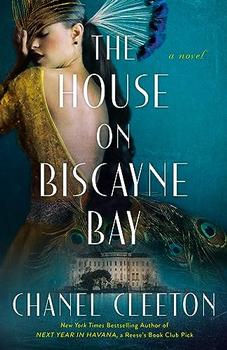
The House on Biscayne Bay
by Chanel Cleeton
As death stalks a gothic mansion in Miami, the lives of two women intertwine as the past and present collide.
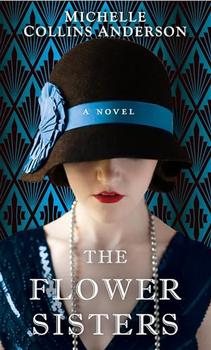
The Flower Sisters
by Michelle Collins Anderson
From the new Fannie Flagg of the Ozarks, a richly-woven story of family, forgiveness, and reinvention.
The Funeral Cryer by Wenyan Lu
Debut novelist Wenyan Lu brings us this witty yet profound story about one woman's midlife reawakening in contemporary rural China.
Your guide toexceptional books
BookBrowse seeks out and recommends the best in contemporary fiction and nonfiction—books that not only engage and entertain but also deepen our understanding of ourselves and the world around us.