Summary | Excerpt | Reading Guide | Reviews | Beyond the book | Read-Alikes | Genres & Themes | Author Bio
Critics' Opinion:
Readers' Opinion:
First Published:
Mar 2012, 384 pages
Paperback:
Aug 2012, 384 pages
 Book Reviewed by:
Kim Kovacs
Buy This Book
Winner of the 2012 Orange Prize for Fiction
Gaining a different perspective on an old story by placing a minor character in the narrator's seat is not a new technique, but it's one that Madeline Miller uses superbly in her debut novel, The Song of Achilles. Throughout the book she outlines the mythological life of the half-god Achilles and skillfully weaves his fabled companion Patroclus into each important event of the hero's life. It is through Patroclus's eyes that the reader witnesses legendary scenes such as Achilles' training with the centaur Chiron and his conquests on the battlefield. However, the narration reflects more on Patroclus than its subject, and surprisingly it is Patroclus that we come to know and admire, not Achilles; the former becomes the hero of the tale.
Miller's storyline relies primarily on her narrator's richly detailed observations, and although the plot will be familiar to most readers, Patroclus's point of view adds a freshness that is highly entertaining. That alone says much about the author's talent (and perhaps her courage); producing a well-written, satisfying work based on a classic is no mean feat.
Her clipped sentences and undemanding vocabulary prevent the story from becoming mired in description and make The Song of Achilles a fast and absorbing read. The cadence gives the narrative an appropriate epic feel, as if it were an oral tale instead of a written one.
[Achilles] did not kneel. He did not call out a greeting to the great king, or incline his head or offer a gift. He did nothing but stand straight, chin proudly lifted, before them all... My hands clutched each other behind my back as I watched Achilles and the game he played. His face seemed cut from stone as he stared his warning at the king of Mycenae - You do not command me. The silence went on and on, painful and breathless, like a singer overreaching to finish a phrase.
However, the novel does have a few small weaknesses. Miller fails to fully develop Achilles in drawing the contrast between the two main characters. He comes off flat and distant, and the reader doesn't really learn more about him than what can be gleaned from legend. (But perhaps this is the author's intention in order to keep the focus elsewhere?) I also found that while Miller's descriptions of the setting are fairly good, they still fall short in their ability to truly evoke time and place. I have a feeling that I wouldn't have noticed this failing quite so much if the rest of her writing hadn't been so vivid.
Readers should also be aware that Miller speculates that the relationship between Achilles and Patroclus was physical as well as emotional (and certainly the interpretation is a reasonable one based on the source material). The novel contains scenes of physical intimacy, which are handled circumspectly and without a lot of graphic description.
Most readers who enjoy historical fiction will find something to love about this book. Miller's writing is beautiful, and that in itself is worth the price of admission. The moving, romantic nature of the narrative is nicely balanced with tales of heroism, particularly once the scene shifts to the Trojan War. This debut is a definite winner.
 This review
first ran in the March 21, 2012
issue of BookBrowse Recommends.
This review
first ran in the March 21, 2012
issue of BookBrowse Recommends.

If you liked The Song of Achilles, try these:

by Selby Wynn Schwartz
Published 2024
An exhilarating debut from a radiant new voice, After Sappho reimagines the intertwined lives of feminists at the turn of the twentieth century.
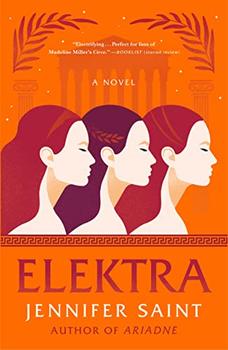
by Jennifer Saint
Published 2023
A spellbinding reimagining of the story of Elektra, one of Greek mythology's most infamous heroines, from Jennifer Saint, the author of the beloved international bestseller, Ariadne.



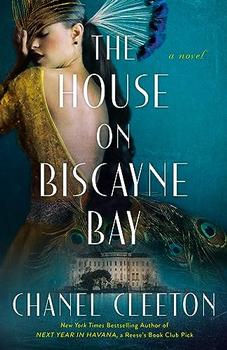
The House on Biscayne Bay
by Chanel Cleeton
As death stalks a gothic mansion in Miami, the lives of two women intertwine as the past and present collide.
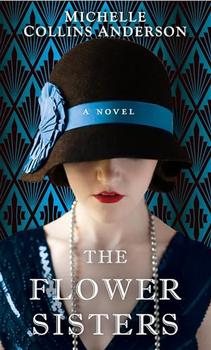
The Flower Sisters
by Michelle Collins Anderson
From the new Fannie Flagg of the Ozarks, a richly-woven story of family, forgiveness, and reinvention.

The Funeral Cryer by Wenyan Lu
Debut novelist Wenyan Lu brings us this witty yet profound story about one woman's midlife reawakening in contemporary rural China.
Your guide toexceptional books
BookBrowse seeks out and recommends the best in contemporary fiction and nonfiction—books that not only engage and entertain but also deepen our understanding of ourselves and the world around us.