Summary | Excerpt | Reviews | Beyond the book | Read-Alikes | Genres & Themes | Author Bio
Critics' Opinion:
Readers' Opinion:
First Published:
Aug 2010, 320 pages
Paperback:
Jul 2011, 320 pages
 Book Reviewed by:
Elena Spagnolie
Buy This Book
In The Sugar King of Havana, John Paul Rathbone tells about the rise and fall of sugar mogul Julio Lobo, one of Cuba's most powerful and wealthiest businessmen in the decades before the Cuban Revolution. Lobo's fortune made him more than just rich; in a country where, today, personal wealth and property ownership is illegal, Lobo's affluence elevated him to legendary status. As Rathbone explains, "In Havana today to have Croesus-like wealth is referred to as ser rico como un Julio Lobo - to be as rich as a Julio Lobo. After almost five decades of communism… he has become emblematic of a way of life that existed… before Castro's revolution did away with such men." And certainly the events of Lobo's life - glamorous love affairs, extreme financial risks (with both positive and negative outcomes), numerous attempts on his life, an unyielding entrepreneurial drive, and a fateful midnight meeting with "Che" Guevara in which everything was taken away - add to that fascinating legend.
 What makes this book especially unique, however, is Rathbone's personal relationship to the material. His mother, Margarita Rathbone, grew up in the same upper class Cuban society as Lobo's daughters and was a close friend of his youngest, María Luisa. Rathbone interweaves narratives of his mother's youth, her exile and eventual return to Cuba with chronicles of Lobo's life, which contribute to the complexity and intrigue of his book. He also grapples with his own sense of identity as the son of a Cuban exile growing up in England and explains how "almost everything about the pairing of England and Cuba seemed to me like a contradiction requiring my own personal, internal reconciliation." In this way, Rathbone's work takes on a sense of personal importance and inadvertently shows how Cuban exile has the potential to create feelings of displacement in subsequent generations.
There is a beautiful, lost quality to his narrative, his quest to piece together his heritage. He recalls: "…my mother spoke to me as a young child and seeded me with recollections that left me with a strange nostalgia for a place that I had never seen." This nostalgia is ever-present in his writing; his evocation of place is vivid, and at times it feels like you are in Cuba, that you can actually smell the sugar cane burning in the fields. However, at other times, Rathbone's lyricism feels a bit unnecessary for a work of nonfiction, and undermines the strength of his extensive research. And extensive it is. In addition to his travels and poignant interviews, Rathbone gained access to the previously un-researched Lobo family archive as well as a collection of approximately five hundred letters between Julio Lobo and his father. These details bring depth to the narrative and truly inform the reader about Lobo's life in an intimate way.
Nonetheless, there is also a noticeable idealization of Julio Lobo - perhaps, too, a part of Rathbone's nostalgia - that keeps Lobo's story from appearing as deep or as complex as it might have actually been. He is unintentionally kept at arms length, often painted in a favorable light, and conclusions about his personality are made without evidence. (Though, given Rathbone's amazing amount of research, I believe he must have his reasons.) It seems the negative aspects of Lobo's character are held back - the emotional consequences of his romantic affairs, the possible darker motivations for his aggressive business sense, or the frustration of living in a place where, "That which should be possible is forbidden. Everything else is illegal."
Despite this, Rathbone does an excellent job weaving together Lobo's story, his mother's and his own, and his descriptions of the effects of Cuban politics on the upper class are more than vivid. There is a sense of loss and reminiscence in his voice that is familiar to me, as I have heard it in my father's voice when talking about the Cuba of his childhood as well.
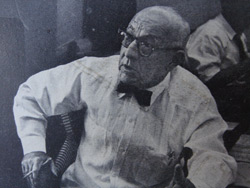
Image: Julio Lobo in the trading room (found by the author in the family archives)
 This review was originally published in The BookBrowse Review in September 2010, and has been updated for the
September 2011 edition.
Click here to go to this issue.
This review was originally published in The BookBrowse Review in September 2010, and has been updated for the
September 2011 edition.
Click here to go to this issue.

If you liked The Sugar King of Havana, try these:

by Mark Kurlansky
Published 2018
A city of tropical heat, sweat, ramshackle beauty, and its very own cadence--a city that always surprises--Havana is brought to pulsing life by New York Times bestselling author Mark Kurlansky.

by Mal Peet
Published 2013
Can love survive a lifetime? With its urgent sense of history, sweeping emotion, and winning young narrator, Mal Peet's latest is an unforgettable, timely exploration of life during wartime.

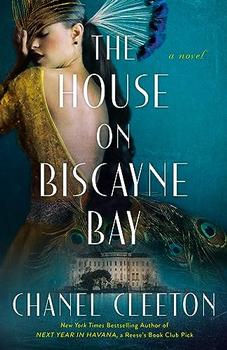
The House on Biscayne Bay
by Chanel Cleeton
As death stalks a gothic mansion in Miami, the lives of two women intertwine as the past and present collide.
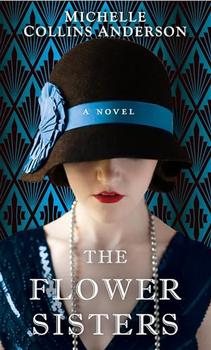
The Flower Sisters
by Michelle Collins Anderson
From the new Fannie Flagg of the Ozarks, a richly-woven story of family, forgiveness, and reinvention.
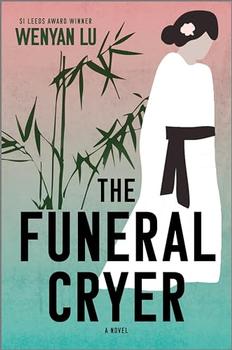
The Funeral Cryer by Wenyan Lu
Debut novelist Wenyan Lu brings us this witty yet profound story about one woman's midlife reawakening in contemporary rural China.
Your guide toexceptional books
BookBrowse seeks out and recommends the best in contemporary fiction and nonfiction—books that not only engage and entertain but also deepen our understanding of ourselves and the world around us.