Summary | Excerpt | Reading Guide | Reviews | Beyond the book | Read-Alikes | Genres & Themes | Author Bio
Critics' Opinion:
Readers' Opinion:
First Published:
May 2008, 256 pages
Paperback:
Apr 2009, 256 pages
 Book Reviewed by:
Kim Kovacs
Buy This Book
Just 52 days after the Siege of Sarajevo began, 35-year-old
cellist
Vedran Smailovic watched as a mortar shell killed 22 of
his friends and neighbors waiting across the street in a
bread line. For the next 22 days, Smailovic took his cello
to the site of their deaths and played the hauntingly
beautiful
Adagio in G Minor, the only response he felt he
could make in the face of so horrific an event. It is this
reaction to the inhumanity of a brutal war that forms the
core around which The Cellist of Sarajevo revolves.
It is difficult to imagine what it would be like to exist in
a place where the choice of which street to cross and when
to do so is a life and death decision. Galloway's writing
transports readers into exactly those circumstances, putting
them right there in the midst of war-torn Sarajevo with all
its hardships and uncertainty.
Little of the narrative involves the fictionalized character
of the cellist himself. Instead we focus on the lives of
three ordinary people in extraordinary circumstances. All
three are aware of the cellist's act of remembrance, but
only one of them even has the opportunity to hear his
performance. There are no deep philosophical discussions
regarding war between them. They concentrate on the things
that would concern normal people in grim circumstances –
food and water, family, life and death, recollections of
good times long gone, hope for something better, the
struggle to do the right thing. The characters are
well-written, created with such depth and sympathy that they
practically feel like family by the end of the novel.
Galloway puts his readers in his characters' shoes, allowing
us to view the war through their eyes, hear it through their
ears. He portrays his protagonists with sympathy and
humanity without ever drifting into sentimentality or
cliché. His prose is spare but conveys an extraordinary
amount of detail in just a few words. One of the characters
leaves his home to make the long, dangerous trip across town
to get water for his family:
"As the door to his apartment closes behind him he presses his back to it and slides to the ground. His legs are heavy, his hands cold. He doesn't want to go. What he wants is to go back inside, crawl into bed, and sleep until this war is over. He wants to take his younger daughter to a carnival. He wants to sit up, anxious, waiting for his older daughter to return from a movie with a boy he doesn't really like. He wants his son, the middle child, only ten years old, to think about anything other than how long it will be before he can join the army and fight."
Reading the novel is a very intense, almost
tiring experience, as every paragraph contains a devastating
memory, observation or choice. The images the author paints
are vivid and unforgettable. Not a single word feels out of
place. The reader has the feeling that nothing can be added
or removed from the novel, that changing it in any way would
lessen it.
Interestingly, Galloway never mentions the ethnic divisions
that were such a big part of the historic conflict. If it
wasn't for the fact that the narrative mentions various
Sarajevo streets and neighborhoods, the novel could be set
in just about any location where a city and its civilians
are caught up in war. The decisions Galloway's characters
must make are universal.
Every now and then a book comes along that makes such an
impression that the reader wants to rush out and buy copies
for all their friends. The Cellist of Sarajevo is
such a novel. It is a work of rare depth and beauty, and is
highly recommended.
The Balkans
The 20th century was an intensely bloody time for the Balkan
region (20th
century timeline & maps) as it emerged from centuries of
control by the Ottoman Empire, and briefer control by the
Austro-Hungarian Empire. The assassination of Archduke
Ferdinand, that triggered World War I, took place on the
Latin Bridge (also known as the Princip Bridge) in
Sarajevo (now the capital of the country of Bosnia and
Herzegovina) leading to massive bloodshed across Europe
including the Balkans.
The bloodshed in the Balkans during World War II was even
worse. The diverse ethnic and political groups living in the
area fought among themselves as well as against the Nazis.
Yugoslav war casualties topped one million people, and over
half a million (mainly ethnic Serbs, plus Jews and gypsies)
were killed in the Jasenovac concentration camp in Croatia.
By the end of the war, the Communist partisans, led by Josip
Broz Tito, were victorious, leading to the consolidation of
six Balkan republics into one single-party socialist state
known as Yugoslavia .... continued in sidebar.
 This review was originally published in The BookBrowse Review in June 2008, and has been updated for the
April 2009 edition.
Click here to go to this issue.
This review was originally published in The BookBrowse Review in June 2008, and has been updated for the
April 2009 edition.
Click here to go to this issue.

If you liked The Cellist of Sarajevo, try these:

by Aeham Ahmad
Published 2021
An astonishing but true account of a pianist's escape from war-torn Syria to Germany offers a deeply personal perspective on the most devastating refugee crisis of this century.
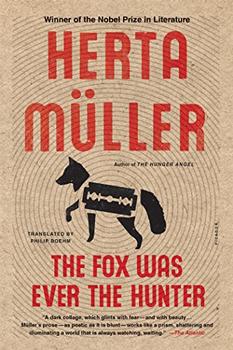
by Herta Muller
Published 2017
An early masterpiece from the winner of the Nobel Prize hailed as the laureate of life under totalitarianism.
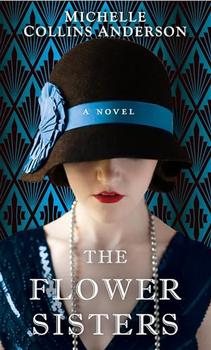
The Flower Sisters
by Michelle Collins Anderson
From the new Fannie Flagg of the Ozarks, a richly-woven story of family, forgiveness, and reinvention.
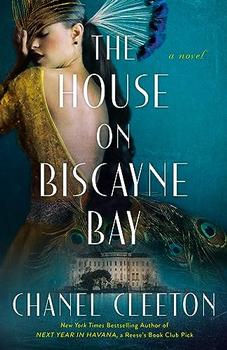
The House on Biscayne Bay
by Chanel Cleeton
As death stalks a gothic mansion in Miami, the lives of two women intertwine as the past and present collide.
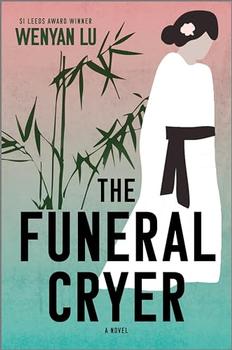
The Funeral Cryer by Wenyan Lu
Debut novelist Wenyan Lu brings us this witty yet profound story about one woman's midlife reawakening in contemporary rural China.
Your guide toexceptional books
BookBrowse seeks out and recommends the best in contemporary fiction and nonfiction—books that not only engage and entertain but also deepen our understanding of ourselves and the world around us.