Summary | Excerpt | Reading Guide | Reviews | Beyond the Book | Readalikes | Genres & Themes | Author Bio
Critics' Opinion:
Readers' Opinion:
First Published:
Nov 2012, 256 pages
Paperback:
Nov 2013, 256 pages
 Book Reviewed by:
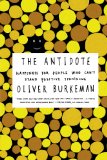
Stacey Brownlie
Buy This Book

Which is exactly what happened in Wood's research. In one set of experiments, people were divided into subgroups of those with low and high self-esteem, then asked to undertake a journal-writing exercise; every time a bell rang, they were to repeat to themselves the phrase 'I am a lovable person.' According to a variety of ingenious mood measures, those who began the process with low self-esteem became appreciably less happy as a result of telling themselves that they were lovable. They didn't feel particularly lovable to begin with – and trying to convince themselves otherwise merely solidified their negativity. 'Positive thinking' had made them feel worse.
* * *
The arrival of George Bush onstage in San Antonio was heralded by the sudden appearance of his Secret Service detail. These were men who would probably have stood out anywhere, in their dark suits and earpieces, but who stood out twice as prominently at Get Motivated! thanks to their rigid frowns. The job of protecting former presidents from potential assassins, it appeared, wasn't one that rewarded looking on the bright side and assuming that nothing could go wrong.
Bush himself, by contrast, bounded onstage grinning. 'You know, retirement ain't so bad, especially when you get to retire to Texas!' he began, before launching into a speech he had evidently delivered several times before. First, he told a folksy anecdote about spending his post-presidency cleaning up after his dog ('I was picking up that which I had been dodging for eight years!'). Then, for a strange moment or two, it seemed as if the main topic of his speech would be how he once had to choose a rug for the Oval Office ('I thought to myself, the presidency is going to be a decision-making experience!'). But his real subject, it soon emerged, was optimism. 'I don't believe you can lead a family, or a school, or a city, or a state, or a country, unless you're optimistic that the future is going to be better,' he said. 'And I want you to know that, even in the darkest days of my presidency, I was optimistic that the future was going to be better than the past for our citizens and the world.'
You need not hold any specific political opinion about the forty-third president of the United States to see how his words illustrate a fundamental strangeness of the 'cult of optimism'. Bush was not ignoring the numerous controversies of his administration – the strategy one might have imagined he would adopt at a motivational seminar, before a sympathetic audience and facing no risk of hostile questions. Instead, he had chosen to redefine them as evidence in support of his optimistic attitude. The way Bush saw it, the happy and successful periods of his presidency proved the benefits of an optimistic outlook, of course – but so did the unhappy and unsuccessful ones. When things are going badly, after all, you need optimism all the more. Or to put it another way: once you have resolved to embrace the ideology of positive thinking, you will find a way to interpret virtually any eventuality as a justification for thinking positively. You need never spend time considering how your actions might go wrong.
Could this curiously unfalsifiable ideology of positivity at all costs – positivity regardless of the results – be actively dangerous? Opponents of the Bush administration's foreign policies might have reason to think so. This is also one part of the case made by the social critic Barbara Ehrenreich, in her 2009 book Bright-Sided: How Positive Thinking Is Undermining America. One underappreciated cause of the global financial crisis of the late 2000s, she argues, was an American business culture in which even thinking about the possibility of failure – let alone speaking up about it at meetings – had come to be considered an embarrassing faux pas. Bankers, their narcissism stoked by a culture that awarded grand ambition above all, lost the capacity to distinguish between their ego-fuelled dreams and concrete results. Meanwhile, homebuyers assumed that whatever they wanted could be theirs if they wanted it badly enough (how many of them had read books such as The Secret, which makes exactly that claim?) and accordingly sought mortgages they were unable to repay. Irrational optimism suffused the financial sector, and the professional purveyors of optimism – the speakers and self-help gurus and seminar organisers – were only too happy to encourage it. 'To the extent that positive thinking had become a business in itself,' writes Ehrenreich, 'business was its principal client, eagerly consuming the good news that all things are possible through an effort of mind. This was a useful message for employees, who by the turn of the twenty-first century were being required to work longer hours for fewer benefits and diminishing job security. But it was also a liberating ideology for top-level executives. What was the point in agonising over balance sheets and tedious analyses of risks – and why bother worrying about dizzying levels of debt and exposure to potential defaults – when all good things come to those who are optimistic enough to expect them?'
Excerpted from The Antidote by Oliver Burkeman. Copyright © 2012 by Oliver Burkeman. Excerpted by permission of Faber and Faber. All rights reserved. No part of this excerpt may be reproduced or reprinted without permission in writing from the publisher.





The House on Biscayne Bay
by Chanel Cleeton
As death stalks a gothic mansion in Miami, the lives of two women intertwine as the past and present collide.

The Flower Sisters
by Michelle Collins Anderson
From the new Fannie Flagg of the Ozarks, a richly-woven story of family, forgiveness, and reinvention.

The Funeral Cryer by Wenyan Lu
Debut novelist Wenyan Lu brings us this witty yet profound story about one woman's midlife reawakening in contemporary rural China.
Your guide toexceptional books
BookBrowse seeks out and recommends the best in contemporary fiction and nonfiction—books that not only engage and entertain but also deepen our understanding of ourselves and the world around us.