Summary | Excerpt | Reading Guide | Reviews | Beyond the Book | Readalikes | Genres & Themes | Author Bio
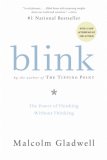
Critics' Opinion:
Readers' Opinion:
First Published:
Jan 2005, 288 pages
Paperback:
Apr 2007, 320 pages
 Book Reviewed by:
BookBrowse Review Team
Buy This Book

By now you are expecting me to say the second option is the best one. You're right, and here's why. Believe it or not, the risk of being sued for malpractice has very little to do with how many mistakes a doctor makes. Analyses of malpractice lawsuits show that there are highly skilled doctors who get sued a lot and doctors who make lots of mistakes and never get sued. At the same time, the overwhelming number of people who suffer an injury due to the negligence of a doctor never file a malpractice suit at all. In other words, patients don't file lawsuits because they've been harmed by shoddy medical care. Patients file lawsuits because they've been harmed by shoddy medical care and something else happens to them.
What is that something else? It's how they were treated, on a personal level, by their doctor. What comes up again and again in malpractice cases is that patients say they were rushed or ignored or treated poorly. "People just don't sue doctors they like," is how Alice Burkin, a leading medical malpractice lawyer, puts it. "In all the years I've been in this business, I've never had a potential client walk in and say, ‘I really like this doctor, and I feel terrible about doing it, but I want to sue him.' We've had people come in saying they want to sue some specialist, and we'll say, ‘We don't think that doctor was negligent. We think it's your primary care doctor who was at fault.' And the client will say, ‘I don't care what she did. I love her, and I'm not suing her.'"
Burkin once had a client who had a breast tumor that wasn't spotted until it had metastasized, and she wanted to sue her internist for the delayed diagnosis. In fact, it was her radiologist who was potentially at fault. But the client was adamant. She wanted to sue the internist. "In our first meeting, she told me she hated this doctor because she never took the time to talk to her and never asked about her other symptoms," Burkin said. "‘She never looked at me as a whole person,' the patient told us. . . . When a patient has a bad medical result, the doctor has to take the time to explain what happened, and to answer the patient's questions—to treat him like a human being. The doctors who don't are the ones who get sued." It isn't necessary, then, to know much about how a surgeon operates in order to know his likelihood of being sued. What you need to understand is the relationship between that doctor and his patients.
Recently the medical researcher Wendy Levinson recorded hundreds of conversations between a group of physicians and their patients. Roughly half of the doctors had never been sued. The other half had been sued at least twice, and Levinson found that just on the basis of those conversations, she could find clear differences between the two groups. The surgeons who had never been sued spent more than three minutes longer with each patient than those who had been sued did (18.3 minutes versus 15 minutes). They were more likely to make "orienting" comments, such as "First I'll examine you, and then we will talk the problem over" or "I will leave time for your questions"—which help patients get a sense of what the visit is supposed to accomplish and when they ought to ask questions. They were more likely to engage in active listening, saying such things as "Go on, tell me more about that," and they were far more likely to laugh and be funny during the visit. Interestingly, there was no difference in the amount or quality of information they gave their patients; they didn't provide more details about medication or the patient's condition. The difference was entirely in how they talked to their patients.
It's possible, in fact, to take this analysis even further. The psychologist Nalini Ambady listened to Levinson's tapes, zeroing in on the conversations that had been recorded between just surgeons and their patients. For each surgeon, she picked two patient conversations. Then, from each conversation, she selected two ten-second clips of the doctor talking, so her slice was a total of forty seconds. Finally, she "content-filtered" the slices, which means she removed the high-frequency sounds from speech that enable us to recognize individual words. What's left after content-filtering is a kind of garble that preserves intonation, pitch, and rhythm but erases content. Using that slice—and that slice alone—Ambady did a Gottman-style analysis. She had judges rate the slices of garble for such qualities as warmth, hostility, dominance, and anxiousness, and she found that by using only those ratings, she could predict which surgeons got sued and which ones didn't.
This is the full text of Chapter 1 of Blink (pages 18-47). Copyright © 2005 by Malcolm Gladwell. All rights reserved. No part of this book maybe reproduced without written permission from the publisher, Little, Brown & Co.






The House on Biscayne Bay
by Chanel Cleeton
As death stalks a gothic mansion in Miami, the lives of two women intertwine as the past and present collide.

The Flower Sisters
by Michelle Collins Anderson
From the new Fannie Flagg of the Ozarks, a richly-woven story of family, forgiveness, and reinvention.
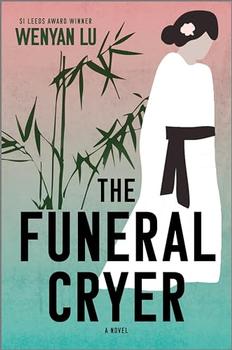
The Funeral Cryer by Wenyan Lu
Debut novelist Wenyan Lu brings us this witty yet profound story about one woman's midlife reawakening in contemporary rural China.
Your guide toexceptional books
BookBrowse seeks out and recommends the best in contemporary fiction and nonfiction—books that not only engage and entertain but also deepen our understanding of ourselves and the world around us.