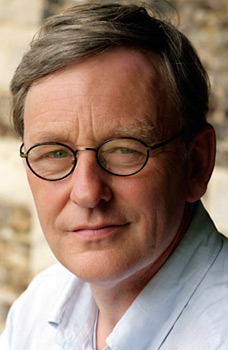
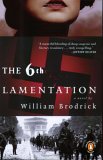
William Brodrick discusses the genesis of The 6th Lamentation and how his family history relates to the novel?
Could you describe the genesis of The 6th Lamentation? How does you own
family history relate to the novel?
The novel springs from two sources. The first is personal. During the
occupation of Holland my mother was part of a group who tried to smuggle Jewish
children to safety. She was caught and imprisoned. The memory of what the Nazis
did lay fresh upon her for the rest of her life. She talked little about her own
experience, but always with a charged brevity. I wanted to write a memorial to
her and that terrible time. The second source is rather prosaic. For a long time
I had thought that a former lawyer who had become a monk—a natural blend of the
practical and the reflective—would make an interesting character in fiction,
especially if he was a person of faith who understood the troubled questions of
today without possessing any trim answers. The novel grew from bringing together
these two streams of interest.
As someone who left the monastery to become a lawyer, do you now see issues
of justice more in terms of their legal or their theological implications? Or is
it impossible to separate the two?
I cannot separate them. Or perhaps I should say the imperative to implement
justice raises both juridical and theological questions. On the one hand we must
constantly interrogate our legislative systems, asking whether they adequately
recognise and enforce identified rights. But absolute justice is always elusive.
Certain rights are not recognised; others are difficult to protect; and the law
cannot restore to victims what they have lost, not least when it is their life.
These reflections can prompt theological discourse, because we are confronting
not so much the limitations of legal systems as the problem of evil, along with
the mystery of God's relationship to the world. While these questions imply a
standpoint of faith, it seems to me that everyone asks them at some point or
another. My novel, and indeed anything else I may write, is very much concerned
with this territory. Incidentally, I chose the name 'Anselm' for my character,
after the medieval saint, lawyer and theologian, because for him the starting
point lay in faith seeking understanding, not understanding seeking faith. These
are deep but inviting waters.
The 6th Lamentation shares characteristics of both tragedy and comedy, with
the final family reunion scene serving nearly the same function as a wedding in
that it brings about a number of reconciliations. Do you think your book is, in
the end, an affirmative, optimistic story?
Emphatically so, but the tragedy remains what it is. This is important. It is
human beings who transcend circumstances, not circumstances that turn out to be
not so bad after all. This is the mysterious nature of the human spirit that I
tried to explore through Agnes: she survives, but not at the expense of the
experience that, in fact, overwhelmed her. She has reached this almost mystical
state of self-possession even before any reconciliation with the past and her
family have occurred (at least, I think so). Indeed, by the end of the novel all
the main characters have come to an inner resolution of sorts. Taken together,
they presage something greater than their personal journeys. The reunion scene,
then, has an eschatological quality: it is the gathering in of broken pieces,
without taking anything away from what went wrong. In fact, it is not just
restoration, but benediction, for Agnes finds herself the head of a family she
knew nothing about. And yet the memory of those who were lost is ever present.
The most telling 'reunion', however, occurs elsewhere, and it is the beginning
of a relationship: that of Salomon Lachaise and Max. This is a reconciliation in
the most unthinkable of places. From this perspective, I suppose the whole novel
is a statement that all will be well, and all manner of things will be well,
regardless of what may happen. It should be noted that the last line of the book
is given to those that were taken away.
Much of the novel's plot revolves around misjudgements and false appearances.
Why have you made these such prominent features of your book?
In a sense this was not a decision—it emerged in the writing. But since the
novel, in part, explores the importance of forgiveness, I did want to stress the
consequences of apparently justified condemnation. Throughout the narrative
everybody has good reasons for the erroneous judgments they make. But
assumptions are allowed too much root room. As a result everyone suffers. Father
Chambray even leaves his Priory. The role of the Church seems deceptive, but
another complexion emerges when all the facts are known. The irony, however, is
that where right judgement was possible, the opportunity was defeated by a
failure to see the evidence for what it was. As Salomon Lachaise bitterly
observes, Schwermann was exactly what he appeared to be.
What, in your view, is the moral value of getting history right? Are we in
danger of forgetting the Holocaust now that those who experienced it will soon
be gone?
I think it was Santayana who said that unless we remember the past we are
condemned to repeat it. Hence it is a matter of duty. But history is also about
honouring and preserving memory and that, too, is a moral imperative. These twin
obligations are never exhausted, for 'getting it 'right' is a matter of
constantly refining our understanding. This is one of the reasons why the book
is so concerned with words and the fragility of language: in the end that is all
that we will have; the witnesses, of necessity, pass on. Thus, I believe the
Holocaust will be remembered, if only because of the reverence, quality and
commitment of modern scholarship. If there is a danger, it lies perhaps in a
complacency to which we are all prone: that species of wilful ignorance whereby
knowledge of detail is left to professionals. This can blind us to the
implications of circumstances that should stand out as a warning. Then the
informed individual becomes the prophet shouting from a sideline. And it is
frequently the lot of prophets to be at least misunderstood if not rejected.
What are you working on now? Do you have an idea for your next book? Will we
see Father Anselm again?
My next book involves Father Anselm revisiting a trial that was the
foundation of his reputation. Or, rather, the trial revisits him. A lawyer
involved in the case dies leaving a key to a safety deposit box. Its contents
demonstrate that Anselm has been the unwitting agent of a moral catastrophe.
Here, I suspect, is what Graham Greene called 'the pattern in the carpet'—the
recurring preoccupations of an author that define his or her work—for once more
I find myself writing about appearances, the potency of the past and the awful
paradox of culpability without blame.
What writers have been most important to your own work?
I can't point to any conscious influences. Intuitively, I suspect I'm
indebted somehow to Richard Powers. The writer who has most influenced me (as
opposed to my work) is probably Thomas Merton. That said, Aristotle, Aquinas,
Tolstoy, Dostoyevsky, Dickens, Moltmann, Rahner, Sobrino and a host of others
have all marked my thinking. As for technique, I bore in mind Bertrand Russell's
short and invaluable essay 'How to write', which contains some wonderful maxims
for expository prose. I also plundered the letters of C S Lewis who was
frequently asked by young people for advice on the craft of writing. The
replies, often a half page in length, are gold dust.
Unless otherwise stated, this interview was conducted at the time the book was first published, and is reproduced with permission of the publisher. This interview may not be reproduced or reprinted without permission in writing from the copyright holder.

Charles Cumming is a British writer of spy fiction. He was educated at Eton College (1985-1989) and the University of Edinburgh (1990-1994), where he graduated with First Class Honours in English Literature. The Observer has ... (more)
If you enjoyed:
The 6th Lamentation
Try:
A Colder War
by Charles Cumming

Born in Canada, Leslie Forbes worked in London as a writer, artist and broadcaster for over 20 years. She was the author of four award-winning travel books and the internationally bestselling novels: Bombay Ice, a Sunday ... (more)
If you enjoyed:
The 6th Lamentation
Try:
Waking Raphael
by Leslie Forbes
We recommend 8 similar authors

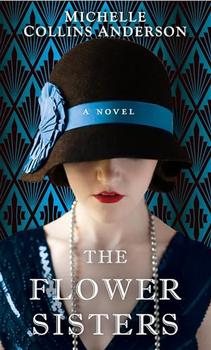
The Flower Sisters
by Michelle Collins Anderson
From the new Fannie Flagg of the Ozarks, a richly-woven story of family, forgiveness, and reinvention.
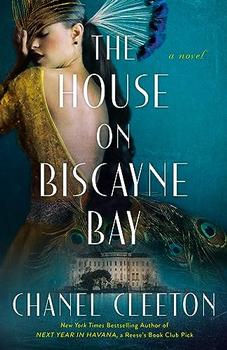
The House on Biscayne Bay
by Chanel Cleeton
As death stalks a gothic mansion in Miami, the lives of two women intertwine as the past and present collide.

The Funeral Cryer by Wenyan Lu
Debut novelist Wenyan Lu brings us this witty yet profound story about one woman's midlife reawakening in contemporary rural China.
Your guide toexceptional books
BookBrowse seeks out and recommends the best in contemporary fiction and nonfiction—books that not only engage and entertain but also deepen our understanding of ourselves and the world around us.