
-
Your next favorite book
is waiting.
Summary | Excerpt | Reading Guide | Reviews | Beyond the book | Read-Alikes | Genres & Themes | Author Bio
 Book Reviewed by:
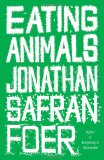
Brilliantly synthesizing philosophy, literature, science, memoir and his own detective work, Eating Animals explores the many fictions we use to justify our eating habits - from folklore to pop culture to family traditions and national myth - and how such tales can lull us into a brutal forgetting.
Jonathan Safran Foer spent much of his teenage and college years oscillating between omnivore and vegetarian. But on the brink of fatherhood - facing the prospect of having to make dietary choices on a child's behalf - his casual questioning took on an urgency. His quest for answers ultimately required him to visit factory farms in the middle of the night, dissect the emotional ingredients of meals from his childhood, and probe some of his most primal instincts about right and wrong. Brilliantly synthesizing philosophy, literature, science, memoir and his own detective work, Eating Animals explores the many fictions we use to justify our eating habits - from folklore to pop culture to family traditions and national myth - and how such tales can lull us into a brutal forgetting. Marked by Foer's profound moral ferocity and unvarying generosity, as well as the vibrant style and creativity that made his previous books, Everything is Illuminated and Extremely Loud and Incredibly Close, widely loved, Eating Animals is a celebration and a reckoning, a story about the stories we've told-and the stories we now need to tell.
George
I spent the first twenty-six years of my life disliking animals. I thought of them as bothersome, dirty, unapproachably foreign, frighteningly unpredictable, and plain old unnecessary. I had a particular lack of enthusiasm for dogs - inspired, in large part, by a related fear that I inherited from my mother, which she inherited from my grandmother. As a child I would agree to go over to friends' houses only if they confined their dogs in some other room. If a dog approached in the park, I'd become hysterical until my father hoisted me onto his shoulders. I didn't like watching television shows that featured dogs. I didn't understand - I disliked - people who got excited about dogs. It's possible that I even developed a subtle prejudice against the blind.
And then one day I became a person who loved dogs. I became a dog person.
George came very much out of the blue. My wife and I hadn't broached the subject of getting a dog, much less set about looking for one. (Why would we...
Discussion Guide & Resource Guide
Questions and topics for discussion
This is a book that everyone should read, vegetarian or not. It is didactic without being dull, it presents its arguments without preaching, it manages to be both approachable in style and appealing to educated readers, and it offers up new arguments in addition to some familiar ones... Perhaps Foer's vision is idealistic, but it is hopeful. And one of the loveliest qualities of Eating Animals is its hopefulness, not just for animals but for human beings as well...continued
Full Review
 (822 words)
(Reviewed by Cindy Anderson).
 J.M. Coetzee
The everyday horrors of factory farming are evoked so vividly, and the case against the people who run the system presented so convincingly, that anyone who, after reading Foer's book, continues to consume the industry's products must be without a heart, or impervious to reason, or both.
J.M. Coetzee
The everyday horrors of factory farming are evoked so vividly, and the case against the people who run the system presented so convincingly, that anyone who, after reading Foer's book, continues to consume the industry's products must be without a heart, or impervious to reason, or both.Foer suggests that meat lovers who don't want to support factory farms consider patronizing small family farms rather than buying grocery store meat, which has been produced by factory farms. The products offered by these small farmers tend to be pricey, but these producers say that their animals live most of their lives outdoors, pain-free, with access to high quality food and water. Foer, who is a vegetarian, doesn't consider them perfect (and he says that some practices, like castrating pigs, are still unacceptable to him), but he finds them to be admirable alternatives for those who choose to eat meat.
Profiled in Eating Animals, Frank Reese's Good
Shepherd Poultry Ranch (Kansas) features free-range poultry and American
...
If you liked Eating Animals, try these:
by Judith Schalansky
Published 2021
Each disparate object described in this book - a Caspar David Friedrich painting, a species of tiger, a villa in Rome, a Greek love poem, an island in the Pacific - shares a common fate: it no longer exists, except as the dead end of a paper trail.
Why Did the Chicken Cross the World?
by Andrew Lawler
Published 2016
From ancient empires to modern economics, veteran journalist Andrew Lawler delivers a sweeping history of the animal that has been most crucial to the spread of civilization across the globe - the chicken.
by Barbara Kingsolver
Published 2008
Bestselling author Barbara Kingsolver returns with her first nonfiction narrative that will open your eyes in a hundred new ways to an old truth: You are what you eat.




A library is thought in cold storage
Click Here to find out who said this, as well as discovering other famous literary quotes!

Can you name the title?
Test your book knowledge with our daily trivia challenge!