Summary | Excerpt | Reviews | Read-Alikes | Genres & Themes | Author Bio
Critics' Opinion:
Readers' Opinion:
First Published:
Jan 2002, 352 pages
Paperback:
Feb 2003, 496 pages
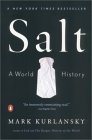
Deftly leading readers around the world and across cultures and centuries, Kurlansky takes an inexpensive, mundane item and shows how it has influenced and affected wars, cultures, governments, religions, societies, economies & food. An entertaining, informative read.
Homer called salt a divine substance. Plato described it as especially dear to the gods. Today we take salt for granted, a common, inexpensive substance that seasons food or clears ice from roads, a word used casually in expressions ("salt of the earth," take it with a grain of salt") without appreciating their deeper meaning. However, as Mark Kurlansky so brilliantly relates in his world-encompassing new book, salt—the only rock we eat—has shaped civilization from the very beginning. Its story is a glittering, often surprising part of the history of mankind.
Until about 100 years ago, when modern chemistry and geology revealed how prevalent it is, salt was one of the most sought-after commodities, and no wonder, for without it humans and animals could not live. Salt has often been considered so valuable that it served as currency, and it is still exchanged as such in places today. Demand for salt established the earliest trade routes, across unknown oceans and the remotest of deserts: the city of Jericho was founded almost 10,000 years ago as a salt trading center. Because of its worth, salt has provoked and financed some wars, and been a strategic element in others, such as the American Revolution and the Civil War. Salt taxes secured empires across Europe and Asia and have also inspired revolution (Gandhi's salt march in 1930 began the overthrow of British rule in India); indeed, salt has been central to the age-old debate about the rights of government to tax and control economies.
The story of salt encompasses fields as disparate as engineering, religion, and food, all of which Kurlansky richly explores. Few endeavors have inspired more ingenuity than salt making, from the natural gas furnaces of ancient China to the drilling techniques that led to the age of petroleum, and salt revenues have funded some of the greatest public works in history, including the Erie Canal, and even cities (Syracuse, New York). Salt's ability to preserve and to sustain life has made it a metaphorical symbol in all religions. Just as significantly, salt has shaped the history of foods like cheese, sauerkraut, olives, and more, and Kurlansky, an award-winning food writer, conveys how they have in turn molded civilization and eating habits the world over.
Salt is veined with colorful characters, from Li Bing, the Chinese bureaucrat who built the world's first dam in 250 BC, to Pattillo Higgins and Anthony Lucas who, ignoring the advice of geologists, drilled an east Texas salt dome in 1901 and discovered an oil reserve so large it gave birth to the age of petroleum. From the sinking salt towns of Cheshire in England to the celebrated salt mine on Avery Island in Louisiana; from the remotest islands in the Caribbean where roads are made of salt to rural Sichaun province, where the last home-made soya sauce is made, Mark Kurlansky has produced a kaleidoscope of history, a multi-layered masterpiece that blends economic, scientific, political, religious, and culinary records into a rich and memorable tale.
Chapter One
A Mandate of Salt
Once I stood on the bank of a rice paddy in rural Sichuan Province, and a lean and aging Chinese peasant, wearing a faded forty-year-old blue jacket issued by the Mao government in the early years of the Revolution, stood knee deep in water and apropos of absolutely nothing shouted defiantly at me, "We Chinese invented many things!"
The Chinese are proud of their inventions. All Chinese leaders, including Mao Zedong, sooner or later give a speech listing the many Chinese firsts. Though rural China these days seems in need of a new round of inventions, it is irrefutably true that the Chinese originated many of the pivotal creations of history, including papermaking, printing, gunpowder, and the compass.
China is the oldest literate society still in existence, and its 4,000 years of written history begin as a history of inventions. It is no longer clear when legends were made into men and when living historic figures were turned into legends. ...
 Anthony Bourdain author of the best-selling Kitchen Confidential
Salt is the fascinating, indispensable history of an indispensable ingredient. Like Kurlansky's earlier work, Cod, it's a must-have book for any serious cook or foodie.
Anthony Bourdain author of the best-selling Kitchen Confidential
Salt is the fascinating, indispensable history of an indispensable ingredient. Like Kurlansky's earlier work, Cod, it's a must-have book for any serious cook or foodie.
If you liked Salt, try these:
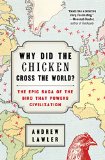
Why Did the Chicken Cross the World?
by Andrew Lawler
Published 2016
From ancient empires to modern economics, veteran journalist Andrew Lawler delivers a sweeping history of the animal that has been most crucial to the spread of civilization across the globe - the chicken.

by Maximillian Potter
Published 2015
Journalist Maximillian Potter uncovers a fascinating plot to destroy the vines of La Romanée-Conti, Burgundy's finest and most expensive wine.


The Flower Sisters
by Michelle Collins Anderson
From the new Fannie Flagg of the Ozarks, a richly-woven story of family, forgiveness, and reinvention.
The House on Biscayne Bay
by Chanel Cleeton
As death stalks a gothic mansion in Miami, the lives of two women intertwine as the past and present collide.

The Funeral Cryer by Wenyan Lu
Debut novelist Wenyan Lu brings us this witty yet profound story about one woman's midlife reawakening in contemporary rural China.
Your guide toexceptional books
BookBrowse seeks out and recommends the best in contemporary fiction and nonfiction—books that not only engage and entertain but also deepen our understanding of ourselves and the world around us.