
-
Your next favorite book
is waiting.
Summary | Excerpt | Reviews | Read-Alikes | Genres & Themes | Author Bio

A Novel
by Jonathan FranzenFreedom comically and tragically captures the temptations and burdens of liberty: the thrills of teenage lust, the shaken compromises of middle age, the wages of suburban sprawl, the heavy weight of empire. An indelible and deeply moving portrait of our time.
Patty and Walter Berglund were the new pioneers of old St. Paul - the gentrifiers, the hands-on parents, the avant-garde of the Whole Foods generation. Patty was the ideal sort of neighbor, who could tell you where to recycle your batteries and how to get the local cops to actually do their job. She was an enviably perfect mother and the wife of Walter's dreams. Together with Walter - environmental lawyer, commuter cyclist, total family man - she was doing her small part to build a better world.
But now, in the new millennium, the Berglunds have become a mystery. Why has their teenage son moved in with the aggressively Republican family next door? Why has Walter taken a job working with Big Coal? What exactly is Richard Katz - outré rocker and Walter’s college best friend and rival - still doing in the picture? Most of all, what has happened to Patty? Why has the bright star of Barrier Street become "a very different kind of neighbor," an implacable Fury coming unhinged before the street's attentive eyes?
In his first novel since The Corrections, Jonathan Franzen has given us an epic of contemporary love and marriage. Freedom comically and tragically captures the temptations and burdens of liberty: the thrills of teenage lust, the shaken compromises of middle age, the wages of suburban sprawl, the heavy weight of empire. In charting the mistakes and joys of Freedom's characters as they struggle to learn how to live in an ever more confusing world, Franzen has produced an indelible and deeply moving portrait of our time.
Excerpt
Freedom
The news about Walter Berglund wasn't picked up locally-he and Patty had moved away to Washington two years earlier and meant nothing to St. Paul now-but the urban gentry of Ramsey Hill were not so loyal to their city as not to read the New York Times. According to a long and very unflattering story in the Times, Walter had made quite a mess of his professional life out there in the nation's capital. His old neighbors had some difficulty reconciling the quotes about him in the Times ("arrogant," "high-handed," "ethically compromised") with the generous, smiling, red-faced 3M employee they remembered pedaling his commuter bicycle up Summit Avenue in February snow; it seemed strange that Walter, who was greener than Greenpeace and whose own roots were rural, should be in trouble now for conniving with the coal industry and mistreating country people. Then again, there had always been something not quite right about the Berglunds.
Walter and Patty were the young ...

If you liked Freedom, try these:
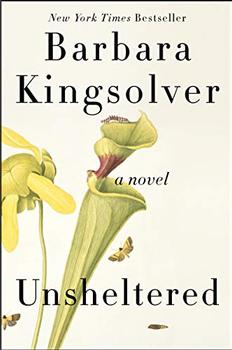
by Barbara Kingsolver
Published 2019
A timely novel that interweaves past and present to explore the human capacity for resiliency and compassion in times of great upheaval.
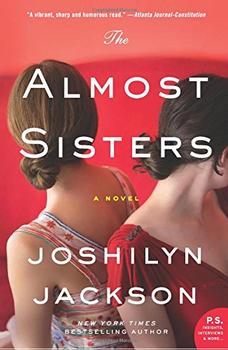
by Joshilyn Jackson
Published 2018
With empathy, grace, humor, and piercing insight, the author of gods in Alabama pens a powerful, emotionally resonant novel of the South that confronts the truth about privilege, family, and the distinctions between perception and reality - the stories we tell ourselves about our origins and who we really are.
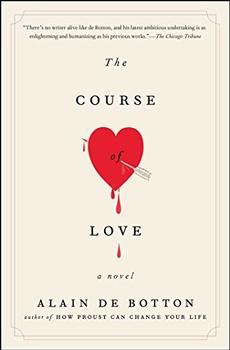
by Alain de Botton
Published 2017
"An engrossing tale [that] provides plenty of food for thought" (People, Best New Books pick), this playful, wise, and profoundly moving second novel from the internationally bestselling author of How Proust Can Change Your Life tracks the beautifully complicated arc of a romantic partnership.




Wherever they burn books, in the end will also burn human beings.
Click Here to find out who said this, as well as discovering other famous literary quotes!

Can you name the title?
Test your book knowledge with our daily trivia challenge!