Summary | Excerpt | Reviews | Readalikes | Genres & Themes | Author Bio

Critics' Opinion:
Readers' Opinion:
First Published:
Aug 2010, 576 pages
Paperback:
Sep 2011, 608 pages

Excerpt
Freedom
The news about Walter Berglund wasn't picked up locally-he and Patty had moved away to Washington two years earlier and meant nothing to St. Paul now-but the urban gentry of Ramsey Hill were not so loyal to their city as not to read the New York Times. According to a long and very unflattering story in the Times, Walter had made quite a mess of his professional life out there in the nation's capital. His old neighbors had some difficulty reconciling the quotes about him in the Times ("arrogant," "high-handed," "ethically compromised") with the generous, smiling, red-faced 3M employee they remembered pedaling his commuter bicycle up Summit Avenue in February snow; it seemed strange that Walter, who was greener than Greenpeace and whose own roots were rural, should be in trouble now for conniving with the coal industry and mistreating country people. Then again, there had always been something not quite right about the Berglunds.
Walter and Patty were the young pioneers of Ramsey Hill-the first college grads to buy a house on Barrier Street since the old heart of St. Paul had fallen on hard times three decades earlier. They paid nothing for their Victorian and then killed themselves for ten years renovating it. Early on, some very determined person torched their garage and twice broke into their car before they got the garage rebuilt. Sunburned bikers descended on the vacant lot across the alley to drink Schlitz and grill knockwurst and rev engines at small hours until Patty went outside in sweatclothes and said, "Hey, you guys, you know what?" Patty frightened nobody, but she'd been a standout athlete in high school and college and possessed a jock sort of fearlessness. From her first day in the neighborhood, she was helplessly conspicuous. Tall, ponytailed, absurdly young, pushing a stroller past stripped cars and broken beer bottles and barfed-upon old snow, she might have been carrying all the hours of her day in the string bags that hung from her stroller. Behind her you could see the baby-encumbered preparations for a morning of baby-encumbered errands; ahead of her, an afternoon of public radio, the Silver Palate Cookbook, cloth diapers, drywall compound, and latex paint; and then Goodnight Moon, then zinfandel. She was already fully the thing that was just starting to happen to the rest of the street.
In the earliest years, when you could still drive a Volvo 240 without feeling self-conscious, the collective task in Ramsey Hill was to relearn certain life skills that your own parents had fled to the suburbs specifically to unlearn, like how to interest the local cops in actually doing their job, and how to protect a bike from a highly motivated thief, and when to bother rousting a drunk from your lawn furniture, and how to encourage feral cats to shit in somebody else's children's sandbox, and how to determine whether a public school sucked too much to bother trying to fix it. There were also more contemporary questions, like, what about those cloth diapers? Worth the bother? And was it true that you could still get milk delivered in glass bottles? Were the Boy Scouts OK politically? Was bulgur really necessary? Where to recycle batteries? How to respond when a poor person of color accused you of destroying her neighborhood? Was it true that the glaze of old Fiestaware contained dangerous amounts of lead? How elaborate did a kitchen water filter actually need to be? Did your 240 sometimes not go into overdrive when you pushed the overdrive button? Was it better to offer panhandlers food, or nothing? Was it possible to raise unprecedentedly confident, happy, brilliant kids while working full-time? Could coffee beans be ground the night before you used them, or did this have to be done in the morning? Had anybody in the history of St. Paul ever had a positive experience with a roofer? What about a good Volvo mechanic? Did your 240 have that problem with the sticky parking-brake cable? And that enigmatically labeled dashboard switch that made such a satisfying Swedish click but seemed not to be connected to anything: what was that?

Excerpted from Freedom: A Novel by Jonathan Franzen. Copyright 2010 by Jonathan Franzen. Excerpted by permission of Farrar, Straus and Giroux.





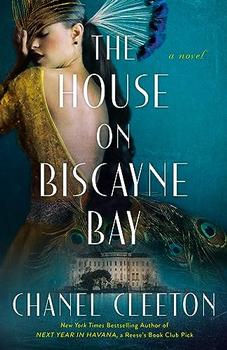
The House on Biscayne Bay
by Chanel Cleeton
As death stalks a gothic mansion in Miami, the lives of two women intertwine as the past and present collide.
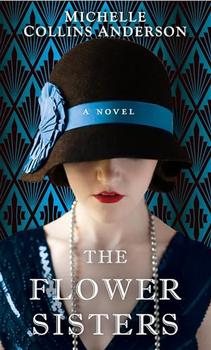
The Flower Sisters
by Michelle Collins Anderson
From the new Fannie Flagg of the Ozarks, a richly-woven story of family, forgiveness, and reinvention.

The Funeral Cryer by Wenyan Lu
Debut novelist Wenyan Lu brings us this witty yet profound story about one woman's midlife reawakening in contemporary rural China.
Your guide toexceptional books
BookBrowse seeks out and recommends the best in contemporary fiction and nonfiction—books that not only engage and entertain but also deepen our understanding of ourselves and the world around us.