Summary | Excerpt | Reviews | Beyond the book | Read-Alikes | Genres & Themes | Author Bio
Critics' Opinion:
Readers' Opinion:
First Published:
Aug 2010, 320 pages
Paperback:
Aug 2011, 320 pages
 Book Reviewed by:
Jo Perry
Buy This Book
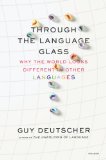
A masterpiece of linguistics scholarship, at once erudite and entertaining, confronts the thorny question of how—and whether—culture shapes language and language, culture.
Linguistics has long shied away from claiming any link between a language and the culture of its speakers: too much simplistic (even bigoted) chatter about the romance of Italian and the goose-stepping orderliness of German has made serious thinkers wary of the entire subject. But now, acclaimed linguist Guy Deutscher has dared to reopen the issue. Can culture influence language—and vice versa? Can different languages lead their speakers to different thoughts? Could our experience of the world depend on whether our language has a word for "blue"?
Challenging the consensus that the fundaments of language are hard-wired in our genes and thus universal, Deutscher argues that the answer to all these questions is—yes. In thrilling fashion, he takes us from Homer to Darwin, from Yale to the Amazon, from how to name the rainbow to why Russian water—a "she"—becomes a "he" once you dip a tea bag into her, demonstrating that language does in fact reflect culture in ways that are anything but trivial. Audacious, delightful, and field-changing, Through the Language Glass is a classic of intellectual discovery.
PROLOGUE
Language, Culture, and Thought
"There are four tongues worthy of the world's use," says the Talmud: "Greek for song, Latin for war, Syriac for lamentation, and Hebrew for ordinary speech." Other authorities have been no less decided in their judgment on what different languages are good for. The Holy Roman Emperor Charles V, king of Spain, archduke of Austria, and master of several Europe an tongues, professed to speaking "Spanish to God, Italian to women, French to men, and German to my horse."
A nation's language, so we are often told, reflects its culture, psyche, and modes of thought. Peoples in tropical climes are so laid-back it's no wonder they let most of their consonants fall by the wayside. And one need only compare the mellow sounds of Portuguese with the harshness of Spanish to understand the quintessential difference between these two neighboring cultures. The grammar of some languages is simply not logical enough to express complex ideas. German, on the other...
How does our mother tongue (Why don't we call it a "father tongue," I wonder?) shape what we see and what we don't see; how we orient ourselves in space and time; and the associations we attach to people, animals, ideas and objects? Why do some people describe the sky as black, not blue? And what exactly did Homer mean when he said "wine-dark sea"? Through the Language Glass is Guy Deutscher's exuberant and very excellent adventure among competing ideas, theories and scientific experiments to find the answers... with a gift for wordplay and a joyful scholarliness, [he] amazes the reader with the richness of linguistic variation and the refinement and inventiveness possible to human imagination and experience...continued
Full Review
(695 words)
This review is available to non-members for a limited time. For full access,
become a member today.
(Reviewed by Jo Perry).
 Stephen Fry
Jaw-droppingly wonderful… A marvelous and surprising book. The ironic, playful tone at the beginning gradates into something serious that is never pompous, something intellectually and historically complex and yet always pellucidly laid out. It left me breathless and dizzy with delight.
Stephen Fry
Jaw-droppingly wonderful… A marvelous and surprising book. The ironic, playful tone at the beginning gradates into something serious that is never pompous, something intellectually and historically complex and yet always pellucidly laid out. It left me breathless and dizzy with delight. Deutscher has much to say about the color "blue": its presence or absence in a language or culture, its sister-color, "green" with which it combines as a single hue in some languages, and notes that it is the color most difficult for children to learn.
Did you know?
This "beyond the book" feature is available to non-members for a limited time. Join today for full access.

If you liked Through the Language Glass, try these:
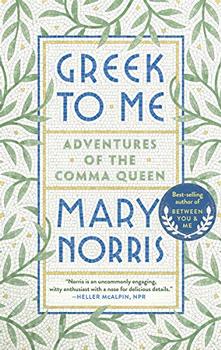
by Mary Norris
Published 2020
The Comma Queen returns with a buoyant book about language, love, and the wine-dark sea.
by Michael Rosen
Published 2016
Michael Rosen takes you on an unforgettable adventure through the history of the alphabet in twenty-six vivid chapters, fizzing with personal anecdotes and fascinating facts





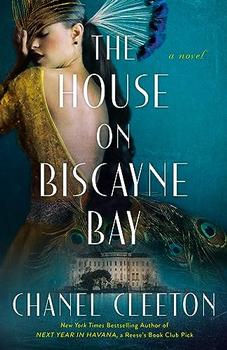
The House on Biscayne Bay
by Chanel Cleeton
As death stalks a gothic mansion in Miami, the lives of two women intertwine as the past and present collide.
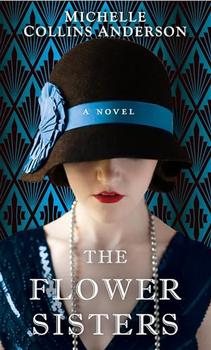
The Flower Sisters
by Michelle Collins Anderson
From the new Fannie Flagg of the Ozarks, a richly-woven story of family, forgiveness, and reinvention.

The Funeral Cryer by Wenyan Lu
Debut novelist Wenyan Lu brings us this witty yet profound story about one woman's midlife reawakening in contemporary rural China.
Your guide toexceptional books
BookBrowse seeks out and recommends the best in contemporary fiction and nonfiction—books that not only engage and entertain but also deepen our understanding of ourselves and the world around us.