
-
Your next favorite book
is waiting.
Summary | Excerpt | Reading Guide | Reviews | Beyond the book | Read-Alikes | Genres & Themes | Author Bio
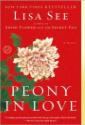
A Novel
by Lisa See Book Reviewed by:
Steeped in traditions and ritual, this story brings to life another time and place – even the intricate realm of the afterworld, with its protocols, pathways, and stages of existence. Ultimately, Lisa See’s new novel addresses universal themes: the bonds of friendship, the power of words, and the age-old desire of women to be heard.
“I finally understand what the poets have written. In spring, moved to passion; in autumn only regret.”
For young Peony, betrothed to a suitor she has never met, these lyrics from The Peony Pavilion mirror her own longings. In the garden of the Chen Family Villa, amid the scent of ginger, green tea, and jasmine, a small theatrical troupe is performing scenes from this epic opera, a live spectacle few females have ever seen. Like the heroine in the drama, Peony is the cloistered daughter of a wealthy family, trapped like a good-luck cricket in a bamboo-and-lacquer cage. Though raised to be obedient, Peony has dreams of her own.
Peony’s mother is against her daughter’s attending the production: “Unmarried girls should not be seen in public.” But Peony’s father assures his wife that proprieties will be maintained, and that the women will watch the opera from behind a screen. Yet through its cracks, Peony catches sight of an elegant, handsome man with hair as black as a cave–and is immediately overcome with emotion.
So begins Peony’s unforgettable journey of love and destiny, desire and sorrow–as Lisa See’s haunting new novel, based on actual historical events, takes readers back to seventeenth-century China, after the Manchus seize power and the Ming dynasty is crushed.
Steeped in traditions and ritual, this story brings to life another time and place–even the intricate realm of the afterworld, with its protocols, pathways, and stages of existence, a vividly imagined place where one’s soul is divided into three, ancestors offer guidance, misdeeds are punished, and hungry ghosts wander the earth. Immersed in the richness and magic of the Chinese vision of the afterlife, transcending even death, Peony in Love explores, beautifully, the many manifestations of love. Ultimately, Lisa See’s new novel addresses universal themes: the bonds of friendship, the power of words, and the age-old desire of women to be heard.
Chapter 1
part i
In the Garden
Riding the Wind
Two days before my sixteenth birthday, I woke up so early that my maid was still asleep on the floor at the foot of my bed. I should have scolded Willow, but I didn’t because I wanted a few moments alone to savor my excitement and anticipation. Beginning tonight, I would attend a production of The Peony Pavilion mounted in our garden. I loved this opera and had collected eleven of the thirteen printed versions available. I liked to lie in bed and read of the maiden Liniang and her dream lover, their adventures, and their ultimate triumph. But for three nights, culminating on Double Seven— the seventh day of the seventh month, the day of the lovers’ festival, and my birthday—I would actually see the opera, which was normally forbidden to girls and women. My father had invited other families for the festivities. We’d have contests and banquets. It was going to be amazing.
Willow sat up and rubbed her eyes. ...
Peony In Love hits all the right notes to be a popular book for 21st century female readers, especially book club members. In fact, it's an absolute shoo-in for book clubs, replete as it is with talking points that explore love, loss and redemption, and plentiful details about ancient Chinese rituals and beliefs, many of which live on into modern times (such as the believe that ghosts cannot turn corners). Added to which, See's heroines, in their downtrodden determination to follow the path of intellectual freedom, are very sympathetic to a modern reader. Some readers may find the level of detail a little too much - no opportunity to extrapolate on a cultural more is left untapped, no chance to expand on a ritual or piece of writing is left unexplored. But for those many readers who read to learn as much as to be entertained, this powerful, graceful and revealing book has a great deal to offer...continued
Full Review
 (984 words)
(Reviewed by BookBrowse Review Team).
Interesting Facts about Lisa See
If you liked Peony in Love, try these:
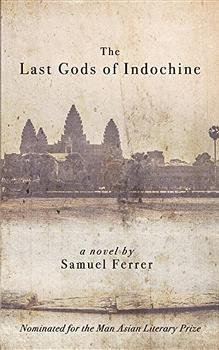
by Samuel Ferrer
Published 2016
Nominated for the Man Asian Literary Prize ("The Booker of Asia")
"A sublime tale told by a master storyteller, steeped in the lore of old. Ferrer's conjuring of romantic Indochine is a journey that lures, stirring up ghosts in a wild phantasmagoria, reckoning with forces both entwined and eternal." - Angela Kan, Travel Host & Writer, The ...

by Sarita Mandanna
Published 2012
Told in rich, lyrical prose and set against the background of a changing society, Tiger Hills is a sweeping saga about one woman's determination to live life on her own terms --- and a riveting novel about the choices we make in the name of family, nation, and love.

by Katherine Govier
Published 2011
Vivid, daring, and unforgettable, The Printmaker's Daughter shines fresh light on art, loyalty, and the tender and indelible bond between a father and daughter.





It is among the commonplaces of education that we often first cut off the living root and then try to replace its ...
Click Here to find out who said this, as well as discovering other famous literary quotes!

Can you name the title?
Test your book knowledge with our daily trivia challenge!