Summary | Excerpt | Reading Guide | Reviews | Beyond the book | Read-Alikes | Genres & Themes | Author Bio
Critics' Opinion:
Readers' Opinion:
First Published:
Aug 2005, 480 pages
Paperback:
Oct 2006, 528 pages
 Book Reviewed by:
BookBrowse Review Team
Buy This Book
A groundbreaking study that
radically alters our understanding of the Americas before the arrival of the
Europeans in 1492.
Traditionally, Americans learned in school that the ancestors of the people who
inhabited the Western Hemisphere at the time of Columbus’s landing had crossed
the Bering Strait twelve thousand years ago; existed mainly in small, nomadic
bands; and lived so lightly on the land that the Americas was, for all practical
purposes, still a vast wilderness. But as Charles C. Mann now makes clear,
archaeologists and anthropologists have spent the last thirty years proving
these and many other long-held assumptions wrong.
In a book that startles and persuades, Mann reveals how a new generation of
researchers equipped with novel scientific techniques came to previously
unheard-of conclusions. Among them:
Mann sheds clarifying light on the methods used to arrive at these new visions of the pre-Columbian Americas and how they have affected our understanding of our history and our thinking about the environment. His book is an exciting and learned account of scientific inquiry and revelation.
Why Billington Survived
The Friendly Indian
On March 22, 1621, an official Native American delegation walked through
what is now southern New England to negotiate with a group of foreigners
who had taken over a recently deserted Indian settlement. At the head of
the party was an uneasy triumvirate: Massasoit, the sachem
(political-military leader) of the Wampanoag confederation, a loose
coalition of several dozen villages that controlled most of what is now
southeastern Massachusetts; Samoset, sachem of an allied group to the
north; and Tisquantum, a distrusted captive, whom Massasoit had
reluctantly brought along as an interpreter.
Massasoit was an adroit politician, but the dilemma he faced would have
tested Machiavelli. About five years before, most of his subjects had
fallen before a terrible calamity. Whole villages had been
...
In a book that startles and persuades, Mann reveals how a new generation of researchers equipped with novel scientific techniques came to previously unheard-of conclusions...continued
Full Review
(286 words)
This review is available to non-members for a limited time. For full access,
become a member today.
(Reviewed by BookBrowse Review Team).
 James Wilson, author of The Earth Shall Weep: A History of Native America
A superbly written and very important book: by far the most comprehensive synthesis I've ever seen of the growing body of evidence that our most deep-rooted ideas about the peopling of the Western hemisphere and the kinds of societies that had developed there by the time of European contact are fundamentally wrong. Charles C. Mann is one of those rare writers who can make scholarly concepts exciting and accessible without trivializing them. In 1491 he has integrated the latest research in many different areas with his own insights and experiences to produce a fascinating and addictively readable tour through the 'New World' before its 'discovery.' His book is, above all, a wonderful, unsentimental act of restitution--challenging centuries of cultural contempt and willful blindness to show just how vigorous, various, densely populated and profoundly human the pre-Columbian Americas really were.
James Wilson, author of The Earth Shall Weep: A History of Native America
A superbly written and very important book: by far the most comprehensive synthesis I've ever seen of the growing body of evidence that our most deep-rooted ideas about the peopling of the Western hemisphere and the kinds of societies that had developed there by the time of European contact are fundamentally wrong. Charles C. Mann is one of those rare writers who can make scholarly concepts exciting and accessible without trivializing them. In 1491 he has integrated the latest research in many different areas with his own insights and experiences to produce a fascinating and addictively readable tour through the 'New World' before its 'discovery.' His book is, above all, a wonderful, unsentimental act of restitution--challenging centuries of cultural contempt and willful blindness to show just how vigorous, various, densely populated and profoundly human the pre-Columbian Americas really were.The article that
formed the basis for this book was originally published in The Atlantic
Monthly in 2002. If, after reading the extensive book excerpt and author
interview at BookBrowse, you want to read more you can read the Atlantic Monthly
article here. Also of interest is an extensive review in the Washington Post Book World written by Alan Taylor, the author
of American Colonies, and a professor of history at the University of
California at Davis.
Did you know?
In response to the frequently asked question, "why do you have a 'pretentious' C in
your name?" Charles C Mann replies, "I get asked about this a lot, occasionally in
exactly those words. The answer is not very interesting. I am named after ...
This "beyond the book" feature is available to non-members for a limited time. Join today for full access.

If you liked 1491, try these:
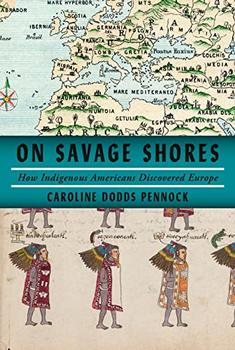
by Caroline Dodds Pennock
Published 2023
A landmark work of narrative history that shatters our previous Eurocentric understanding of the Age of Discovery by telling the story of the Indigenous Americans who journeyed across the Atlantic to Europe after 1492
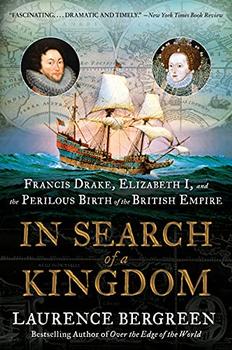
by Laurence Bergreen
Published 2022
In this grand and thrilling narrative, the acclaimed biographer of Magellan, Columbus, and Marco Polo brings alive the singular life and adventures of Sir Francis Drake, the pirate/explorer/admiral whose mastery of the seas during the reign of Queen Elizabeth I changed the course of history.


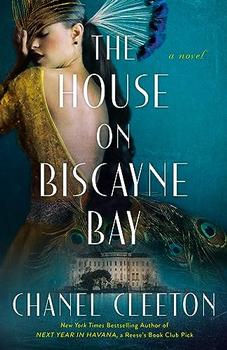
The House on Biscayne Bay
by Chanel Cleeton
As death stalks a gothic mansion in Miami, the lives of two women intertwine as the past and present collide.
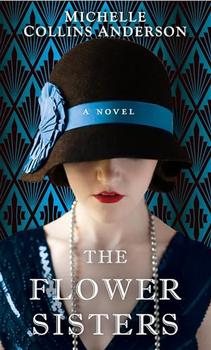
The Flower Sisters
by Michelle Collins Anderson
From the new Fannie Flagg of the Ozarks, a richly-woven story of family, forgiveness, and reinvention.

The Funeral Cryer by Wenyan Lu
Debut novelist Wenyan Lu brings us this witty yet profound story about one woman's midlife reawakening in contemporary rural China.
Your guide toexceptional books
BookBrowse seeks out and recommends the best in contemporary fiction and nonfiction—books that not only engage and entertain but also deepen our understanding of ourselves and the world around us.