Summary | Excerpt | Reading Guide | Reviews | Read-Alikes | Genres & Themes | Author Bio

Critics' Opinion:
Readers' Opinion:
First Published:
Mar 1997, 480 pages
Paperback:
Apr 1999, 480 pages
'Diamond has written a book of remarkable scope . . . one of the most important and readable works on the human past published in recent years.'
Winner of the Pulitzer Prize and a national bestseller: the global account of the rise of civilization that is also a stunning refutation of ideas of human development based on race.
In this "artful, informative, and delightful" (William H. McNeill, New York Review of Books) book, Jared Diamond convincingly argues that geographical and environmental factors shaped the modern world. Societies that had a head start in food production advanced beyond the hunter-gatherer stage, and then developed writing, technology, government, and organized religion—as well as nasty germs and potent weapons of war—and adventured on sea and land to conquer and decimate preliterate cultures. A major advance in our understanding of human societies, Guns, Germs, and Steel chronicles the way that the modern world came to be and stunningly dismantles racially based theories of human history.
Winner of the Pulitzer Prize, the Phi Beta Kappa Award in Science, the Rhone-Poulenc Prize, and the Commonwealth Club of California's Gold Medal
The Fates of Human Societies
Chapter One
Up to the Starting Line
A suitable starting point from which to compare historical developments on the different continents is around 11,000 B.C. This date corresponds approximately to the beginnings of village life in a few parts of the world, the first undisputed peopling of the Americas, the end of the Pleistocene Era and last Ice Age, and the start of what geologists term the Recent Era. Plant and animal domestication began in at least one part of the world within a few thousand years of that date. As of then, did the people of some continents already have a head start or a clear advantage over peoples of other continents?
If so, perhaps that head start, amplified over the last 13,000 years, provides the answer to Yali's question. Hence this chapter will offer a whirlwind tour of human history on all the continents, for millions of years, from our origins as a species until 13,000 years ago. All that will now be summarized in ...
 Bill Gates
Guns, Germs and Steel lays a foundation for understanding human history, which makes it fascinating in its own right. Because it brilliantly describes how chance advantages can lead to early success in a highly competitive environment, it also offers useful lessons for the business world and for people interested in why technologies succeed. Edward O. Wilson, Pellegrino University Professor, Harvard University
No scientist brings more experience from the laboratory and field, none thinks more deeply about social issues or addresses them with greater clarity, than Jared Diamond as illustrated by Guns, Germs, and Steel. In this remarkably readable book he shows how history and biology can enrich one another to produce a deeper understanding of the human condition.
Bill Gates
Guns, Germs and Steel lays a foundation for understanding human history, which makes it fascinating in its own right. Because it brilliantly describes how chance advantages can lead to early success in a highly competitive environment, it also offers useful lessons for the business world and for people interested in why technologies succeed. Edward O. Wilson, Pellegrino University Professor, Harvard University
No scientist brings more experience from the laboratory and field, none thinks more deeply about social issues or addresses them with greater clarity, than Jared Diamond as illustrated by Guns, Germs, and Steel. In this remarkably readable book he shows how history and biology can enrich one another to produce a deeper understanding of the human condition.
If you liked Guns, Germs & Steel, try these:
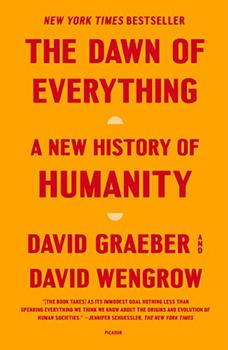
by David Graeber, David Wengrow
Published 2023
A dramatically new understanding of human history, challenging our most fundamental assumptions about social evolution―from the development of agriculture and cities to the origins of the state, democracy, and inequality―and revealing new possibilities for human emancipation.

by Rebecca Stott
Published 2013
Darwin’s Ghosts tells the story of the collective discovery of evolution, from Aristotle to Al-Jahiz, an Arab writer in the first century, from Leonardo da Vinci to Denis Diderot in Paris, exploring the origins of species while under the surveillance of the secret police.






The House on Biscayne Bay
by Chanel Cleeton
As death stalks a gothic mansion in Miami, the lives of two women intertwine as the past and present collide.

The Flower Sisters
by Michelle Collins Anderson
From the new Fannie Flagg of the Ozarks, a richly-woven story of family, forgiveness, and reinvention.

The Funeral Cryer by Wenyan Lu
Debut novelist Wenyan Lu brings us this witty yet profound story about one woman's midlife reawakening in contemporary rural China.
Your guide toexceptional books
BookBrowse seeks out and recommends the best in contemporary fiction and nonfiction—books that not only engage and entertain but also deepen our understanding of ourselves and the world around us.