return to home  
Join   |  Gift   |  Member Login   |  Library Login
BookBrowse Mobile
Follow Us: 
   Reading Guides

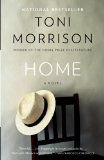
Home by Toni Morrison: Questions, plus a reading group guide, with links to reviews, excerpt, author interview and author biography at BookBrowse.com.

Home

Home
by Toni Morrison
Hardcover: May 2012,
160 pages.
Paperback: Jan 2013,
160 pages.

Publication information
Author Information
Critics' Opinion:   
Readers' Rating:    Not Yet Rated
About BookBrowse Rankings
Share: 
Buy This Book

Reading Guide Questions

 Printer Friendly Guide

Please be aware that this discussion guide may contain spoilers!

The introduction, discussion questions, and suggested further reading that follow are designed to enliven your group's discussion of Nobel Laureate Toni Morrison's searing new novel, Home.


About This Book

Frank Money and his sister Cee are profoundly lost, divided from each other and from themselves as they search for direction and hope in 1950s America. Frank joined the army to escape his too-small world, leaving behind his cherished and fragile sister. When he returns to the United States after the war, he is haunted by memories of his childhood and the horrors he witnessed abroad; it is only when he hears that Cee is in danger that his life regains the sense of purpose he had lost.

As the novel begins, Frank finds himself in a mental institution, where he has been drugged and strapped to a bed. He has no idea how or why he got there, only that he must escape. After he frees himself, he takes refuge with a minister who helps him begin his journey back to Georgia, where he has been summoned to help save his gravely ill sister.

Cee had taken a job "assisting" Dr. Beauregard Scott, an unrepentant Confederate. In fact, she has become the subject of his experiments in eugenics, which have made her infertile and endangered her life.

As Frank travels back to Georgia, we learn about his story and his history: the terrors of combat in Korea and the traumas of a childhood in the Deep South. Cee and Frank grew up in the small town of Lotus, where they were raised in the house of their coldhearted grandmother, Lenore. As a black man in Georgia, Frank endured daily injustices, and he and Cee are shattered by buried secrets and horrible visions of racial violence.

Home follows the classic structure of the hero's journey. Frank, a modern Odysseus, leaves home, undergoes horrific trials that test his moral strength, and then returns home a chastened and changed man. He is filled with regrets about friends he could not save on the battlefield, but when he learns that Cee is endangered he is given the chance to rescue his sister.

Home is not only about one man finding his manhood and his home. It is also about the healing power of women—of Miss Ethel Fordham and her friends in Lotus, who nurse Cee back to health and nurture her in her time of need. Fierce, unflinching, deeply compassionate—and rooted in traditional healing practices—their methods are sharply contrasted with the self-serving, aggressive techniques of a patriarchal medical industry.

In Home, Morrison vividly evokes—through the trials of a brother and sister—the particular brand of racism that prevailed just before the end of Jim Crow and the beginning of the Civil Rights Movement. In dramatizing the abuses of the medical system, the devastating effects of war on those who fight it, and the meaning of both leaving and coming home, she holds a mirror up to our own time as well.


Questions

  1. Why has Toni Morrison chosen Home for her title? In what ways is the novel about both leaving home and coming home? What does home mean for Frank, for Cee, for Lenore, for Lily?
  2. The race of the characters is not specified in the novel. How does Morrison make clear which characters are black and which are white? Why might she have chosen not to identify characters explicitly by their race?
  3. What is the effect of alternating between Frank's first-person (italicized) narration and the third-person omniscient narration through which most of the story is told? What is the implied relationship between Frank and the narrator?
  4. Talking about the horrors of war in Korea, Frank tells the reader: "You can't imagine it because you weren't there" [p. 93]. Does the reader succeed in imagining it even though he or she was not there? How close to another's experience, even those radically unlike our own, can imagination take us?
  5. How has Frank's war experience affected him? What symptoms of post-traumatic stress disorder does he exhibit? In what ways does he suffer from survivor guilt?
  6. In what sense can Home be understood as Frank's confession?
  7. In what very concrete ways does Cee's lack of education hurt her? How might she have been saved from infertility had she understood the implication of the books about eugenics in Dr. Beau's office?
  8. Why do the women who heal Cee have such contempt for "the medical industry"? [p. 122]. In what ways are Frank and Cee both victims of a medical system that puts its own aims above the heath of its patients? Does Home offer an implicit critique of our own health-care system?
  9. What methods do Miss Ethel Fordham and the other women use to nurse Cee back to health? Why do they feel Frank's male energy might hinder the healing process? What larger point is Morrison making about the difference between feminine and masculine, or earth-based and industrial, ways of treating illness?
  10. Frank doesn't know "what took place during those weeks at Miss Ethel's house surrounded by those women with seen-it-all eyes," only that they "delivered unto him a Cee who would never again need his hand over her eyes or his arms to stop her murmuring bones" [p. 128]. In what ways is Cee transformed by the treatment, and the wise counsel, that Miss Ethel gives her?
  11. Both Frank and Cee were eager to leave Lotus, Georgia, and never return. Why do they find it so comforting when they do go back? What is it about the place and people that feels to Frank "both fresh and ancient, safe and demanding" [p. 132] and makes Cee declare that this is where she belongs?
  12. How have Miss Ethel and the other women in her community learned not just to live with but to rise above the limitations imposed on them? What moral code do they live by?
  13. Why does Frank decide to give a proper burial to the man killed for sport—and whose undignified burial Frank and Cee witnessed as children—at the end of the novel? Why would this act be emotionally important for him? Why has Morrison structured the novel so that the end mirrors the beginning?
  14. The flowering lotus is a plant of extraordinary beauty, but it is rooted in the muck at the bottom of ponds. In what ways is the fictional town of lotus, Georgia, like a lotus plant?
  15. Why is it important that Frank does not resort to violence against Dr. Beau? In what ways has Frank been changed by the experiences he undergoes in the novel?
  16. Much has been written about racism in America. What does Home add to our understanding of the suffering blacks endured during the late 1940s and early '50s? What is most surprising, and distressing, about the story Morrison tells?


Further Reading Suggestions

  • James Baldwin, Go Tell It on the Mountain
  • Ralph Ellison, Invisible Man
  • Zadie Smith, White Teeth
  • Isabel Wilkerson, The Warmth of Other Suns: The Epic Story of America's Great Migration
  • Richard Wright, Black Boy
  • Zora Neale Hurston, Their Eyes Were Watching God;
  • Toni Morrison, The Bluest Eye, Sula, Song of Solomon, Tar Baby, Beloved, Jazz, Paradise, Love, A Mercy.


Unless otherwise stated, this discussion guide is reprinted with the permission of Vintage. Any page references refer to a USA edition of the book, usually the trade paperback version, and may vary in other editions.

Become a Member
Click Here
Editor's Choice
  •  May 23 
  •  May 21 
  •  May 20 
And the Mountains Echoed
Khaled Hosseini

And the Mountains Echoed Jacket

Khaled Hosseini has written a new novel about how we love, how we take care of one another, and how the choices we make resonate through generations
Helga's Diary
Helga Weiss

Helga's Diary Jacket

The remarkable diary of a young girl who survived the Holocaust—appearing in English for the first time.
Fever
Mary Beth Keane

Fever Jacket

A bold, mesmerizing novel about the woman known as "Typhoid Mary," the first known healthy carrier of typhoid fever in the burgeoning metropolis of early twentieth century New York.
Click Here
   Most Recent Blog Entries
Movies Based on Books: Summer 2013 (May - August)
Jewish Young Adult Books That Are Not About The Holocaust
Books to Give This Mother's Day
rss  RSS   rss  subscribe
Recent Reader Reviews
Two Lives by Vikram Seth
Two Lives is a memoir written by international best-selling author, Vikram Seth. In this interesting and engaging book, Seth writes about his great... read more
Z: A Novel of Zelda Fitzgerald by Therese Fowler
Z, the novel about the life of Zelda Sayre Fitzgerald is at points charming and; like another reviewer, I kept thinking of the movie, "Midnight... read more
Flight Behavior by Barbara Kingsolver
Although heavy on the scientific details, which slowed down the story for me (OK, I admit, I was one of those liberal arts majors who skipped out on... read more
RSS RSS feed More...  
Most Viewed This Week
1. Wonder
R.J. Palacio
2. A Child Called It
Dave Pelzer
3. The Glass Castle
Jeannette Walls
4. The Notebook
Nicholas Sparks
5. The Boy in the Striped Pajamas
John Boyne
More...
Book Club Recommendations
Why Be Happy When You Could Be Normal?
by Jeanette Winterson
Paperback (Mar/13)
Eleanor & Park
by Rainbow Rowell
Hardback (Feb/13)
The House Girl
by Tara Conklin
Paperback (Oct/13)
The Painted Girls
by Cathy Marie Buchanan
Hardback (Jan/13)
More...
First Impressions
Members read and review books often months before they're published. See what they think in First Impressions!
The Last Girl
by Jane Casey
Four Stars            (May/13)
The Sisterhood
by Helen Bryan
Four Stars            (Apr/13)
The Caretaker
by A .X. Ahmad
Four Stars            (May/13)
Golden Boy
by Abigail Tarttelin
4.5 Stars            (May/13)
More...
  Latest BookBrowse News
Judge rules unused Borders gift cards to be worthless (May 23 2013)
Borders owes nothing to holders of roughly $210.5 million of gift cards that had not been used by the time the bookstore chain shut down, a Manhattan federal... Full Story
rss RSS feed More...
 
BookBrowse Poll
Q: Which of these Summer movies based on books would you like to see? (Info on each movie here)
The Great Gatsby
Epic
Man of Steel
World War Z
The Lone Ranger
The Wolverine
R.I.P.D.
Percy Jackson
Paranoia
The Mortal Instruments
Select Any That Apply
Search: Title or Author
Free Newsletters
The Light Between Oceans

Online Book Club
More about
The Comfort of Lies
Join the discussion!


Win This Book!
On Sal Mal Lane


"Piercingly intelligent and shatter-your-heart profound."

Enter To Win Now!

wordplay
Solve this clue:
"I Y N P O T Solution, Y P O T P"

and be entered
to win....
frame top
New Author
Interviews
Menna van Praag
Erica Brown
Helga Weiss
Kate Morton
frame bottom
HOME Book Submissions | Advertising | Library Subscriptions | Reviewing for BookBrowse | Contact Us