Book Club Discussion Questions
In a book club? Subscribe to our Book Club Newsletter and get our best book club books of 2025!
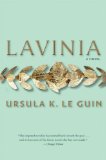
For supplemental discussion material see our Beyond the Book article, Vergil and our BookBrowse Review of Lavinia.
Please be aware that this discussion guide will contain spoilers!
Introduction
In
The Aeneid, Vergil's hero fights to claim the king's daughter,
Lavinia, with whom he is destined to found an empire. In this novel, Lavinia is
given a voice and perspective all her own, which she uses to tell both the story
of ancient Italy's first great people—the Latins—and of the great hero Aeneas's
final years spent as her husband and king to Italy's people.
Against the backdrop of a half-wild world of gods and prophecies, great halls
and muddy villages, Lavinia grows from a young girl of carefree joy to a young
woman haunted by the madness of her mother and the responsibilities of her
father. As is her duty, she meekly entertains the attention of suitors who would
marry her to gain her father's crown, until a strange vision-dream of a poet
reveals her unexpected future. Embracing her fate, Lavinia struggles against
those forces that threaten her father's hard-won peace and her foretold marriage
to a foreign hero who has yet to land on Italy's shores.
Lavinia is a book of love and war, generous and austerely beautiful, from a
writer working at the height of her powers.
Discussion Points
- On page 3, Lavinia says that "as far as I know, it was my poet who gave
me any reality at all. Before he wrote, I was the mistiest of figures,
scarcely more than a name in genealogy." How does Le Guin address the
concept of immortality—and the role of poetry in creating it—throughout the
novel?
- Lavinia says that, like the farmers who lay their bodies against the
hard earth of Gaia, the Earth Mother, she, too, knows what it's like to have
a hard mother. What other examples of "mother" imagery can you identify
throughout the book? Compare and contrast the various parent-child
relationships found between these characters.
- When Lavinia describes herself as meek and silent, do you think she has
a low opinion of herself, or is she just being humble? Or is she being
ironic? What finally enables her to speak strongly and without fear, to her
mother and to others?
- What did you already know about the Greeks, early Romans, or Etruscans,
and what did you learn about them through Lavinia? Identify and
discuss some of their practices and beliefs. Do you think these cultures are
more similar than they are different? Do you think the characters of the
novel would agree with you? Why or why not?
- Lavinia makes use of a very fluid notion of time and materiality,
especially with regard to the early Latins' views on death and rebirth, the
material world and the Underworld. How does this worldview influence the
actions of the characters of the novel? Did it alter your own way of
thinking at all? Why or why not?
- The Latins, Trojans, and other people of the ancient world believe
strongly in the meaning of omens. What omens are received throughout the
course of this story and what do they signify to the people who read them?
- Like Janus, the two-faced god, the ancient world is experienced as an
expression of duality. Identify some of the dichotomies described throughout
the novel and how they influence the plot of the novel. As a technique, how
do they influence the telling of the story?
- On page 103, Lavinia says, "Things were going as they should go, and in
going with them I was free." Using examples from the novel, describe how a
belief in Fate can be freeing. Do you agree or disagree with the concept
that a predetermined life provides more freedom than one in which nothing is
set? Why?
- Similarly, how does a belief in Fate affect the characters' ability to
make choices or to determine which of their actions are right or wrong? How
does this issue affect Aeneas in particular?
- Lavinia as narrator often tells of what is yet to happen, moving into
the future of her life with Aeneas, then returning to the most prominent
thread of the story as a linear narrative of her past. What effect does this
moving backward and forward in time achieve? How does it affect your reading
experience?
- How do the roles of men and women differ from each other in the Latin
culture? If arranged marriage was the norm in your culture, would you say
that a self-respecting woman should resist it or not?
- Despite Latinus's reign of peace, the young Latins manage to instigate a
bloody war against the Trojans by inflaming their countrymen's fear of the
foreigners. How do you see this "fear of the other" perpetrated in modern
cultures? When the poet recites a long list of deaths, what is the purpose
of the speech and what does it have to do with the book as a whole?
- The people of ancient Italy are ruled by kings and queens of many types.
Compare and contrast the styles of leadership exemplified by Kings Latinus,
Turnus, Aeneas, and Ascanius; also compare and contrast the models of
queenship portrayed by Amata and Lavinia.
- As Le Guin notes in her afterword, Lavinia takes place in the
world of Vergil's Aeneid. We scarcely meet the familiar classical gods in
this book. When Aeneas refers to the goddess Venus, for instance, Lavinia
doesn't know what he is talking about, since she knows Venus only as a star.
Yet Lavinia's people are deeply religious, worshipping daily, and seeking
guidance from powers greater than humans. If the early Latins did not
believe in gods as people, what did they believe in and why did they
worship?
Other questions that might be interesting and open up discussion
When does Latinus behave like a king, and when doesn't he?
Why does Aeneas suffer so intensely from his battle fury, when heroes such as
Achilles are admired above all others for exactly the same thing?
Unless otherwise stated, this discussion guide is reprinted with the permission of Harvest Books.
Any page references refer to a USA edition of the book, usually the trade paperback version, and may vary in other editions.

 Book Reviewed by:
.png)


