Reading Guide Questions

Please be aware that this discussion guide will contain spoilers!
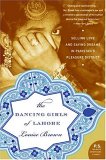
IntroductionIn Heera Mandi, the red-light district of Lahore, Pakistan, sociologist
Louise Brown examines the fate of the beautiful and tragic dancing girls. Once
the courtesans of kings, graceful and erudite, contemporary dancing girls find
themselves in dire straits, clinging to an ancient romantic identity while
facing a destitute future.
Central to Brown's study is Maha, a middle-aged dancing girl of increasing
girth who must auction her daughter's virginity to the highest bidder. Tasneem,
a young
khusra, navigates the demarcation between male and female at
will, yet is doomed to be less than either. Tariq, of the untouchable sweeper
caste, Maha's increasingly uninterested "husband" Adnan, Laila, the former
dancing girl turned promoter/pimp, and high-paying sheiks in Dubai are but a few
of the people introduced in Brown's unflinching portrayal of a world that, much
like Maha herself, veers between "rage and joy, cruelty and gentle compassion."
Questions for Discussion
- Consider the reversal of traditional Pakistani norms in Heera Mandi-"in
the mohalla, female beauty and sexuality are openly celebrated . . .
lauded and envied." Why does Brown refer to "luxury of purdah"
enjoyed by affluent families?
- How do shame, honor and social status intertwine in Heera Mandi? How
does Maha manage her "shame" and why does Brown say, "paradoxically, a veil
can heighten rather than lessen a woman's power"?
- With "no education and few skills" Nisha and Niha are trapped in a
vicious circle of prostitution. Given the complicated realities of cast and
class in Pakistan, would these girls have a chance even if they were
educated? How does prostitution become an economic inevitability when one
must support parents and siblings in a patriarchal society?
- In Heera Mandi "love is a transaction conducted on the basis of an
illusion." How do words such as "beloved" and "lover" maintain the illusion
for both the tawaif and her tamash been? How do Iqbal Hussain,
Mumtaz, and Hasan illustrate the manner in which even men born in this
milieu are scarred?
- When Brown decides to clean Maha's house, why do her actions signify an
"irreconcilable culture clash"? Do you find Maha's dismay to be
understandable in this context? In what other instances does Brown find her
Western values and customs to be incomprehensible to the people of Heera
Mandi?
- Do you find Maha's behavior-the rages, the mystics, the Corex – to be
self-destructive or coping mechanisms? In this setting, is self-delusion a
survival requirement?
- Brown observes that the women of Heera Mandi, "don't believe me when I
tell them that the lives of the other women are equally blighted." By
maintaining facades of prosperity, how do they inadvertently contribute to
their own misery? Consider the double-bind: society demeans them, while
their own community judges them as dirty or respectable based on stringent
rules of behavior.
- Who are the khusras? Do you find it surprising that they exist in a
conservative Islamic society? How do the khusras fit in a society built on
male privilege, honor and masculinity, excused from women's obligations, but
never seen as men? Are they homosexual in the Western meaning of the word?
- Why is Shiism "particularly suited to Heera Mandi"? Do you find it
paradoxical that prostitution and particularly flagellating form of
godliness coexist in this society?
- When Maha agrees to send Neha to Sheikh Khasib in the Gulf, Brown faces
a moral quandary: "I can't walk away from this situation without losing my
integrity, but I can't stay and keep it going either." Is it possible to
resolve this situation? What would you have done, and how would you justify
your actions?
Unless otherwise stated, this discussion guide is reprinted with the permission of Harper Perennial.
Any page references refer to a USA edition of the book, usually the trade paperback version, and may vary in other editions.
 Book Reviewed by: