return to home  
Join   |  Gift   |  Member Login   |  Library Login
BookBrowse Mobile
Follow Us: 
   Reading Guides

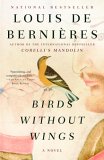
Birds Without Wings by Louis de Bernieres: Questions, plus a reading group guide, with links to reviews, excerpt, author biography at BookBrowse.com.

Birds Without Wings

Birds Without Wings
by Louis de Bernieres
Hardcover: Aug 2004,
576 pages.
Paperback: Jun 2005,
576 pages.

Publication information
Author Information
Critics' Opinion:   
Readers' Rating:  
About BookBrowse Rankings
Share: 
Buy This Book

Reading Guide Questions

 Printer Friendly Guide

Please be aware that this discussion guide may contain spoilers!

About This Books  

Set on the eve of World War I, Birds Without Wings tells the story of Eskibahçe, a charming and vibrant ethnically mixed town in present-day Turkey, and how it is irrevocably changed by the ravages of nationalism, war, and religious fervor. Before the war, Eskibahçe is filled with a wild assortment of characters, Christian and Muslim, Turkish and Armenian, the mad and the sane, the rich and the poor, living side by side in remarkable harmony.

There is Ali the Snowbringer, who lives with his family and his donkey inside a hollowed-out tree; Iskander the Potter, who supplies the town with proverbial wisdom along with his pots; Karatavuk—Iskander’s son—and Mehmetçik, whose deep friendship reaches across religious barriers; Father Kristoforos and Abdulhamid Hodja, priest and imam, who hail each other playfully as "infidels"; Rustem Bey, the landlord and protector of the town, who finds happiness with a Circassian mistress after his wife is nearly stoned to death for adultery.

There are lunatics as well—a crazy Sufi known as "the Dog," who lives in a tomb and terrifies everyone with his smile, and a man known as "the Blasphemer," who flies into cursing fits at the sight of any holy man. There is Philothei, a girl of such disquieting beauty that she must be veiled, and her besotted lover, Ibrahim the Goatherd, who will be driven mad by the horrors of war. And there is Mustafa Kemal, whose military daring will lead him to many stunning victories against the invading Western European forces and to a reshaping of the whole region. What happens to these characters—and their beloved town—because of the war is the great tragedy that Birds Without Wings describes with such unforgettable vividness.


For Discussion

  1. Why has Louis de Bernières chosen Birds Without Wings as his title? What actual and symbolic roles do birds play in the book? What does Karatavuk mean when he writes at the end of the novel, "We were birds without wings. . . . Because we cannot fly we are condemned to do things that do not agree with us" [p. 550–551]?

     
  2. The setting of Birds Without Wings is an early twentieth-century Turkish village. How, despite its distant setting, does the novel mirror the contemporary world? In what way is the world of the novel vastly different from the world today?

     
  3. In his prologue, Iskander the Potter says that he misses the Christians after they were removed from Eskibahçe: "Without them our life has less variety, and we are forgetting how to look at others and see ourselves" [p. 7]. Why does he feel that the presence of "others" allowed the villagers to see themselves? Why is the loss of variety so important? Why were so many different kinds of people able to live together in Eskibahçe so peacefully?

     
  4. What makes Eskibahçe such a marvelously colorful village? Who are some of its most eccentric and engaging characters? How does the village change over the course of the novel?

     
  5. The novel vividly describes the nationalist fervor that swept the world in the early twentieth century: "Serbia for the Serbs, Bulgaria for the Bulgarians, Greece for the Greeks, Turks and Jews out!" [p. 16] What causes these feelings? What are their ultimate consequences?

     
  6. After Ayse and Polyxeni convince the reluctant Daskalos Leonidas to write a message in tears on the wings of a dove, which they hope will fly to Polyxeni’s dead mother, Ayse exclaims, "It’s incredible! A man with that much education, and he didn’t even know about how to get a message to the dead" [p. 77]. What does this scene suggest about the gulf between traditional and modern ways of understanding the world?

     
  7. On the way to Smyrna, Iskander prefaces his story by saying, "The thing about stories is that they are like bindweeds that have to wind round and round and creep all over the place before they get to the top of the pole" [p. 128]. Is what Iskander says here true of the novel itself? How does the story line "creep all over the place"?

     
  8. What kind of man is Mustafa Kemal? How does he achieve his great military success? What are the ultimate consequences of his actions?

     
  9. Leyla tells Rustem Bey that the women in town are saying he is a bad master because he doesn’t beat her [p. 228]. What does this passage suggest about the relationship between women and men in the novel? What roles are women expected to play? In what ways are they oppressed by their culture?

     
  10. What are the most horrific aspects of war as they are described in Birds Without Wings? What are its greatest cruelties? What surprising acts of compassion do the soldiers perform for one another and even for their enemies? How does war affect the village of Eskibahçe?

     
  11. Why does de Bernières use different narrators and different points of view in the novel? Does this multiplicity of voices mirror some of the novel’s main themes?

     
  12. What is the significance of the relationships between Philothei and Ibrahim and between Karatavuk and Mehmetçik? Why are these young people so drawn to each other despite their religious differences?

     
  13. Can Birds Without Wings be read as a cautionary tale for our own times? What does the novel say about the larger themes of love and war, revenge and forgiveness, both toward oneself and others?

Suggested Reading

Paul Bowles, The Sheltering Sky; Lawrence Durrell, The Alexandria Quartet; John Fowles, The Magus; A. R. Homer, The Mirror of Diana; Gabriel García Márquez, One Hundred Years of Solitude; James McBride, Miracle at St. Anna; Henry Miller, The Colossus of Maroussi; Leo Tolstoy, War and Peace.

Copyright Vintage Books.


Unless otherwise stated, this discussion guide is reprinted with the permission of Vintage. Any page references refer to a USA edition of the book, usually the trade paperback version, and may vary in other editions.

Become a Member
Click Here
Editor's Choice
  •  May 25 
  •  May 23 
  •  May 21 
The Shelter Cycle
Peter Rock

The Shelter Cycle Jacket

An American original, Peter Rock brings our strangest beliefs to vivid and sympathetic life in this haunting novel inspired by true events.
And the Mountains Echoed
Khaled Hosseini

And the Mountains Echoed Jacket

Khaled Hosseini has written a new novel about how we love, how we take care of one another, and how the choices we make resonate through generations
Helga's Diary
Helga Weiss

Helga's Diary Jacket

The remarkable diary of a young girl who survived the Holocaust—appearing in English for the first time.
Click Here
   Most Recent Blog Entries
Movies Based on Books: Summer 2013 (May - August)
Jewish Young Adult Books That Are Not About The Holocaust
Books to Give This Mother's Day
rss  RSS   rss  subscribe
Recent Reader Reviews
Bring Up the Bodies by Hilary Mantel
A very large book - in number of pages and in content - and every page worth reading. Thoroughly enjoyed this one and her first book on the... read more
Two Lives by Vikram Seth
Two Lives is a memoir written by international best-selling author, Vikram Seth. In this interesting and engaging book, Seth writes about his great... read more
Z: A Novel of Zelda Fitzgerald by Therese Fowler
Z, the novel about the life of Zelda Sayre Fitzgerald is at points charming and; like another reviewer, I kept thinking of the movie, "Midnight... read more
RSS RSS feed More...  
Most Viewed This Week
1. The Boy in the Striped Pajamas
John Boyne
2. And the Mountains Echoed
Khaled Hosseini
3. Telegraph Avenue
Michael Chabon
4. The Glass Castle
Jeannette Walls
5. The Round House
Louise Erdrich
More...
Book Club Recommendations
Why Be Happy When You Could Be Normal?
by Jeanette Winterson
Paperback (Mar/13)
Eleanor & Park
by Rainbow Rowell
Hardback (Feb/13)
The House Girl
by Tara Conklin
Paperback (Oct/13)
The Painted Girls
by Cathy Marie Buchanan
Hardback (Jan/13)
More...
First Impressions
Members read and review books often months before they're published. See what they think in First Impressions!
The Sisterhood
by Helen Bryan
Four Stars            (Apr/13)
Golden Boy
by Abigail Tarttelin
4.5 Stars            (May/13)
The Last Girl
by Jane Casey
Four Stars            (May/13)
The Caretaker
by A .X. Ahmad
Four Stars            (May/13)
More...
  Latest BookBrowse News
Judge rules unused Borders gift cards to be worthless (May 23 2013)
Borders owes nothing to holders of roughly $210.5 million of gift cards that had not been used by the time the bookstore chain shut down, a Manhattan federal... Full Story
rss RSS feed More...
 
BookBrowse Poll
Q: Which of these Summer movies based on books would you like to see? (Info on each movie here)
The Great Gatsby
Epic
Man of Steel
World War Z
The Lone Ranger
The Wolverine
R.I.P.D.
Percy Jackson
Paranoia
The Mortal Instruments
Select Any That Apply
Search: Title or Author
Free Newsletters
The Light Between Oceans

Online Book Club
More about
The Comfort of Lies
Join the discussion!


Win This Book!
On Sal Mal Lane


"Piercingly intelligent and shatter-your-heart profound."

Enter To Win Now!

wordplay
Solve this clue:
"I Y N P O T Solution, Y P O T P"

and be entered
to win....
frame top
New Author
Interviews
Menna van Praag
Erica Brown
Helga Weiss
Kate Morton
frame bottom
HOME Book Submissions | Advertising | Library Subscriptions | Reviewing for BookBrowse | Contact Us