return to home  
Join   |  Gift   |  Member Login   |  Library Login
BookBrowse Mobile
Follow Us: 
   Reading Guides

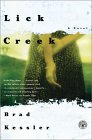
Lick Creek by Brad Kessler: Questions, plus a reading group guide, with links to reviews, excerpt, author biography at BookBrowse.com.

Lick Creek

Lick Creek
by Brad Kessler
Hardcover: Mar 2001,
256 pages.
Paperback: Mar 2002,
256 pages.

Publication information
First book/First Novel


Author Information
Critics' Opinion:   
Readers' Rating:  
About BookBrowse Rankings
Share: 
Buy This Book

Reading Guide Questions

 Printer Friendly Guide

Please be aware that this discussion guide may contain spoilers!

DISCUSSION POINTS

  1. In the opening pages of Lick Creek, Emily tries to imagine what it is like to work in the coal mines. "There's a power inside the earth," her brother Delmar tells her, making her jealous of this mysterious underground world from which women are excluded. In what other ways is Emily's life circumscribed by having been born female? Discuss the contrasting picture Brad Kessler paints of the lives of men and the lives of women.

  2. Emily loves Gianni with a simple trust and spontaneity that stands in stark contrast to the reluctant manner in which she later allows herself to fall for Joseph. How has her ability to love and trust been affected by the coal mine disaster that took the lives of her father, brother, and childhood sweetheart? By her smoldering resentment of the power company Joseph works for? And by the bitter aftereffects of her encounter with Robert Daniels?

  3. Set in the remote mining country of West Virginia, Lick Creek has as its historical background the introduction of electric power to the region in the late 1920s. Kessler's tale examines the relentless march of progress that threatens to totally transform rural life without bringing any immediate benefits to the people. In addition to the human cost of progress, what other themes does Brad Kessler explore? Discuss the clash of cultures and classes that the novel portrays. In what ways does the plight of this one Appalachian farm family illuminate what one critic has called "the quintessential American story of the struggle between the powerful and the powerless"?

  4. Brad Kessler depicts Emily's mother, Ada, as a woman who has a way of knowing things before they happen. But when her husband and son are killed, Ada claims she has lost her gift. "What was the use of finding things in dreams, she'd say, if she couldn't tell a mine was about to blow when fully awake?" What purpose does Ada's special talent serve in the novel? Why does it disappear, and then return suddenly just as Emily is about to run off with Joseph? What is your personal view of this kind of extrasensory perception? Do you believe it exists and can be trusted? Why?

  5. What role does the natural world play in the novel? Do you agree with reviewers who have described Brad Kessler's prose as lyrical and his imagery as tactile? Why? Are there any images that stand out in your mind? What other novelists does Kessler's writing style call to mind?

  6. After the coal mine tragedy, Emily's mother retreats so totally into her own grief that she seems to forget that she still has a living daughter. She springs to life only when a power line accident brings the injured Joseph into her home in need of care. Why do you think she has ignored her own daughter's needs for so long, yet is so solicitous toward a stranger? How important is it to Ada that there is a man in the house again? Do you think she would have been as eager to help if the person needing care had been a woman? What do you make of the relationship between Ada and Emily? Were you surprised by the intensity of the emotional good-bye scene between mother and daughter when Emily runs off with Joseph?

  7. In one of the central events of the novel, power company executive Robert Daniels befriends Emily and ultimately beds her, taking advantage of her lack of sophistication by plying her with rum and Coke to aid in his seduction. Several reviewers have characterized the encounter as a "rape." Do you think the term is justified? Although Emily herself never uses the word rape and never puts together a clear picture of what actually took place, her sense of violation leaves her consumed by a need to exact revenge. Do you think the intensity of her outrage is justified?

  8. What are we to make of Daniels's pleasure at running into Emily again at the power company's inauguration ball? Why do you think he is so oblivious to her feelings? Is his complete unawareness of her fury a manifestation of the power imbalance between them, or is it a consequence of a difference in the male and female perspective on date rape? How do you think the author wants us to view the seduction? Do we judge the encounter differently with today's sensibilities than we might have in the 1920s when the story is set? Do you think it is always clear when a date rape has taken place? Do you think it is possible for society to arrive at a definition of date rape that is equally just to both men and women?

  9. Why do you think the author makes Joseph a Jewish Russian immigrant? Late into the night, as he excitedly tries to convey to Emily his passion for his work as a lineman, Joseph reflects that "electricity flows over the face of the earth but is landless, that it sojourns endlessly like a Gypsy, and that what it seeks, above all else, is to burrow back into earth, to be grounded; and that secretly he seeks the same, like his father and father's father and so on for generations back." Discuss what this passage might mean. Do you think, as one reviewer suggests, that the author intends this passage as a metaphor for the journey of the Jewish people in the diaspora? How does Joseph's identity as an outsider figure in the novel?

  10. When Emily's long-simmering rage erupts as she returns to the Roncevert Hotel, her first impulse is to set fire to Daniels's office, "to carbonize the place in a great conflagration, just as the mine had been burned, just as all of them had gone up in flames." But when she can't find a match or anything to spark a flame, she decides to steal two stacks of bills from his safe, rationalizing the theft by telling Joseph, "They owe me this money. Not only me, but Delmar and my father and my mother." How do you feel about Emily's actions and her attempt to justify them? Only after Joseph floors the accelerator of his truck in panic and nearly runs over a guard as they make their escape does Emily begin to experience some remorse. Discuss what you think Emily is going through as the cataclysmic events she has set in motion begin to sink in, leaving her wishing she could "return to earlier that afternoon or last week or month and live it all again, but differently this time."

  11. What are we to make of Emily's unsent letters to her mother? Were you surprised by their intimacy? Did they change your opinion of the nature of the relationship between mother and daughter? Were you surprised, as Emily herself seems to be, by how much she misses her mother, Garvin, her home, and everyone in Lick Creek? Have you ever written letters to someone not knowing whether you would ever mail them? Did it free you, as it apparently freed Emily, to reveal your deepest feelings? Why do you think the letters remained with Joseph after Emily's death and not with Ada?

  12. Why do you think Kessler ends his novel the way he does? Does Emily's death feel like an appropriate end to the story or does it come too abruptly? Were you anticipating a tragic conclusion? Do you like the symmetry of a story that begins with one tragic accident that claims the lives of Emily's father, brother, and first love, and concludes with another, a streetcar accident that takes Emily's life? Can you think of other examples of symmetry in Lick Creek?


Unless otherwise stated, this discussion guide is reprinted with the permission of Scribner. Any page references refer to a USA edition of the book, usually the trade paperback version, and may vary in other editions.

Become a Member
Click Here
Editor's Choice
  •  Jun 19 
  •  Jun 17 
  •  Jun 15 
If You Find Me
Emily Murdoch

If You Find Me Jacket

There are some things you can't leave behind…
Americanah
Chimamanda Ngozi Adichie

Americanah Jacket

Fearless, gripping, at once darkly funny and tender, spanning three continents and numerous lives, Americanah is a richly told story set in today's globalized world.
We Are All Completely Beside Ourselves
Karen Joy Fowler

We Are All Completely Beside Ourselves Jacket

The story of an American family, middle class in middle America, ordinary in every way but one. But that exception is the beating heart of this extraordinary novel.
The Expats by Chris Pavone
   Most Recent Blog Entries
Top Ten Guidelines For How to Behave in a Book Club
Movies Based on Books: Summer 2013 (May - August)
Jewish Themed Young Adult Books, Not About The Holocaust
rss  RSS   rss  subscribe
Recent Reader Reviews
In the Shadow of the Banyan by Vaddey Ratner
First time novelist Vaddey Ratner captured my heart and senses in this novel based on her childhood in Cambodia. Her story transcends any news story... read more
In the Shadow of the Banyan by Vaddey Ratner
From the first page, I was drawn in by the lyrical writing of the author and mesmerized as the narrator, eight year old Raami, remembered the years... read more
TransAtlantic by Colum McCann
Trite but true, all good things must come to an end. I so wanted to keep reading the wonderful prose, the settings that let one think they are part... read more
RSS RSS feed More...  
Most Viewed This Week
1. Coraline
Neil Gaiman
2. Memoirs of a Geisha
Arthur Golden
3. The Glass Castle
Jeannette Walls
4. The Immortal Life of Henrietta Lacks
Rebecca Skloot
5. Behind the Beautiful Forevers
Katherine Boo
More...
Book Club Recommendations
Where'd You Go, Bernadette
by Maria Semple
Paperback (Apr/13)
The Unlikely Pilgrimage of Harold Fry
by Rachel Joyce
Paperback (Mar/13)
The Unchangeable Spots of Leopards
by Kristopher Jansma
Hardback (Mar/13)
How to Get Filthy Rich in Rising Asia
by Mohsin Hamid
Hardback (Mar/13)
More...
First Impressions
Members read and review books often months before they're published. See what they think in First Impressions!
Crime of Privilege
by Walter Walker
Four Stars            (Jun/13)
Her Last Breath
by Linda Castillo
4.5 Stars            (Jun/13)
Children of the Jacaranda Tree
by Sahar Delijani
4.5 Stars            (Jun/13)
More...
  Latest BookBrowse News
Kenn Nesbitt is new Children's Poet Laureate (Jun 12 2013)
Kenn Nesbitt has been named the new Children's Poet Laureate: Consultant in Children's Poetry to the Poetry Foundation, which noted that the two-year position... Full Story
rss RSS feed More...
 
BookBrowse Poll
Q: We've been discussing guidelines for book club etiquette. Which of these do you think are important?
Read the book
Listen thoughtfully to all members
Take notes while you're reading
Stay on topic when you're speaking
Enjoy yourself
Don’t get drunk
Bring chocolate, everyone likes chocolate!
Eat before you come so you don’t devour the snacks
Compliment others sincerely
Have a good sense of humor
Don’t fret the small stuff
Search: Title or Author
Free Newsletters

Online Book Club
More about
The Execution of Noa P. Singleton
Join the discussion!


Win This Book!
You Only Get Letters From Jail


one of the finest and truest collections of 'American' short stories I have ever read

Enter To Win Now!

wordplay
Solve this clue:
"T M T C, T M T Stay T S"

and be entered
to win....
frame top
New Author
Interviews
Carol Rifka Brunt
Kent Wascom
Jennifer McVeigh
Elizabeth Becker
frame bottom
HOME Book Submissions | Advertising | Library Subscriptions | Reviewing for BookBrowse | Contact Us