Reading Guide Questions

Please be aware that this discussion guide will contain spoilers!
About This Guide
A Grove Press Reading Guide by
Barbara Putnam
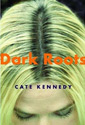
We hope that these discussion questions will enhance your reading group's exploration of Cate Kennedy's
Dark
Roots. They are meant to stimulate discussion, offer new viewpoints, and enrich your enjoyment of the book.
More reading group guides and additional information, including summaries, author tours, and author sites for other fine Grove Press titles, may be found on our Web site,
www.groveatlantic.com.
Questions for Discussion
- "I have been told, both in approval
and in accusation, that
I seem to love all my characters. What I do in writing of
any character is to try to enter into the mind, heart, and skin
of a human being who is not myself. Whether this happens
to be a man or a woman, old or young, with skin black or
white, the primary challenge lies in making the jump itself.
It is the act of a writer's imagination that I set most high."
—Eudora Welty.
Do you think Kennedy seems to love all her characters?
Does she enter completely into "the mind, heart, and skin"
of different people? Do you, as a reader, feel drawn to follow
her there? Which characters in these stories do you understand
and feel the best, whether or not you condone their
actions?
- Did you find that the stories offer a surprising range of subjects,
tones, and settings? Most are focused on one relationship
or a family. Yet think about the variety of human natures
and conflicts. The spirit may be sly satire or grim vengeance
or just endurance, but usually with ironic insights. Which
stories use shock value effectively? Which ones make you
smile with satisfaction, perhaps along with the narrator?
- Violence, real or imagined, is often a place of revelation or
a sharp turning point. Think of the accident in "What Thou
and I Did, Till We Loved." And the near murder in "Flotsam."
Recall the sustained imagery of trapping that leads
to the final event in "Cold Snap." What other stories turn
on a violent act?
- Crimes can be blatant or subtle in the stories. Do you think
some are even debatable? Eco-crime in "Direct Action" is a
destructive yet justifiable act of civil disobedience in the eyes
of the perpetrator. And in those of the reader? What about
the border smuggling in "Habit"? Where on the scale would
you put the pickling episode in "The Testosterone Club"?
And how about letting the dog loose in "Sea Burial"?
- Is lack of communication, or, more dramatically, a failure
to communicate something crucial at a crucial time, often
the problem in flawed relationships in the stories? In each
of them do you notice small, seemingly insignificant moments
that might magnify a whole malaise in a relationship? "Oh Andrew, he never talks" (p. 16) in
"A Pitch Too High
for the Human Ear." In this story where does Andrew find
his best communication? Does Kennedy allow us to feel
sympathy for both husband and wife? Do you feel more empathy
for a character with remorseful insight into his or her
limitations? What does the title mean? And the forlorn last
words, "Can you hear it Vicki? I want to say. It's not words,
it's nothing so coherent as words. It's all of us, hoarse with
calling, straining in the darkness to hear something we recognise as our names" (p. 22).
- When do women make conscious choices to leave men in
the stories? When do women decide to live their own lives
instead of plumping up and being subsumed by men? How
is Daniel portrayed in "Wheelbarrow Thief"? How does
Stella's cuisine, especially her stock cooking, prefigure later
events? ("But she sees now, what seemed like waste is actually
a kind of gift. Something reduced to its essentials, a sum
total strained of its parts" p. 159 ). What gives Stella the
strength to free herself? "Thinking about it now she savours
it, a distilled flavour, runs her hands down her breasts and
hips and legs. She is all here, and the cramp is lifting off
her like steam" (p. 164). Talk about a similar liberation in
"Seizure." Are certain traits shared by Steve and Daniel?
- How does Monica start to preserve herself (preserve: an
operative word in the story) by designating her husband and
his two pals "The Testosterone Club"? What in their behavior
merits this name? We read of "their complete confidence
in their own majestic sexual magnetism" (p. 66). What
is the tone of Monica's recollections? Is she appalled,
amused, or threatened by the trio? How do Monica's talents
as a can-do woman in the kitchen provide her highly
satisfactory escape? How does her husband sow the mustard
seed of his own destruction with his special gift to his
wife? Does the story remind you a little of Alec Guiness's
film Kind Hearts and Coronets?
- Would you say that Cate Kennedy is shrewd about contrasting
turbulent interior lives with threats from the outside
world? Which stories explore this contrast most dramatically?
Can the outside threats be imagined, as perhaps in
"Dark Roots"? Is the narrator her own nemesis as she "spirals
down" into deception? She calls it a "slippery slope" and "a
poison," her fear of aging. "You have traded in your unselfconsciousness
for this double-visioned state of standing outside
yourself, watchful and tensed for exposure" (p. 84). Is
there hope at the end for this May-October romance? What
do you think will happen if she turns the light on?
- In "Habit" when do we learn the sex of the narrator? Does
withholding this information contribute to ambiguity in
the story? Do we nonetheless learn quite a lot about the
narrator through her internal monologue? How real is the
menace at customs? How does it compare to the larger
menace in the narrator's life? Talk about how sentences
like "I seem to be inviting confession," "I have, I suppose,
a habit," "it's the faith that heals," and "I am blessed" stitch
together the story?
- In "Cold Snap," how would you describe the boy's mental
state? Is he somehow gifted with odd intuition even though
he is limited in other ways? How are his love and understanding
of trees important to the story? Is it appropriate
that the feed-store boy refers to Deliverance? How does
the father's revenge foreshadow the pattern of the story
later, and does it create a sense of dread? How do the new
people bring trouble on themselves? Comment on "Well,
it looks like the light's on but there's no one home" (p. 52), "Look at all those bloody trees . . . I'm sick of the sight of
them" (p. 53), and "I started explaining but she wasn't really
listening" (p. 53). Do the woman's alien, exploitive values
lead her to a trap? How does Billy use nature to ensnare "the loony lady" who is herself a threat to nature?
"That's
what nature's like, for everything poisonous there's something
nearby to cure it if you just look around" (p. 57).
- In "Resize", Dave as a husband feels bleak and inept. How
does the imagery of removing the wedding rings ("He feels
the moment heat up, become molten") alleviate his feeling
baffled and numb? Is the shift buttressed by the clunker
of a car suddenly behaving? "He steps on the clutch and
finds first gear, feeling the calibrations gnash like teeth momentarily
then drop into place, lubricated, fitted together
like bones in a hand" (p. 64). Talk about this shift of gears
in the marriage.
- Three of the stories set in motion the relationships of
mothers and daughters. Explore the challenges, conflicts,
and resolutions faced by both mothers and daughters in "Flotsam," "Angel," and "Soundtrack." The characters and
settings are strikingly different. Do you see any points of
comparison? Are there some elements of universality?
- Flannery O'Connor has said that "a story always involves,
in a dramatic way, the mystery of personality." Is that a
useful way to look at the stories in Dark Roots? O'Connor
further says that good stories are not triggered by problems
or abstract issues but by concrete details and the five
senses. Which of the stories leap to mind for the mystery
of personality, concrete detail, and the senses? Can you give
examples?
- Motivation for characters' actions can be murky and deceptive.
Often even the characters fail to understand why
they do what they do . . . or fail to do. Auden has said, "The
desires of the heart are as crooked as corkscrews." Do you
understand what drives people in this book? Which ones
still perplex you?
Suggestions for Further Reading
A Few Short Notes on Tropical Butterflies by John Murray;
Where You Find It by Janice Galloway;
Goodnight, Nobody by
Michael Knight;
Sightseeing by Rattawut Lapcharoensap;
the
short fiction of Lorrie Moore,
The Dead Fish Museum by
Charles D'Ambrosio;
Everyman's Rules for Scientific Living
by Carrie Tiffany.
Unless otherwise stated, this discussion guide is reprinted with the permission of Black Cat.
Any page references refer to a USA edition of the book, usually the trade paperback version, and may vary in other editions.
 Book Reviewed by: