Reading Guide Questions

Please be aware that this discussion guide will contain spoilers!
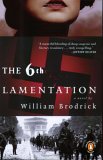
About This Book
In this brilliant debut novel, William Brodrick draws upon his experience
both as an Augustinian friar and as a practicing lawyer to create the
unforgettable character of Father Anselm, a monk who must search the darkest
corners of history to try to fathom the human capacity to do evil.
When Eduard Schwermann, an alleged Nazi war criminal, claims sanctuary at
Larkwood Priory, the Church is thrown into a dilemma. Does it harbor him and
risk a scandal in the media or cast him out into a world that wants to punish
him for crimes he insists he did not commit? In the weeks leading up to
Schwermann's trial, Father Anselm must find out why the Church had granted
Schwermann sanctuary fifty years earlier—and apparently helped him escape from
France and assume a new identity in Britain. As Anselm conducts his
investigation, others quicken their own pursuit of the truth about Schwermann,
about the Holocaust, and about their own tangled personal histories. Most
significant among them is Agnes Aubret, a dying French expatriate who risked
everything—and lost—to save children from the concentration camps. In the brief
time that remains to her, she wants to bring Schwermann to justice, but must
reveal her own startling past to do so.
A tale of great moral complexity, stunning reversals, and a Shakespearean
tension between appearance and reality, The 6th Lamentation is both a fast-paced
thriller and a moving meditation on truth, history, and the human predicament.
Discussion Questions
- Many books, both fiction and nonfiction, have been written about the
Holocaust. What makes The 6th Lamentation distinctive? What does it add to our
knowledge about the Holocaust and its aftermath?
- In his introduction, William Brodrick writes that Anselm is not to be
taken as "someone who has the answer to why evil often seems to prevail over
what is good, but as a companion to anyone who asks the question." What makes
Anselm such a capable companion to anyone who ponders the balance of good and
evil in the world? What kind of person is he? What virtues does he demonstrate
throughout the novel? What are his weaknesses?
- Agnes is the great matriarch of the novel. In what ways does her life as a
mother and grandmother define her? How does her writing, and the revelations it
contains, change the lives of those around her?
- After Agnes learns that she has only a short time left to live, she says
to herself, "Loose ends are only tied up in books" and pushes aside "the
lingering, irrational hope that her life might yet be repaired by a caring
author" [p. 5]. In what ways are the loose ends of her life tied up in this
book? What are the parallels between the novelist and God as authors of
individual human stories?
- When Anselm visits Rome and the Vatican, Father Conroy warns him: "Be
careful. Don't go by appearances. Nothing's what is seems here" [p. 89], an
observation that recurs in other contexts throughout the novel. Does the Church
play a deceptive role in the story? Where else in the novel do we find that
things are not what they seem?
- When Pascal Fourges announces that he's going to try to find Schwermann,
his father tells him "…we cannot make a synthesis of the past, and there comes a
time when we have to forgive what we can, when it is better to forget what
cannot be forgiven." Pascal replies that "it's about history. Getting it right"
[p. 157]. Should Pascal have pursued Schwermann? What are the consequences, both
good and bad, of that decision? Why is it so important to get history "right"?
- What motivates Anselm, Lucy, and Salomon La Chaise to strive so
relentlessly to bring Eduard Schwermann to justice? How are their motivations
both similar and different?
- Anselm asks, "What, then, was the Sixth Lamentation: the tragedy of a
people or a personal testament?" [p. 63]. Which is it in your view? In what ways
are historical and personal tragedies interwoven in the novel? How does history
affect family and, through family, the lives of individuals?
- Near the end of the novel, Victor tells Anselm, "It's all been an
inexplicable mix of misfortune and luck. But since I am a religious man, I
suppose I should look to Providence. Only that rather complicates things, don't
you think? Because there's no accounting for the graces received, set against
what went wrong, without hindrance, for so long" [p. 343]. Are the events that
lead to the novel's climatic reconciliations the result of luck or Providence,
blind chance or God's will?
- What are the major surprises and reversals that occur in The 6th
Lamentation? What effect do these have on the reader's sense of certainty about
what is true and not true in the novel? What does the novel as a whole suggest
about the instability of appearances and the danger in jumping to conclusions?
- At the end of the novel, Anselm tells Father Andrews: "Almost without
exception, I misunderstood everything.... The list of misjudgments is too long
to enumerate...all from prejudice, loose thinking, fancy" [p. 369]. What are Anslem's most significant misjudgments? To what extent is nearly everyone in the
novel guilty of misinterpreting what has happened? In what sense is the entire
novel about the dangers of rushing to judgment?
- The 6th Lamentation ends with a moving family reunion, where true
identities are revealed and true relations reestablished. Why is this the right
way to end the novel? In what ways does this scene heal and to some degree
reverse the Nazi horrors of fifty years before?
Unless otherwise stated, this discussion guide is reprinted with the permission of Penguin.
Any page references refer to a USA edition of the book, usually the trade paperback version, and may vary in other editions.