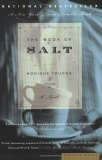
Reading Guide Questions

Please be aware that this discussion guide will contain spoilers!
About The Book of Salt
"A lush, fascinating, expansive first novel about exile." — New York Times
"An irresistible, scrupulously engineered confection that weaves together
history, art and human nature . . . Truong has, after much deliberation,
cultivated a veritable feast." — Los Angeles Times
"[He] came to us through an advertisement that I had in desperation put in
the newspaper. It began captivatingly for those days: 'Two American ladies wish
. . .' " It was these lines in The Alice B. Toklas Cook Book that inspired
The
Book of Salt, a brilliant first novel by acclaimed Vietnamese American writer
Monique Truong.
In Paris, in 1934, Bính has accompanied his employers, Gertrude Stein and
Alice B. Toklas, to the train station for their departure to America. His own
destination is unclear: will he go with "the Steins," stay in France, or return
to his native Vietnam? Bính has fled his homeland in disgrace, leaving behind
his malevolent charlatan of a father and his self-sacrificing mother. For five
years, he has been the live-in cook at the famous apartment at 27 rue de
Fleurus. Before Bính's decision is revealed, his mesmerizing narrative catapults
us back to his youth in French-colonized Vietnam, his years as a galley hand at
sea, and his days turning out fragrant repasts for the doyennes of the Lost
Generation.
Bính knows far more than the contents of the Steins' pantry: he knows their
routines and intimacies, their manipulations and follies. With wry insight, he
views Stein and Toklas ensconced in blissful domesticity. But is Bính's account
reliable? A lost soul, he is a late-night habitué of the Paris demimonde, an
exile and an alien, a man of musings and memories, and, possibly, lies. Love is
the prize that has eluded him, from his family to the men he has sought out in
his far-flung journeys, often at his peril. Intricate, compelling, and witty,
the novel weaves in historical characters, from Stein and Toklas to Paul Robeson
and Ho Chi Minh, with remarkable originality. Flavors, seas, sweat, tears —
The
Book of Salt is an inspired feast of storytelling riches.
Questions for Discussion
We hope the following questions will stimulate discussion for reading groups
and provide a deeper understanding of The Book of Salt for every reader.
-
"Gertrude Stein thinks it is unfathomably erotic that the food she is
about to eat has been washed, pared, kneaded, touched, by the hands of her
lover." How is food — and cooking — used as seduction in The Book of Salt?
Compare the meals between Gertrude Stein and Alice B. Toklas with the meals Bính
shares with Sweet Sunday Man and the man on the bridge. How is the reader also
seduced or persuaded by these meals? Have you ever wooed someone with what you
fed them?
- Bính says, "All my employers provide me with a new moniker, whether they
know it or not . . . Their mispronunciations are endless, an epic poem all their
own." How is Bính "lost in translation" in The Book of Salt? His interior
monologue is lush and eloquent, but he can speak only a few words in French and
English — what is the reader privy to that the other characters are not? Have
you ever lived in a place where you weren't able to fully speak your mind?
- O Magazine said, "Salt, whether from 'kitchen, sweat, tears, or the sea' —
is the secret of this perfectly rendered book." How is salt used as an
ingredient in Bính's story?
- What does Gertrude Stein's (invented) manuscript, "The Book of Salt," have
to do with The Book of Salt? Sweet Sunday Man tells Bính that Gertrude Stein's
version "captured you perfectly." Could that be true? How do you imagine it
reads?
- The Book of Salt begins with Bính waiting for the train that will lead the
Steins to America. He seems to be facing a choice: "I thought that fate might
have been listening in . . ." How did you expect the story to end? Did you think
that Bính would leave Paris? Where would he go? How did the ending of the novel
surprise you?
- Bính says, "Love is not a bowl of quinces yellowing in a blue and white
china bowl, seen but untouched." Is love what Bính is looking for in Paris? He
does finally get his much-desired photograph of Sweet Sunday Man, and Sweet
Sunday Man also takes a rare item. How is love given and taken throughout the
story? What are the characters left with? Have you kept (or stolen) artifacts of
a past love?
- Bính says, "When I am telling the truth, why does it so often sound like a
lie?" Do you believe Bính's stories? What is the importance of truth in The Book
of Salt, and what are the consequences of lies? Do you ever tell stories
differently than others remember them?
- When the Steins vacation outside Paris with Bính, he says, "What you
probably do not know, Gertrude Stein, is that in Bilignin you and Miss Toklas
are the only circus act in town. And me, I am the asiatique, the sideshow
freak." How are the Steins and Bính aligned as outsiders? And how are they not?
What is revealed in the Steins' response to Lattimore and Paul Robeson — how is
it different from the Bilignin villagers' response to Bính?
- ". . . the Old Man's anger has no respect for geography…even here, he
finds me." Does Bính seem "shamed" by his exile? Does he seem freed? How do we
carry the judgment of our parents? What "voices" followed you when you first
left your family home?
- Bính uses the color red often when describing his mother: "Red is luck
that she had somehow saved, stored, and squandered on her youngest son." What
other meanings does he give to red? Why does he cut his fingertips? Did Bính's
vision of the gray pigeon in the park change your understanding of his mother,
and of what Bính left behind in Vietnam?
- Bính says of the Steins' apartment, "This is a temple, not a home." Do
you agree? Are you familiar with the works of Gertrude Stein or Alice B. Toklas?
Has The Book of Salt changed the way you think of them?
- Who is the scholar-prince? Do you think Bính ever finds his? Did his
mother find hers? How much do folk and fairy tales shape what we expect from
romantic love? Do you have a certain myth in mind when you think of "ever
after"?
For Further Reading
The following titles may be of interest to readers who enjoyed The Book of
Salt.
Becoming Madame Mao by Anchee Min
The Woman Who Knew Gandhi by Keith Heller
La Tour Dreams of the Wolf Girl by David Huddle
Grass Roof, Tin Roof by Dao Strom
Unless otherwise stated, this discussion guide is reprinted with the permission of Mariner Books.
Any page references refer to a USA edition of the book, usually the trade paperback version, and may vary in other editions.